

An Evening with Sam Harris
Ruminations on Sam Harris' "Truth and Consequences" live essay reading at the Beacon Theatre in October 2025.


“Ninety minutes straight with no break? You’re a lunatic!”
I looked at Sam in disbelief, “Even comics stop at an hour-ten. How do you manage it?” We were standing in the Beacon Theatre greenroom, his wife Annaka next to him. He admitted, “Actually, about an hour in, my leg started to go numb. I was worried I might not be able to keep going. At the end, my legs were so stiff, I feel like I waddled off stage like Joe Biden” - “I saw. I was half expecting George Clooney to write an op-ed about you tomorrow.” I replied.
With that came a sound rarely heard: a genuine belly laugh from Sam Harris. I can’t say I wasn’t chuffed— I got a laugh out of the driest voice in the world, (not to mention the son of the comedy writer who created the Golden Girls.) It was surreal to be backstage with him among the usual orbit of writers, thinkers, and self-declared ‘dangerous minds’ that populate the pod-osphere. I’d awkwardly slipped between Coleman Hughes and Douglas Murray to thank Sam before he left to prepare for the next leg of the tour— Boston. He’d just done this same talk to Seattle and got what he described as ‘a very different reaction’.
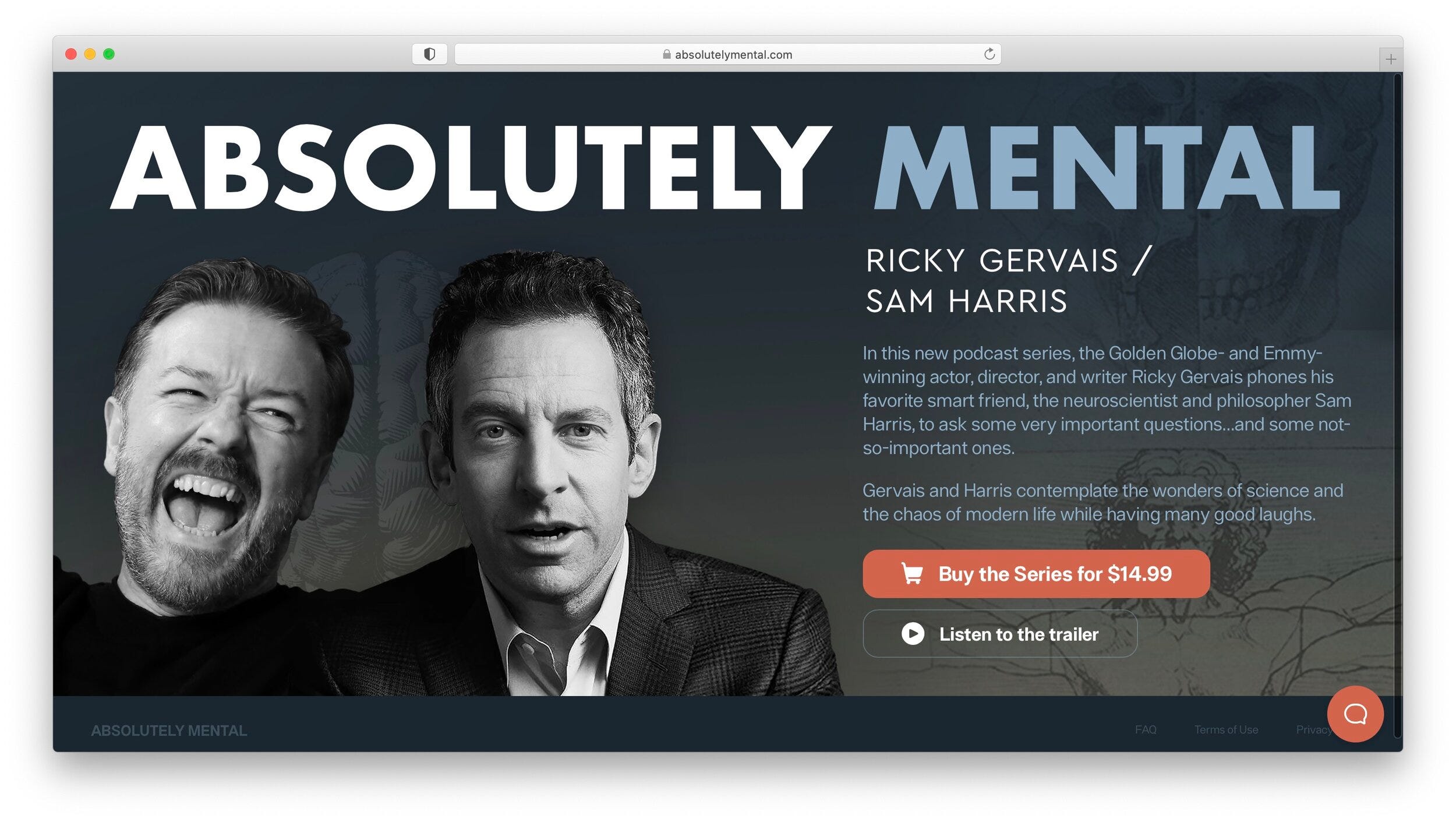
I’ve worked with Sam and his team for a while now. Back when he was launching a podcast series with Ricky Gervais called Absolutely Mental, I was hired to design the podcast art. (You can see the behind-the-scenes of that process here.) That meant I had a front-row seat in a small way to his ideas before thousands were hearing them. I also got to illustrate the entire “Essential Sam Harris” series, which collected all of his writing and conversations on the topics of AI, Morality, Consciousness, Violence, Free Will, Belief and Unbelief, Nuclear War, the Information Landscape, Eastern Spirituality, and Death. (You can find all of those here.)
All of this work made last night, when he stood, amplified in ideas and voice, feel like watching someone step out of my AirPods onto the stage. It’s strange sitting in a theatre full of people who all seem to have read more books than you’ve bought.
I’ve never 100% agreed with every single thing Sam is on the record as saying, and I’d worry if I did. I do, however, like the way he approaches a lot of difficult and complex issues— with a mix of logic and a vast understanding of the underpinnings of human psychology. His Stanford neuroscience degree holds him in good stead for interrogating both sides of his curiosity: Waking up (Meditation) and Making Sense (Cultural, Social & Political discussion).
The Truth & Consequences Tour
Sam spoke for nearly two hours straight- no breaks, no slides, no mercy. Just five sips of water during intermittent applause breaks. I’ve never seen anything like it, certainly not in this era of attention deficit. One solitary speaker on the stage, at a podium, reading an essay to a rapt full house at a theatre. It felt remarkably unculty, too, which is a big accomplishment when sermonising like this. There was an air of thoughtfulness in the crowd. It wasn’t smugness or reverence; it was a room full of people who, god forbid, have used the words “I don’t know” in conversation in the past 12 months.
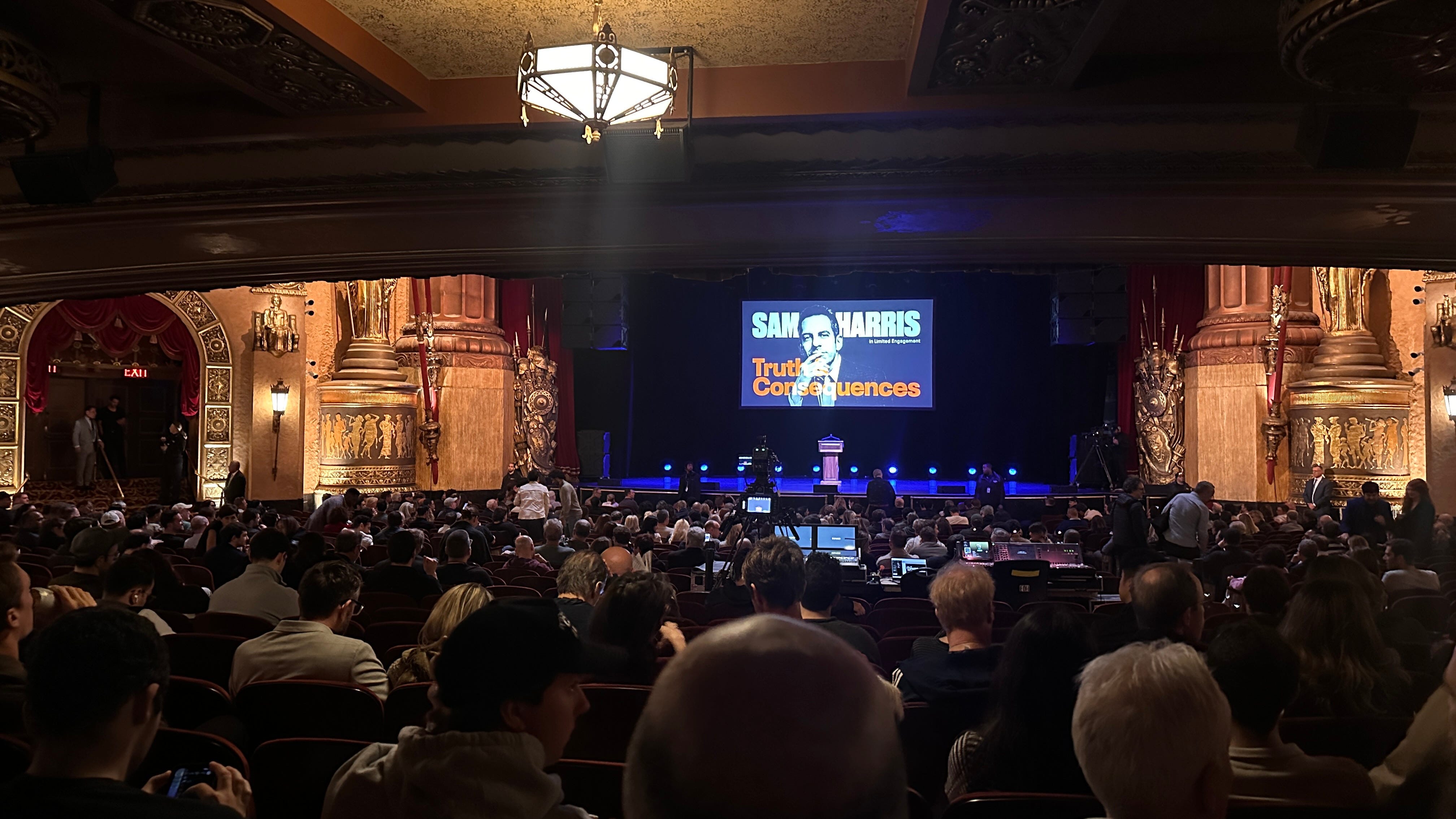
He moved quickly from big topic to big topic. A modern philosopher’s greatest hits tour: AI, Morality, Consciousness, Violence, Free Belief and Unbelief, the threat of Nuclear War, The Information Landscape, Spirituality, and even Death. It’s a lot to absorb, but I scribbled notes in the dark. You’re welcome.
This was one of the stops on his “Truth and Consequences” tour- the first of several live events he’s held since before the pandemic. I was at that last one, too. It was a conversation in 2019 at this same venue with the Nobel prize-winning author of Thinking, Fast & Slow, the late Daniel Kahneman.
Tonight, he jabbed at the hypocrisy of his one-time friend, Elon Musk —“He is the most dangerous clown in the world. He pretends he’s a free-speech absolutist, but then kicks off journalists he disagrees with.” He then got to work dissecting the current garbage fire we’re all navigating in Trump’s America 2.0. There was a lot to cover.
“Trump has the attack surface of a planet.”
He spoke a lot about the long-term effects of the president’s impulsive, destructive behaviour on the American project and on society at large. The so-called “Derangement syndrome” MAGA trolls throw at anyone criticising Trump has lost meaning now that the far right has become literally deranged.
He said Trump’s speaking style is “like inflating a balloon and just letting it go.”
“At this point, Trump could drop his pants and masturbate at a press conference, and an hour later, Marco Rubio would be on Fox saying what a passionate man he is.” He’s a completely unpredictable wildman, and he is the most powerful person on Earth. He recalled a meeting with Zelensky when Trump claimed, ‘They started it.’ “Even Putin didn’t say that. This is pure, bizarre, spontaneous fabrication with very real consequences.”
The audience nodded so hard I thought someone might herniate a disc in agreement.

Trump, through the prism of golf.
Sam’s take on Trump and golf is devastating precisely because it strips away the politics and gets to the moral core of the man. Golf, as he puts it, is a kind of secular religion of integrity. It’s the only sport where the entire system depends on honesty: you call penalties on yourself, you record your own score, and a single unsigned scorecard can erase a victory. In other words, golf only works because people tell the truth.
So when someone cheats at golf, they aren’t gaming a system, they’re rejecting its entire premise. Trump’s obsession with the game, paired with his compulsive cheating, reveals something deeper than vanity. It’s not about wanting to win, it’s about needing to rewrite reality in his favour. Buying a club, playing alone, and then declaring yourself champion isn’t competitiveness— it’s pathology.
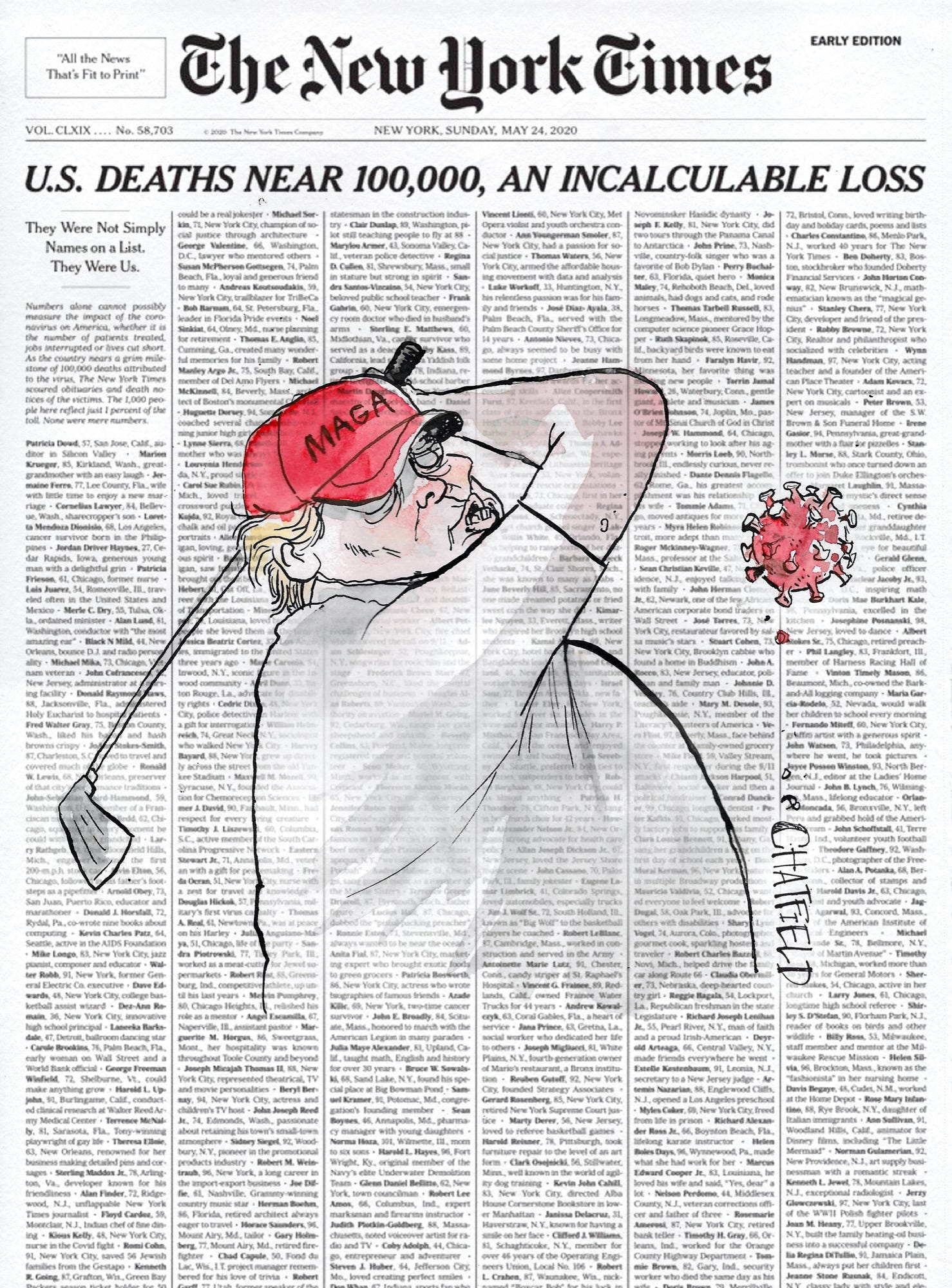
“If there’s an Antichrist for golf, then it’s Trump.”
Sam described it as “morally insane.” It’s not psychotic, but it’s the sort of moral derangement that can only come from someone who doesn’t recognise truth as a value. Trump doesn’t just break rules, he desecrates them. He lies not to get away with something, but to prove that he can.
Golf becomes the perfect metaphor: a man so consumed by his image that he cheats at the one game where you’re only ever playing yourself. As Sam said, it’s “like cheating at prayer.” You aren’t fooling anyone but yourself, and yet somehow, that’s the entire point. It’s not madness, exactly. It’s a moral inversion. A golf course, of all places, just happens to show it in the clearest light.
On Civility and Tribalism.
“Decorum, civility, and kindness are so important now. They’re more important than loyalty — but loyalty seems to be the only value being pushed in the administration right now.”
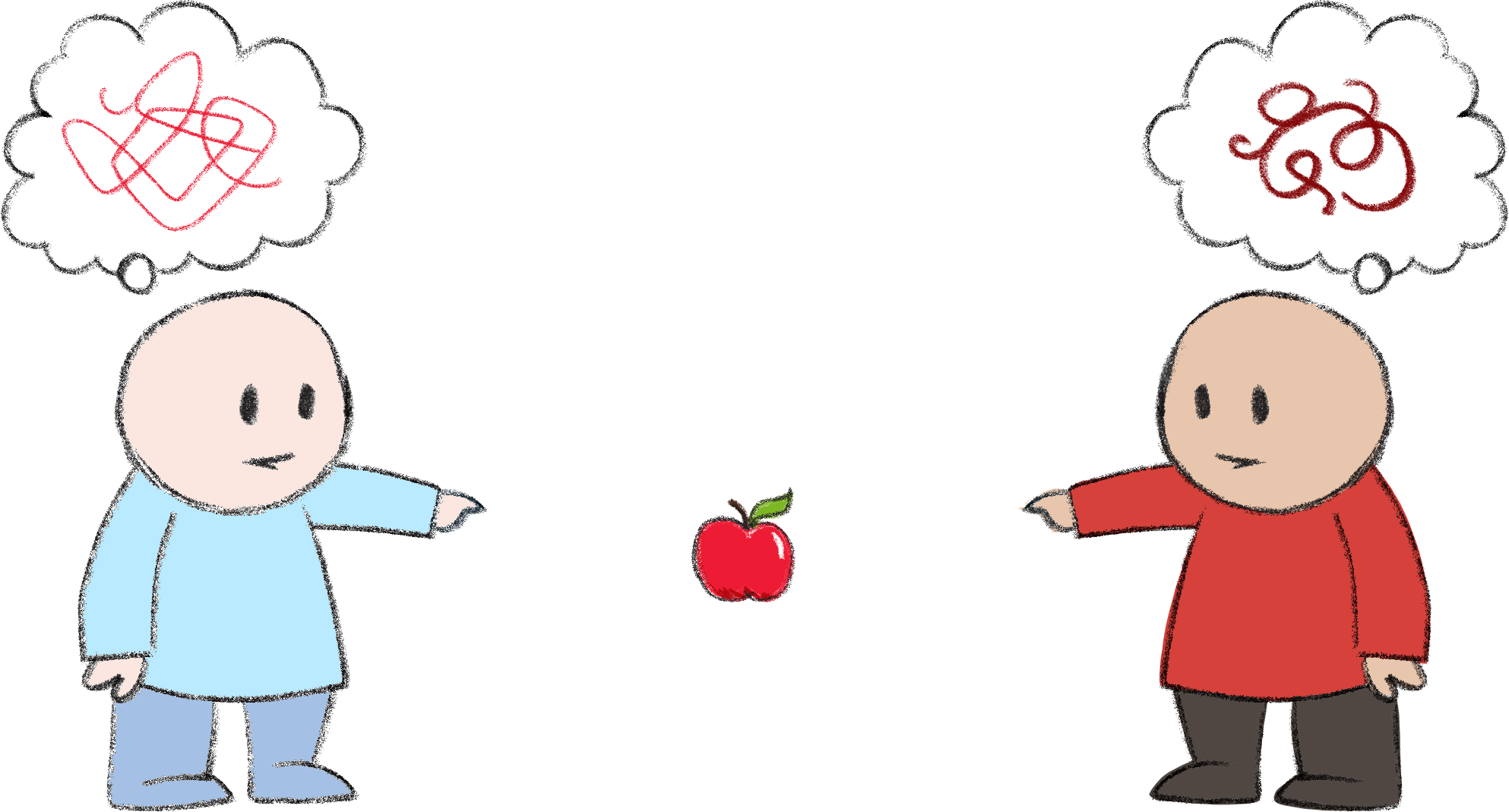
The lack of civility being boosted online by algorithms has caused a fracturing of reality. Manners don’t matter. In addition, truth is no longer objective, but subjective. Two people in the same room can’t agree on fundamentally basic things, so how are they meant to debate complex and nuanced issues? They simply can’t.
On Information Consumption and Podcasts.
Sam made a point that landed somewhere between funny and horrifying. “Even 4chan has a moderation policy. Why don’t podcasts?” He’d recently declined to host RFK Jr. “He’s a loon and a liar,” he said flatly. Though, in the same breath, he admitted, “His ability to say things is just as valid as mine. It’s my First Amendment right. But my decision not to bring him on my show is equally as valid.”
He lamented that most globally successful podcast hosts aren’t equipped for the conversations they’re having. “The people who seem to talk about these topics on podcasts are blissfully uneducated on the topic.” Then he paused and added, “Somehow we’ve all decided the best way to discuss these topics is to listen to woefully unqualified people having long-form conversations - previously known as conversations.”
It got a laugh, but it stuck with me. In a world where everyone’s broadcasting and no one’s listening, the act of simply talking to another human being for three hours now feels revolutionary. Clouding one’s thoughts with the voices of others is the order of the day, it seems. Doing the dishes? Why be bothered by your own mind, or form your own opinions? Why not just pipe in some pre-fabbed ones from an MMA commentator and a crank who thinks Tylenol causes autism! (Caveat: I’m sure I have this opinion from listening to podcasts.)
Identity Is Not a Personality.
Something that gave pause was his section about identity, and how the obsession with focusing entirely on that one facet across all culture/politics in a modern democratic society is deeply flawed: identity is not your entire personality.
The idea that someone has to be permanently tied to a preordained identity because of where their mother, parents, or ancestors were born is, at the least, facile, and at worst, dangerous. It is anathema to the entire project of building a society in which the content of one’s character is the most important trait to pay attention to.
He explored the differences between native, cultural identities and theological ones: “Being Japanese means you’re from Japan, you were born in Japan.” But with Judaism: “being Jewish could just mean your mother was Jewish.” It is theological, not geographical. So, when people lump all people who are Jewish into one monolith, it’s a reductive and lazy place from which to make any kind of honest assessment.
He spoke about the rise in antisemitism, both in the US and abroad — why it matters, and why it’s often the early warning sign of something much worse. It reminded me of something Christopher Hitchens said before he died: that antisemitism isn’t just a Jewish problem, it’s everyone’s. “Because anti-Semitism is the godfather of racism and the gateway to tyranny, fascism, and war,” he wrote, “it is to be regarded not as the enemy of the Jewish people alone, but as the common enemy of humanity and civilisation.”
On Gratitude. (And hiccups.)
Towards the tail end of the talk, he revisited his idea that gratitude comes from realising all the situations you’re not in. ie, Sure, you’re stuck in a traffic jam and you’re running late, but you haven’t just been given a terminal diagnosis. You’re not being hunted and slaughtered by a rogue militia. You’re not stuck on a crowded old wooden boat in the Indian Ocean being smuggled to Australia. You’re not nauseous.
It sounds silly, even morbid, but it’s a Stoic philosophy that has worked for centuries. People write gratitude journals now about all the things they’re grateful are happening to them— I write out the things I’m glad aren’t happening to me. My own take on this mental framing? It’s a bit sillier, but it’s:
“Gratitude is being in a constant state of not having the hiccups.”
~Me
Finally, Sam concluded on a somewhat positive note.
“You can’t wait to be happy. You can only be happy. You can’t wait for that New York Times headline that says “Everything’s finally fine, go about your day.” — it’s never going to happen. You don’t control the things that happen, all you control is your reaction to the things that happen.”
Solid advice for our moment of perpetual panic.
When he concluded, the crowd stood, and they applauded. He slowly walked off stage, stiff-legged- sore, spent, but intellectually upright, like someone who just deadlifted the weight of fifty moral worlds. It’s funny, standing in a theatre full of people applauding rationality. It felt almost… religious?
He’s going to be tweaking and adding to this presentation as he continues the tour over the coming months. It’ll be fascinating to see where it lands when he’s done with it.
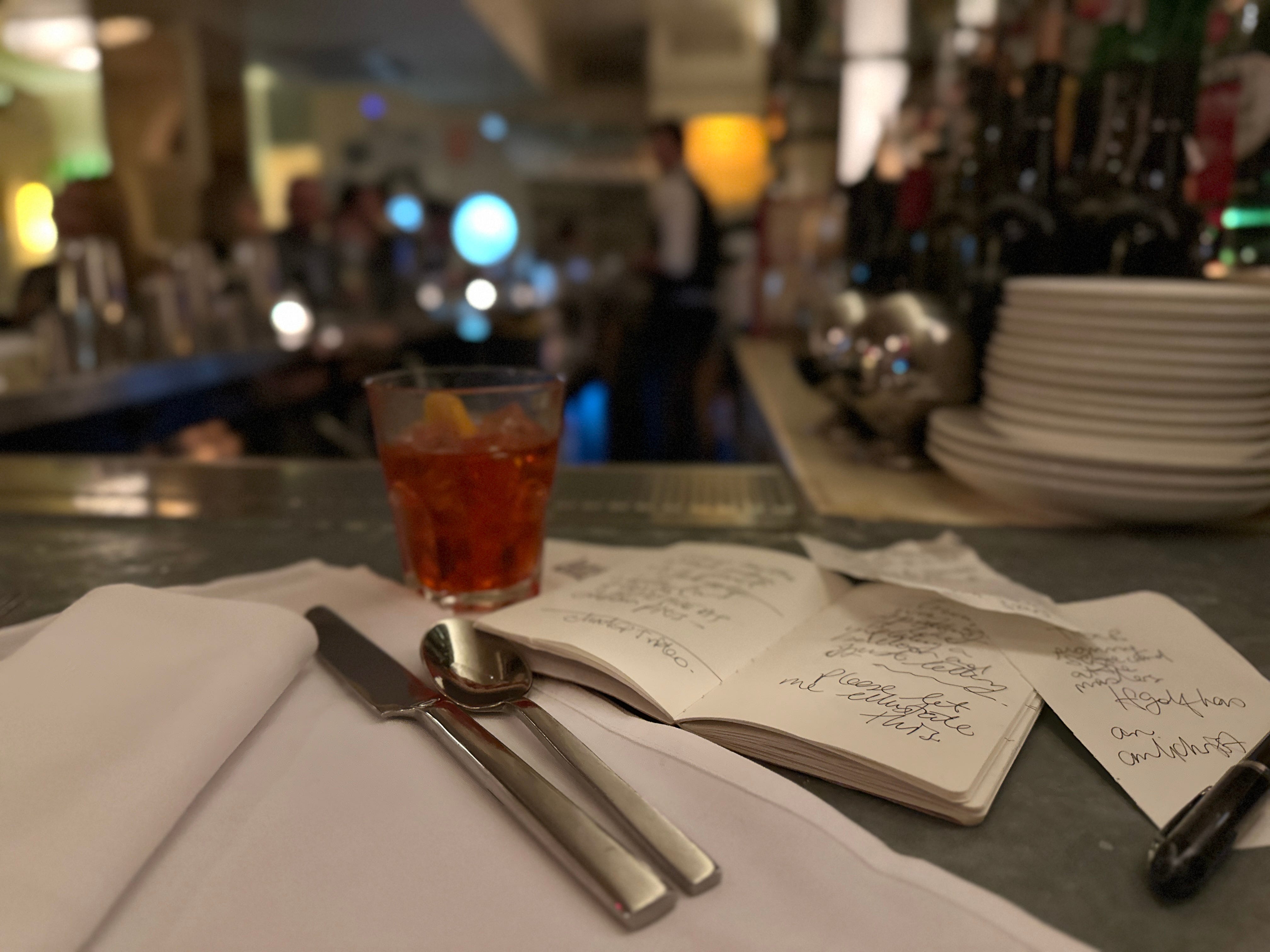
After ascending the stairway to the cool New York night, I took myself off to nearby Cafe Luxembourg to gather my notes and thoughts, and get a hold of myself after getting that laugh. There may not be a solution to every problem we’re facing, but at the very least, we need to be able to discuss these things in a logical, clear-headed way. I felt like the people in that room all longed for the same thing.
Anyway. Thanks for reading. I know this was a long one, so thanks for getting to the end. Let me know your thoughts in the comments. I always love hearing from you.
‘til next time
Your pal,

Related Reading:

Your cartoons are the culmination of the thoughts in your mind. I'm grateful for NOT being blind so I may hear your voice. :-) Carry on! (with thanks).
Loved the Tootsie dedication and the book by you and Dooley. Thank you♥️♥️♥️