Thursday, midday. Paul Noth is in Milwaukee, where he moved back after 20 years split between the Upper East Side and the Princeton area, and where he now has, as he put it while wandering to another room mid-stream to chase better WiFi, multiple rooms. (We get it, Paul. You don’t live in Manhattan anymore.)
First order of business: it’s Noth, rhymes with both. He’s been letting people say “Nawth” for decades out of Midwestern politeness. Gosh. Consider yourselves corrected on his behalf. If you missed it live, the replay is above. Here’s what happened, with every link we promised on air down the bottom…
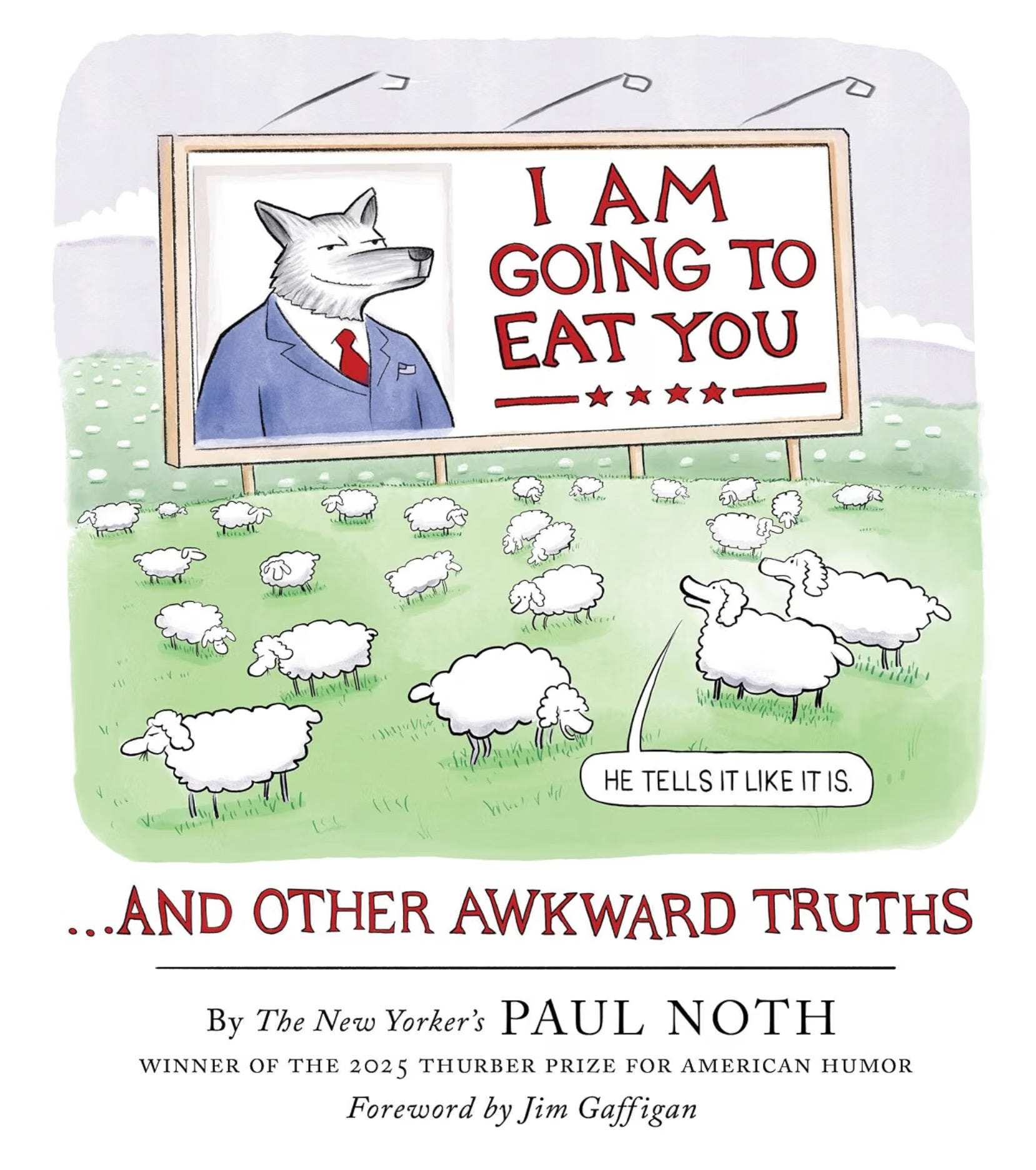
Pre-orderers get a signed bookplate posted to them! Just shoot him an email at paul@paulnoth.com with your mailing address and your desired inscription. (A proof-of-purchase screenshot is also much appreciated.)
You know Paul’s most famous cartoon even if you don’t know his name: the flock of sheep gazing up at a billboard of a wolf, captioned “He tells it like it is.” It’s among the most shared cartoons in the magazine’s history; it’s now the cover of his book, and Paul has mixed feelings about its immortality. “It should be a historical document by now,. he said, a little wearily.
Here’s the detail that should be laminated and handed to every rejected cartoonist on earth: The New Yorker rejected it the first time he submitted it. So did they reject his other most popular cartoons, first time ‘round. Paul resubmits. He always has, fortified by a story he’d heard about Saul Steinberg, who supposedly used to take his rejected cartoons, put them straight into a fresh envelope, and post them back to the magazine. (The balls on this guy! I love him.)
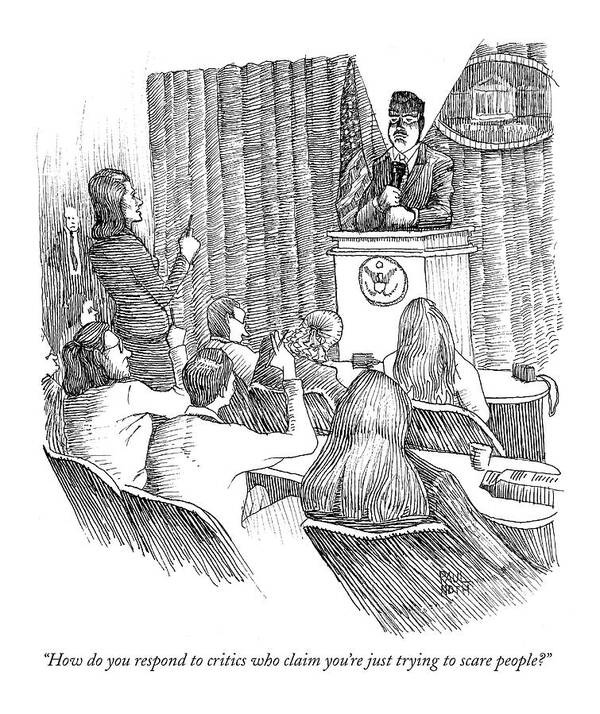
Paul sold to The New Yorker in 2004. The cartoon: a White House press secretary holding a torch under his chin like a kid telling a ghost story, while a reporter asks how he responds to critics who say he’s just trying to scare people. He’d worked on that batch for the best part of 2 months under the wing of Matt Diffee, whom he’d met at the Rejection Show and who walked the batch in to Bob Mankoff.

At Paul’s first look meeting, surrounded by his heroes (Gahan Wilson among them), Mankoff greeted the new arrival with two sentences that became his entire art education. The first: “Don’t get cocky.” The second: “I want to see 10 a week from you, even if they’re shit.”
Paul has done 10 a week ever since, through every all-nighter, every TV job, every book. “It was my art school in a lot of ways,” he said. Like me, he’d never been to one. He’d never had art in public before. He learned to draw in public, 10 at a time, and eventually stripped away his early etching-style hatch marks when he realised the truth every gag cartoonist arrives at eventually: “The best style for me was the best execution of the joke.” Or as Lee Lorenz put it in The Art of the New Yorker, which we both worship: a cartoon is beautiful the way a sailboat is beautiful. It has exactly what it needs to function, and nothing else.
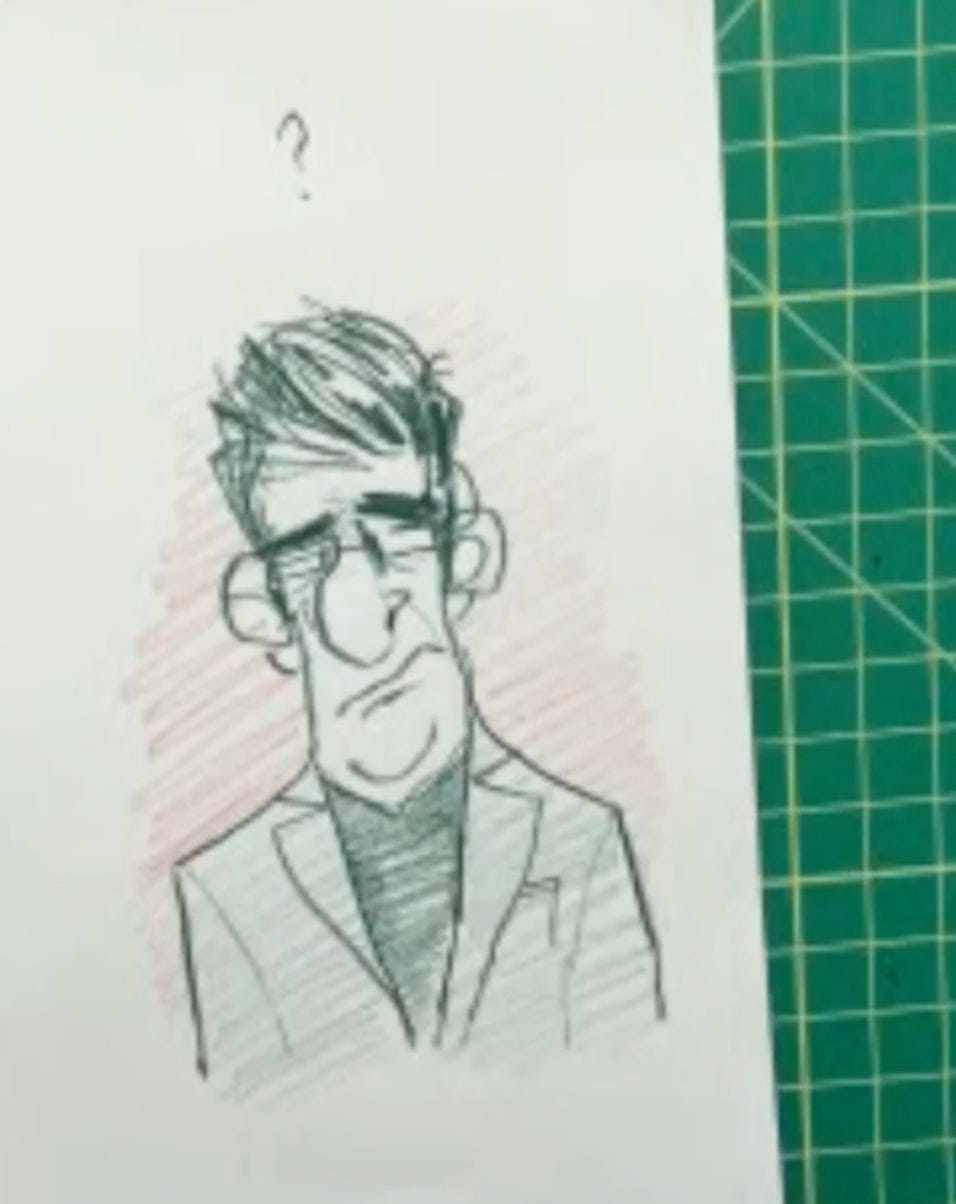
Mankoff gave me my version of that lecture too, around 2014, back when I wore a suit jacket to the offices like I was auditioning for a bank. He looked at my batch of borrowed styles and asked what I think about when I do my hair in the morning. “Try and think about your drawings as your hairdo. It’s a style you’ve arrived at. You’re not trying to copy Johnny Depp.” This from a man with famously luxurious amounts of hair. It worked, though. It worked on both of us.
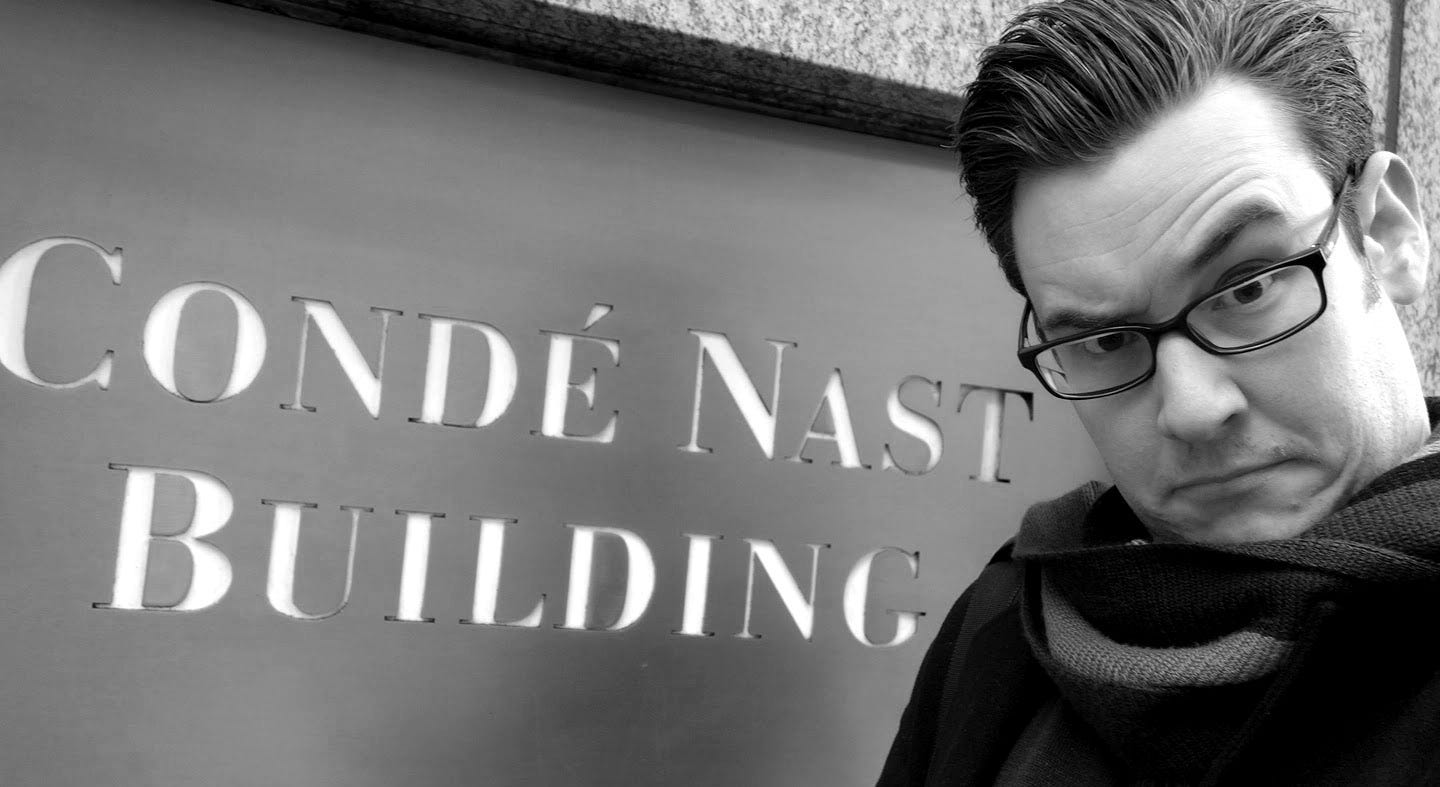
The Pale Force story is even better than I’d hoped. Jim Gaffigan, it turns out, is Paul’s brother-in-law; he’d married Paul’s sister a year or two before. Paul, not yet a New Yorker cartoonist, pitched Jim an animated bit for Late Night with Conan O’Brien, modelled on Steve Martin turning up to Letterman with something weird in his back pocket. When the head writer asked whether he’d done animation before, Paul said yes. (He had made flip books, so… technically not a lie?)
The budget was roughly what a guest gets paid for sitting on the couch, which is not a number that produces animation, and his first delivery came back with the note that a 16-megabyte video file cannot be broadcast on network television. The night the first episode aired, running on no sleep, he watched it freeze for a single millisecond and briefly died. Then it killed, the series got Emmy-nominated, and Paul got a comedy education by osmosis: Robert Smigel, Brian Stack and Demetri Martin down the hall, Conan’s face providing the biggest laugh of every episode no matter what Paul animated. His conclusion, having vowed never to do low-budget animation again:
Worth it.