


The question landed like a perfectly timed comedic slap.
It was 2022, and I was sitting at my drawing board, having just returned from the profusely illustrated Manhattan apartment of Edward Sorel, 96-year-old satirical legend, keeper of every important illustration award, and the man whose caricatures have been making politicians sweat since the Eisenhower administration.
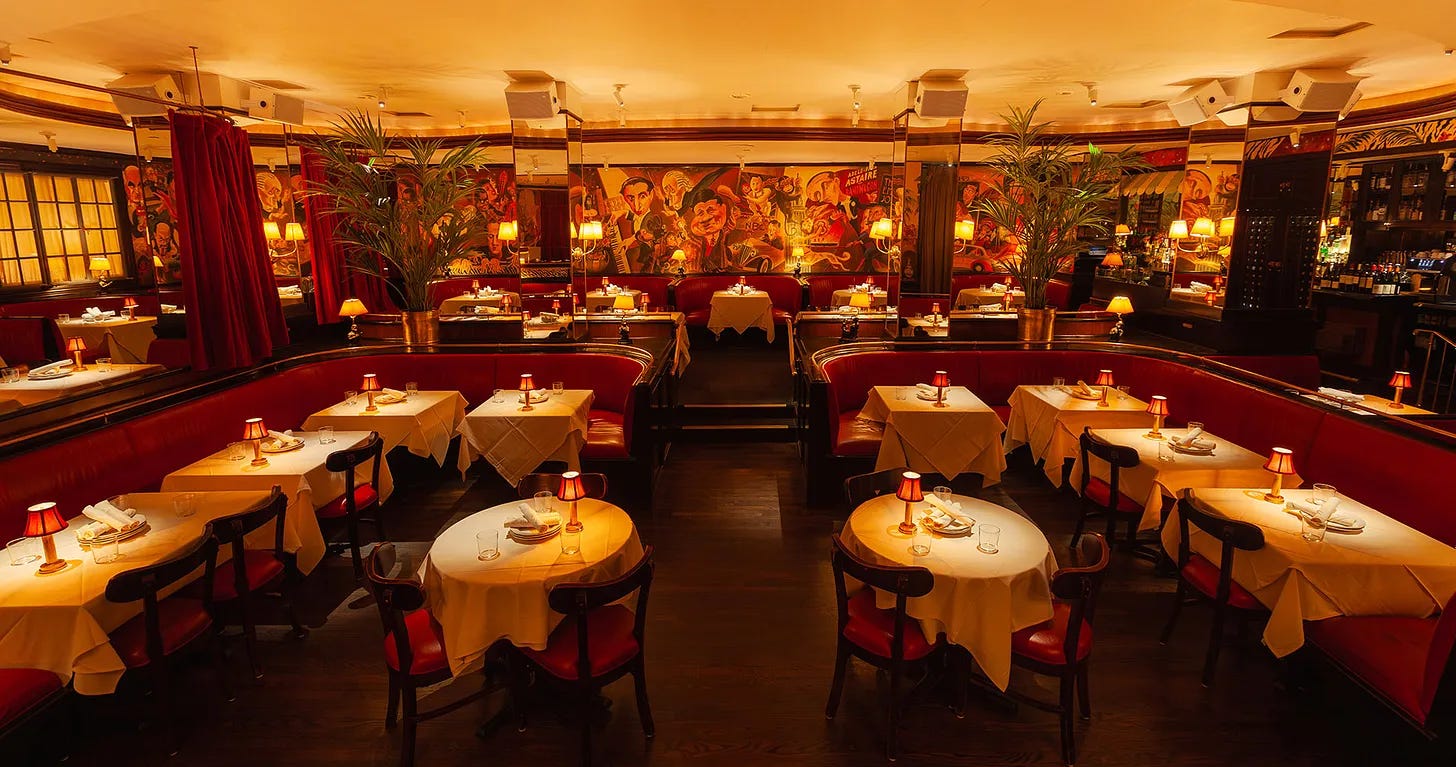
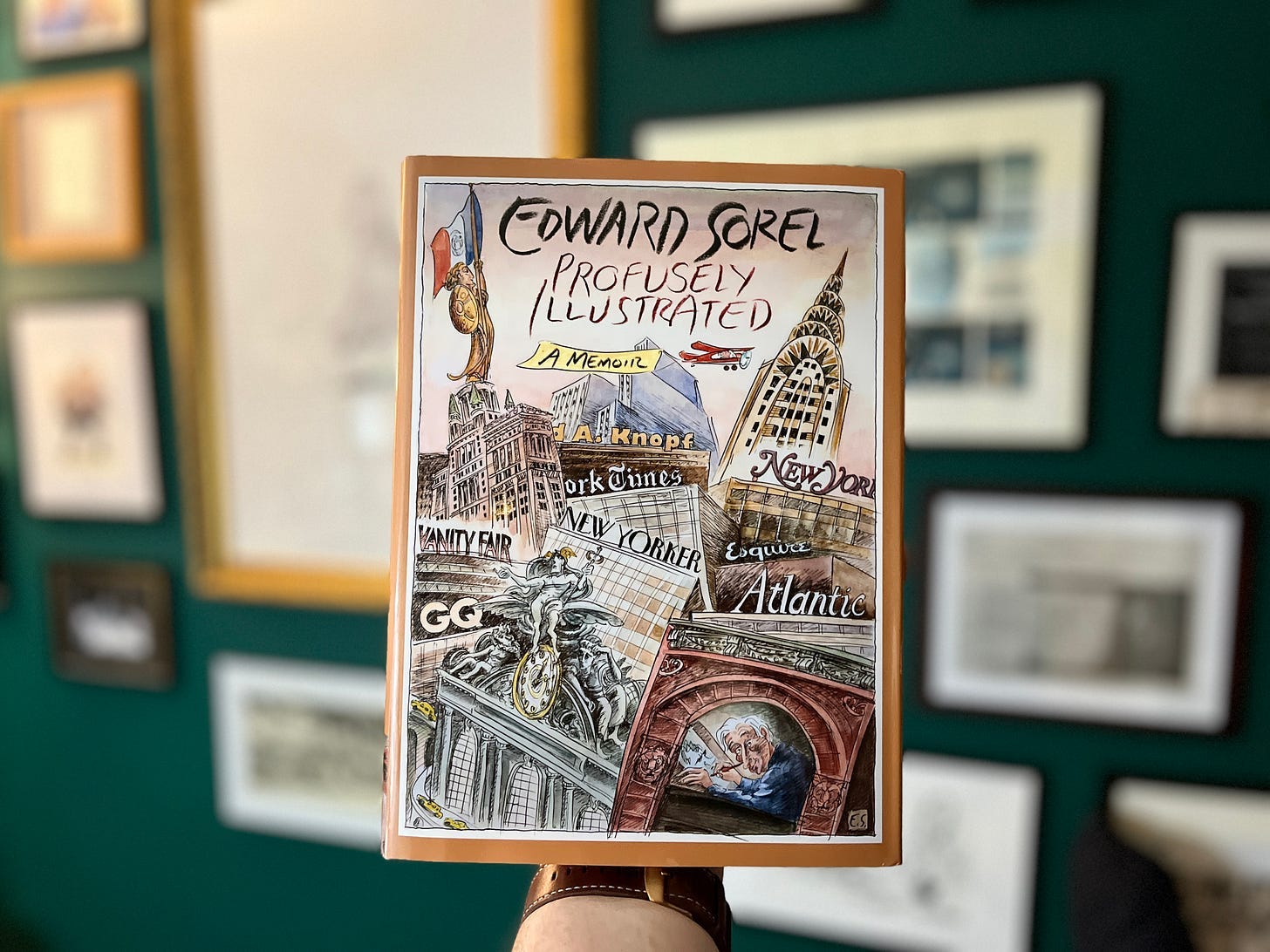
Sorel is, without question, one of the most iconic satirical illustrators in America. His recent memoir, Profusely Illustrated, is a testament to his prolificity. The book details a series of accidents that led him to become more of a caricaturist than a traditional illustrator. If you’ve ever been to the sunken dining room at the Monkey Bar on E54th (pictured above), you’ve been immersed in his unmissably unique, energetic line.
Needless to say, I’m a fan.
I was nervous to finally get an opportunity to meet him. My friend Karen Green, Curator for Comics and Cartoons at Columbia University, had teed up the meeting during which we got to hand Mr. Sorel his Reuben Award, the highest honour bestowed by his peers in the cartooning industry. He won towards the end of the pandemic years, and it wasn’t safe for him to travel.
He really was chuffed. He called it “the best kind of award you can get.” The acceptance speech was recorded from his apartment during the Omicron spike. He concluded it by saying,
“I’ve found making satirical drawings a most satisfying way to go through life. What was especially satisfying was seeing my drawings get better and better as the years went on.“
(Video recorded by Karen Green)
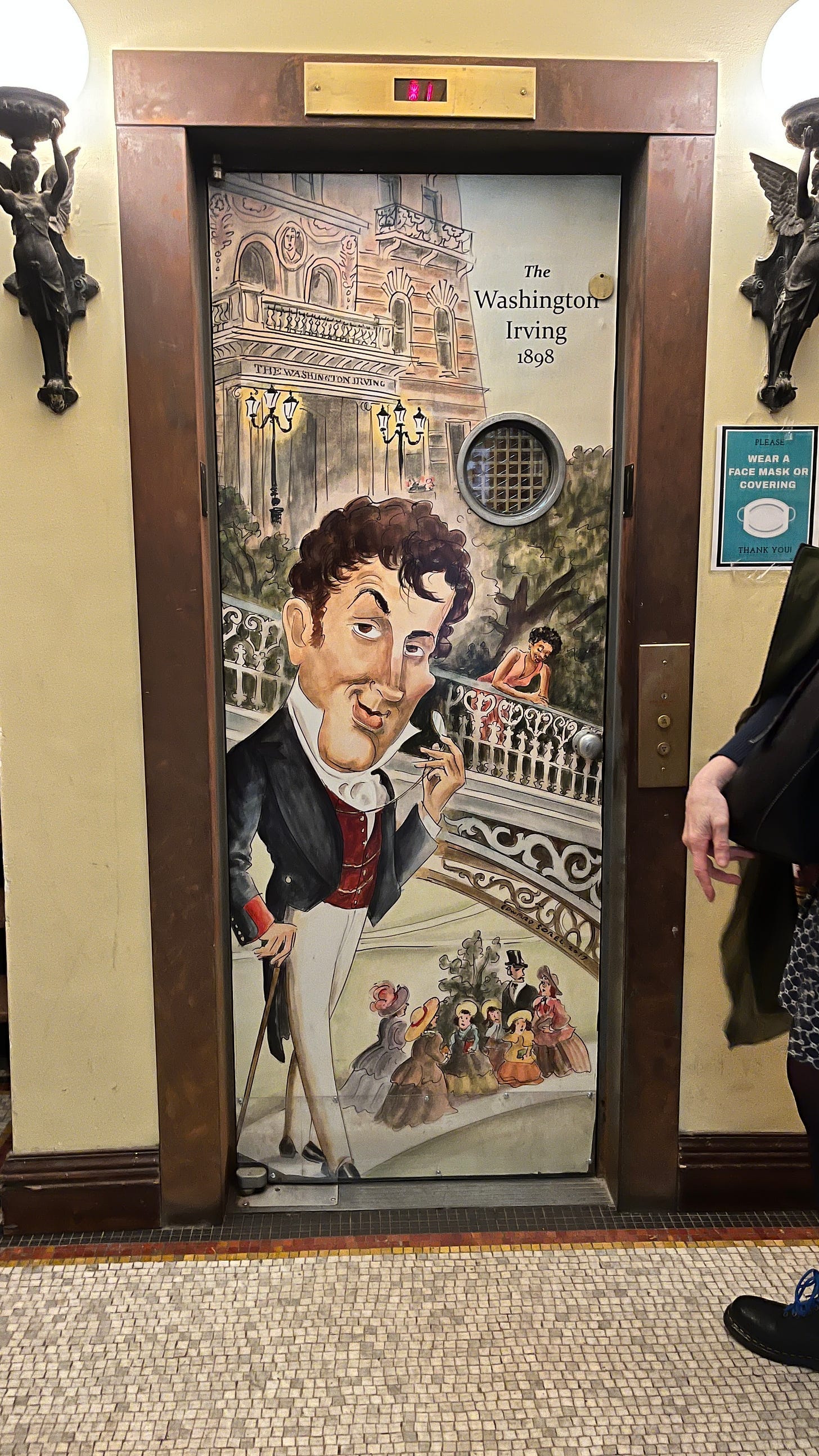
From the moment we stepped into his hand-illustrated elevator, a knot formed in my stomach. I felt like a complete dilettante calling myself a cartoonist in his company. I’d heard stories that he could be a bit of a misanthropic grump. Upon stepping through the door, the knot loosened as I quickly discovered he is, in fact, not a grump. (He’s just a New Yorker.)

Oh, and I wasn’t kidding: the elevator to his apartment might just be the greatest one in Manhattan. It was like riding up to heaven in a Wonka contraption designed by Ludwig Bemelmans after a three-martini lunch.
(Okay, I’ll cool it with the gushing— I thought you should know how much his professional opinion means to me.)
Over coffee and baked Jewish delicacies, Sorel shared with Karen and me that he was working away on a full-page illustration for Esquire and couldn’t quite land a likeness the way he wanted. It was 3:30 pm, and he’d been at it all day. He needed the break.
I was both relieved and horrified to learn that this feeling —with which I’m intimately familiar— is still something that still haunts illustrators no matter how long they’ve been at the drawing board. Having an established style doesn’t rescue you from this all-consuming affliction. Sorel, at the age of 95, is still as dedicated to his process as ever. (Yes, he’s still working at 95. Cartoonists don’t retire.)
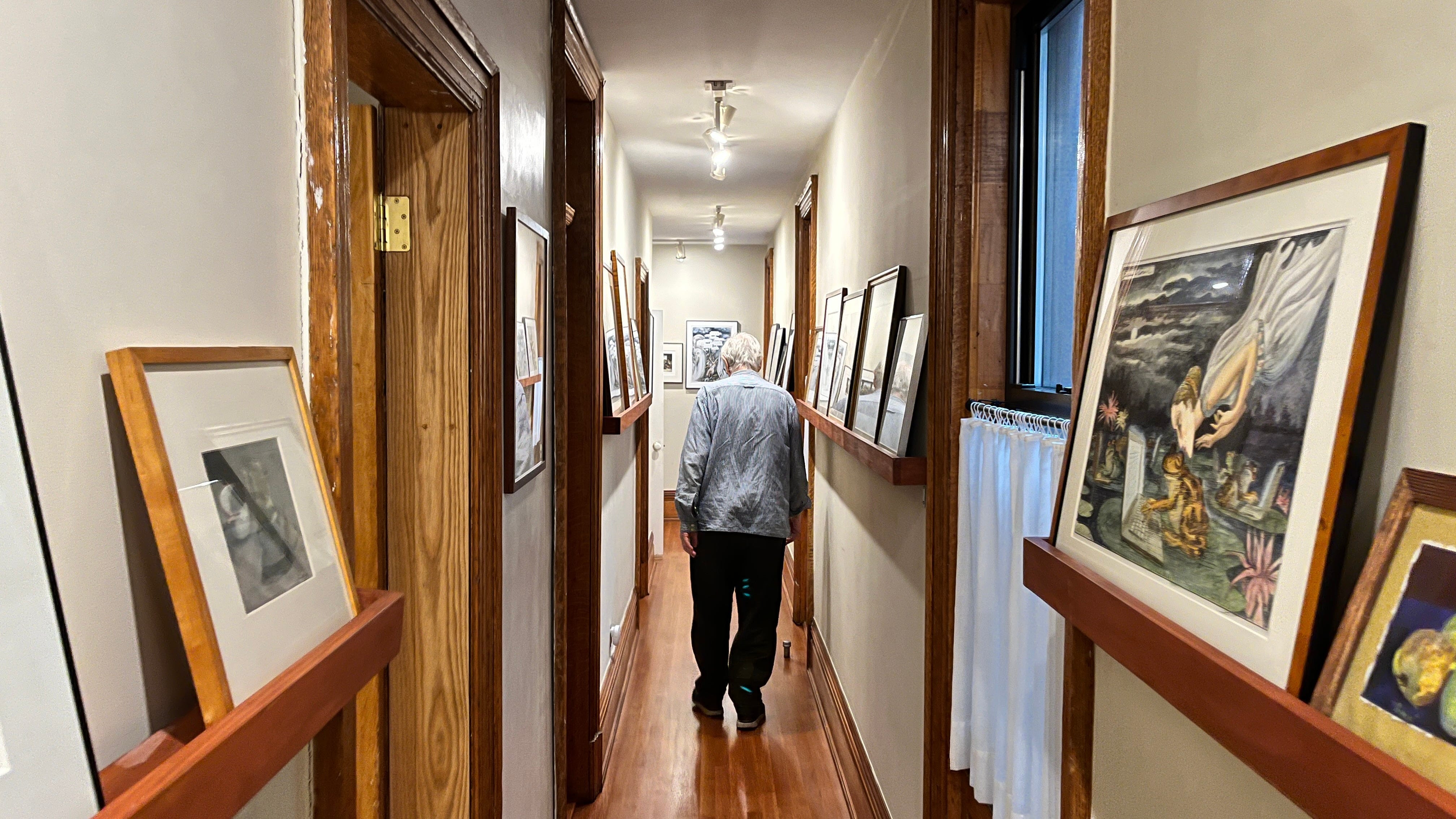
He invited us down the narrow hallway to his studio. The walls were adorned with framed originals; personal gifts by everyone from David Levine to Peter Arno— a continuous Pantheon of New Yorker cartoonists and illustrators guiding the way to the one place Sorel spends his days: a small, sacred room with a huge black drawing board framed by giant wooden flat files and desks, drawers bursting with iconic art.
Strewn around the studio floor and tables were page upon page with the slightest variations of the same illustration— evidence of an explosive dedication to getting the piece down the way he wanted it. He admitted he was having an unsettling battle. He’d clearly gone a few rounds, but it hadn’t defeated him. There were scraps that he liked. He remained determined.
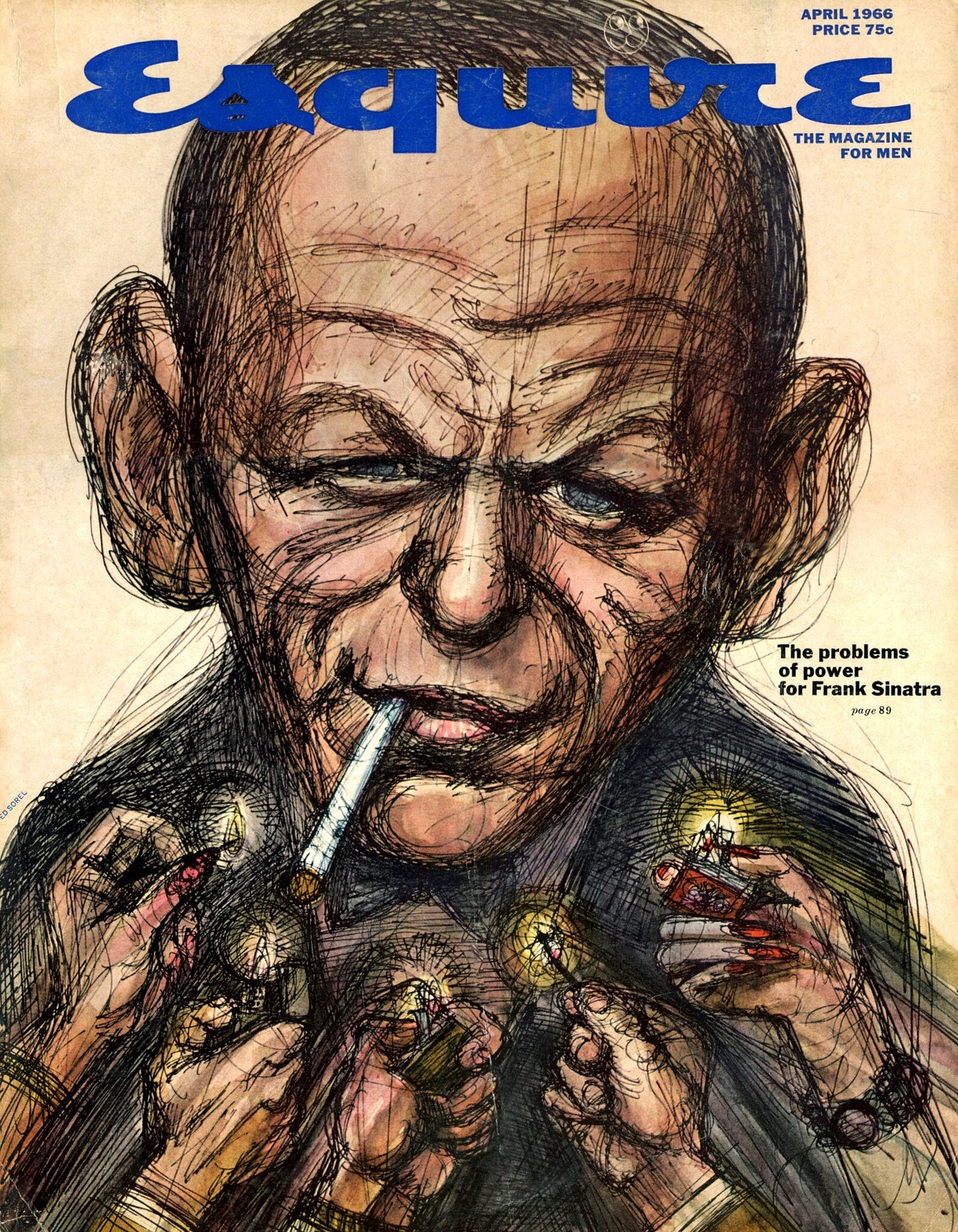
His commitment to never tracing, never light-boxing, and trying to capture the spontaneity of a pencil sketch in his finished inks is a chief reason his style is so sought-after. It’s also the reason it’s so challenging to turn out work with such energetic quality. It takes a lot of effort to make it look effortless.
Sidenote: I did snap a photo of his studio, but I won’t post it here because I didn’t get his permission to share it, and, frankly, if anyone published a private photo of what my studio looked like while I was mid-project, I’d take ‘em for a quiet drive to the Pine Barrens without hesitation. (I’m working on it with my therapist.)
Well. The afternoon visit concluded. We jumped in a cab to Zabar’s, where he asked about my work before we parted ways with a wave (handshakes were still very risky). I was reeling.
Soon after, Sorel generously took the time to go through a large selection of my art: illustrations, gag cartoons, caricatures, comic strips— the works. I was very anxious to share it with him, but I knew the discomfort would be worth his feedback. It was generous of him to offer.
Once he’d sat with my garbage fire of a portfolio, he gave me the most valuable, candid feedback I’ve ever received as a cartoonist. It sank into my subconscious and has lived there, rent-stabilised, ever since. I’m sharing it with you because I think it might be helpful for your own development:

He said,
“Jason, I'm overwhelmed by the drawings, not so much by the quantity, as by the number of different styles—everything from broad slapstick to sensitive portraits done with a delicate line.
How do you decide who you're going to be when you get up in the morning?”

That last line knocked me back in my chair. It wasn’t exactly advice, but it was something far more valuable; a crucial question I’d avoided asking myself for as long as I’ve been working. He was completely right: I didn’t have a discernible style of my own. You couldn’t pick my work out of a line-up if you were the best Art Director on Earth. This was not a compliment.
Every artist who has ever ‘influenced’ my work has had a distinctive style that you could pick a mile away. You can recognise Mort Drucker from the moon. (and Searle from Saturn.)
He was right, of course. I'd spent so many years being a professional shape-shifter; adapting to whatever brief landed on my desk, aping styles to match client comps, that I'd never developed my own voice. I'd been wearing so many artistic masks, I'd forgotten what my actual face looked like underneath.
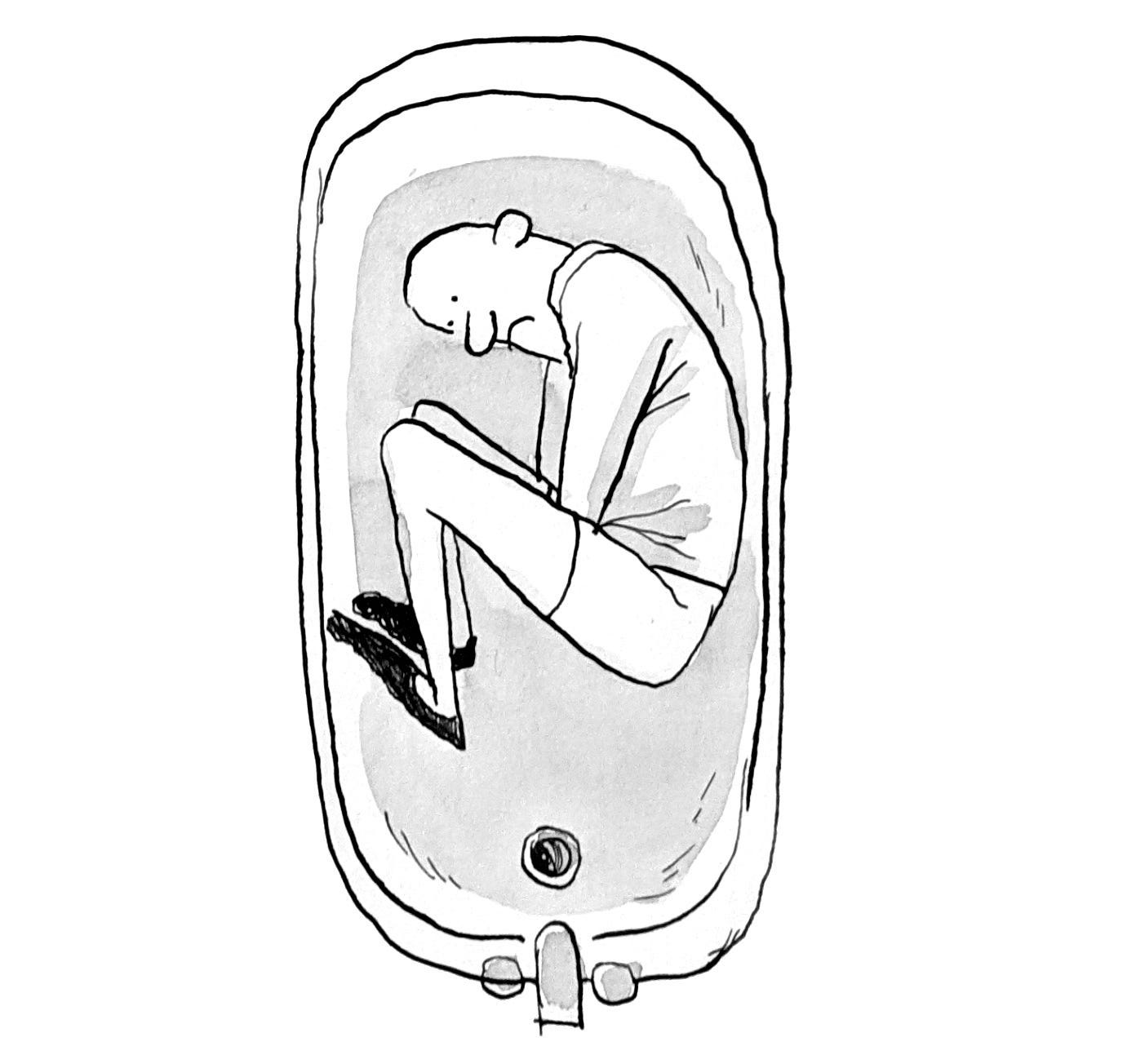
One good thing about making your living as a cartoonist is that if you’re lucky, you get to do varied and interesting projects that challenge you and push you in directions you wouldn’t have gone without that day’s brief. If you’re unlucky, you get boring, unfulfilling projects that make you question your career choices. You take jobs you don’t want to pay the rent, and you begin resenting the work. (If you’re really unlucky, you don’t get any work at all.) On balance, most professional cartoonists get a mix of both good and bad jobs.
But, there’s one thing they should always carve out time for, which I neglected to do for most of my career:
Drawing for yourself.
I was so preoccupied with turning in jobs that paid my rent that I never actually prioritised what got me so obsessed with cartooning in the first place: Play. Drawing for — God forbid— fun!

