Tuesday, 21st April 2026
Greenwich Village, NY
There’s a very particular kind of electricity that hums in the green room of a live show at the Comedy Cellar.
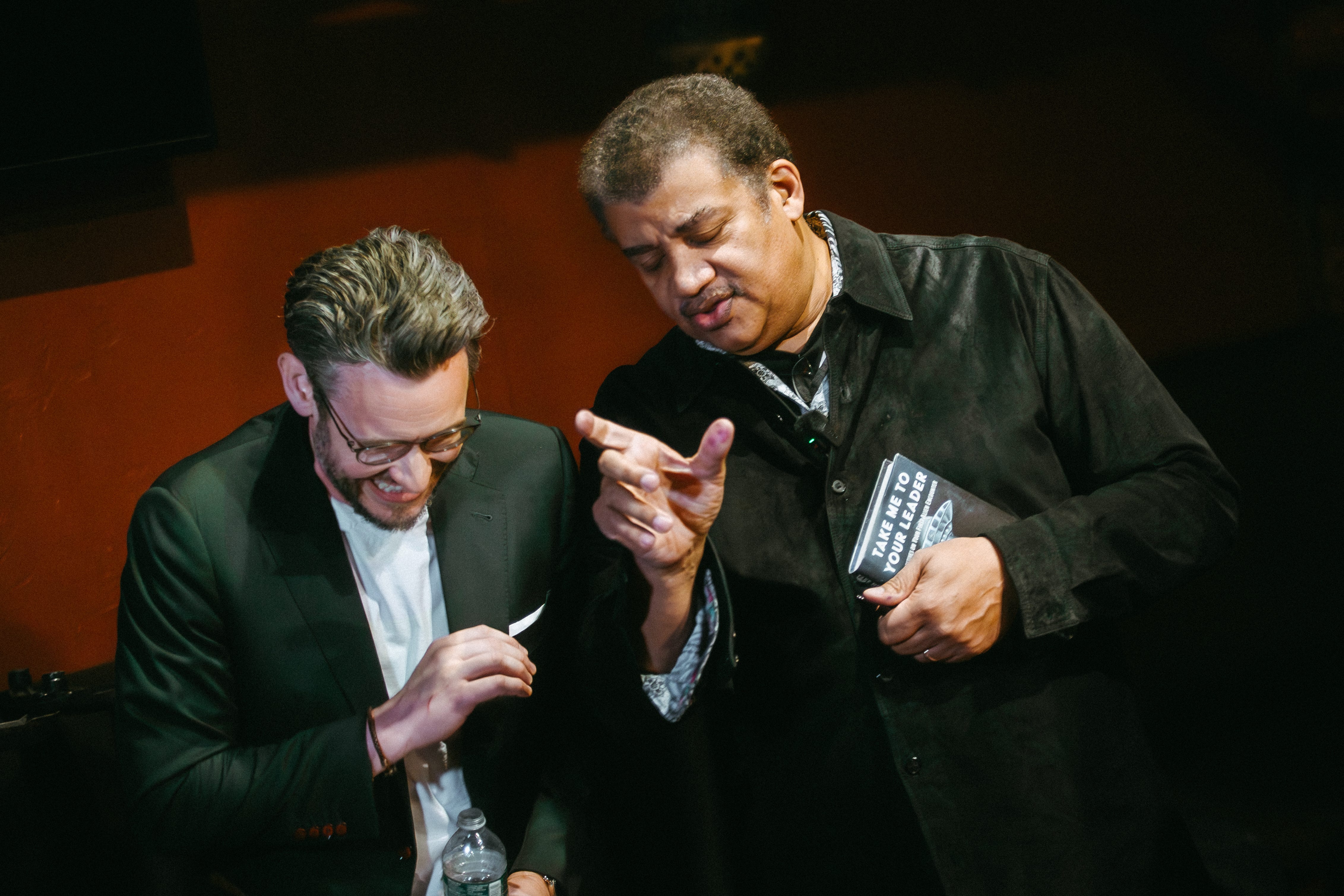
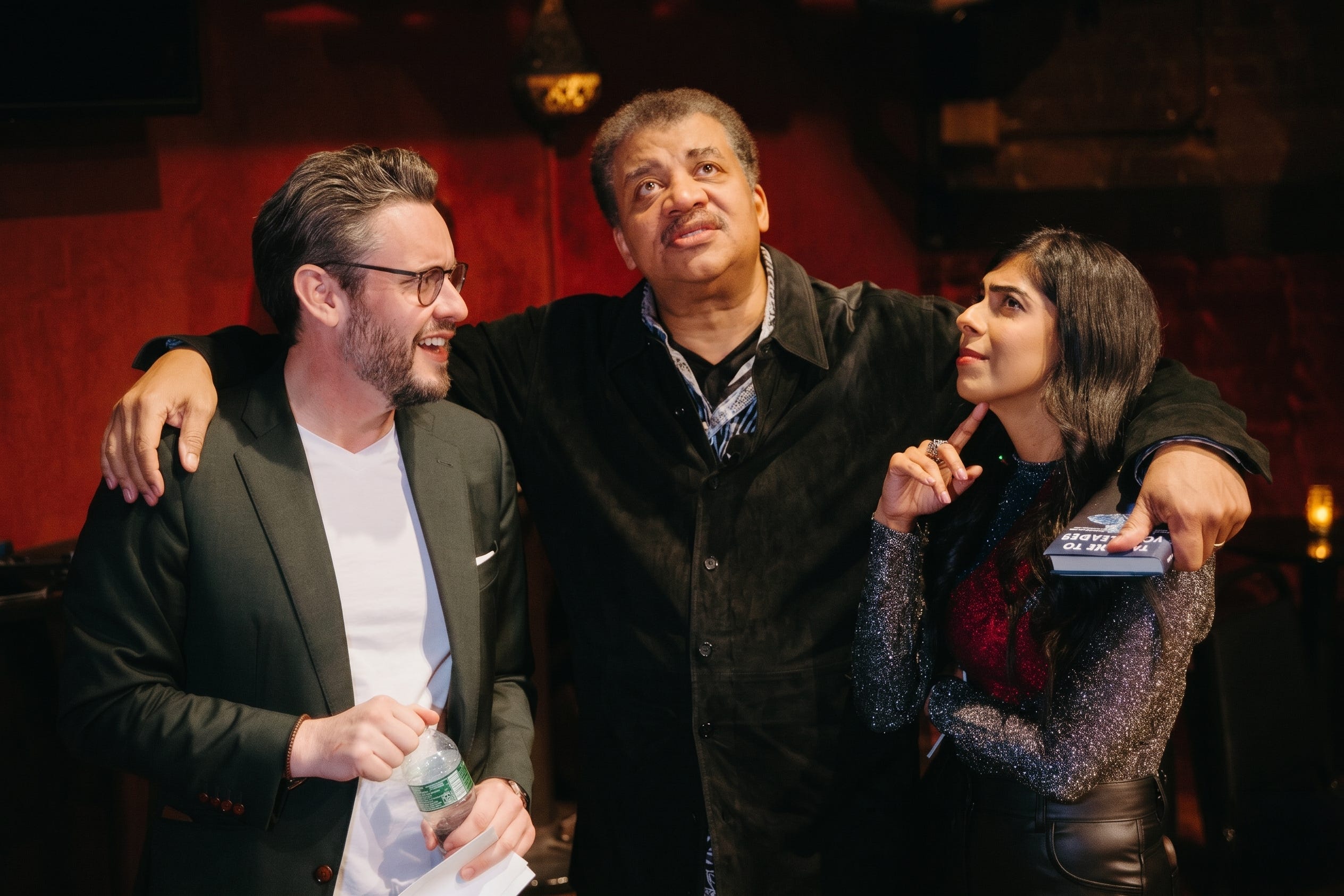
It’s a kind of ‘casual nervous’ energy. Comedians pacing, staring blankly into the notes app on their phones, producers nervously checking their watches. But last night was different. Last night, I was backstage to introduce my friend, the brilliant Nayeema Raza, for a live recording of her podcast, “Smart Girl, Dumb Questions.” Her guest was Neil deGrasse Tyson.
Neil is currently launching his new book, a scientifically infused etiquette guide and user’s manual for what to do when we finally make contact with extraterrestrial life. So, naturally, the backstage conversation bypassed the usual polite New York small talk and immediately accelerated into the stratosphere.
The following is a full 8-part accounting of what results when you cram a top-tier podcaster, a New Yorker cartoonist, and a world-famous astrophysicist into a small room together before a show…

If you enjoy my work and would like to support, please upgrade to become a paid subscriber (only $1 per week)

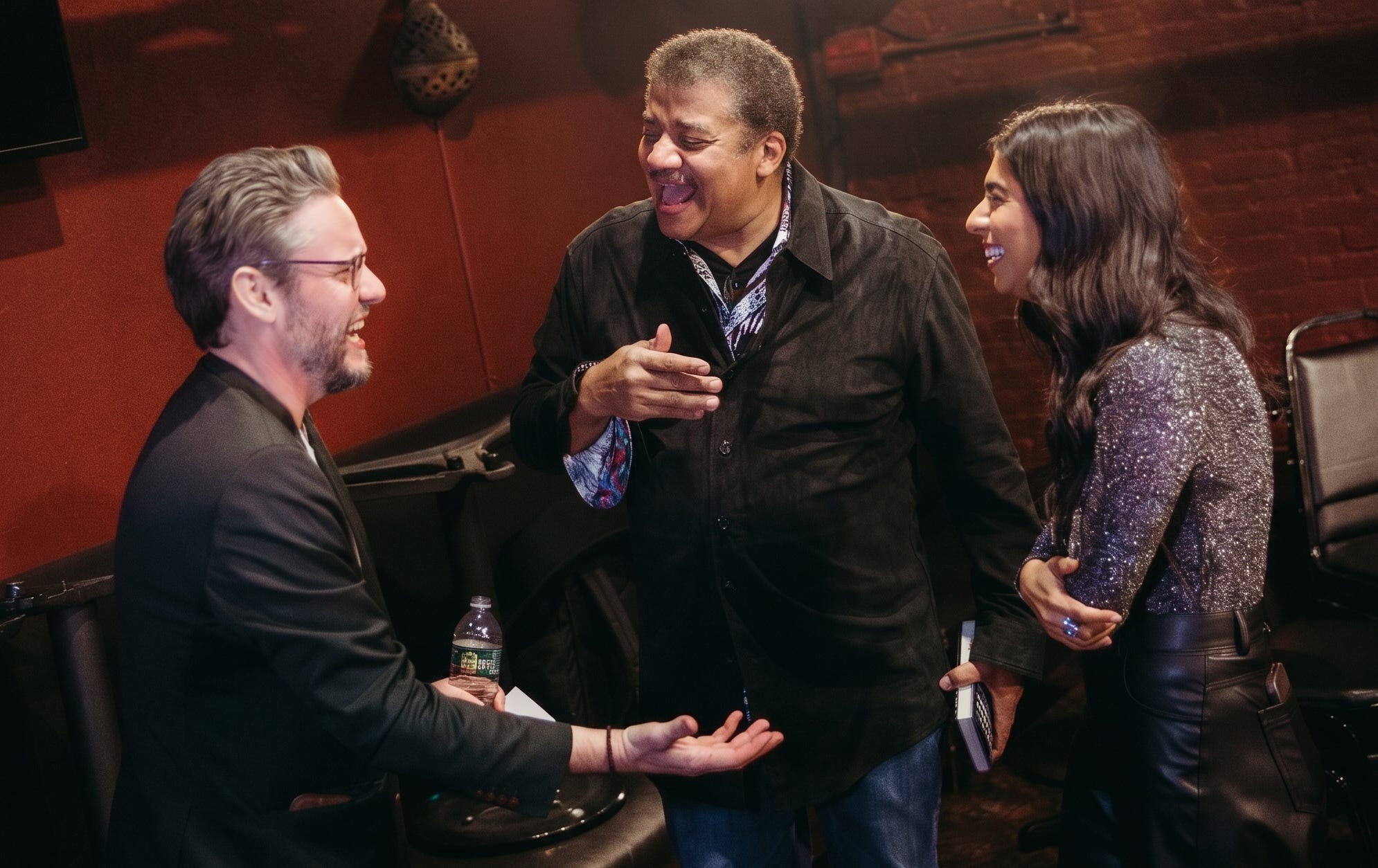
Part I:
The Gravitational Pull of a Star
If you’ve ever wondered what Neil deGrasse Tyson is like in person, I can confirm that the man does not merely enter a room; he establishes a gravitational orbit.
He is exactly as you see him on television: booming, impossibly enthusiastic, relentlessly curious, and utterly immune to mundane small talk. While most people backstage are complaining about the MTA or the weather, Neil is dissecting the air pressure of vintage subwoofers.
Before we even sat down, we were talking about the old-school speakers bolted to the corner wall. Neil climbed on the stool to take a closer look at the rear of the Bose speakers and was explaining the sheer, concussive force of low-frequency audio. “It could blow out a match,” he told me, describing the air pressure coming out of the cones.
That is the baseline frequency of hanging out with Neil. Everything is a lesson in physics, delivered with the cadence of a guy telling a great story at a bar.
But the real magic started when Nayeema handed him a copy of his new book…
Part II:
The Texture of the Galle[x]y
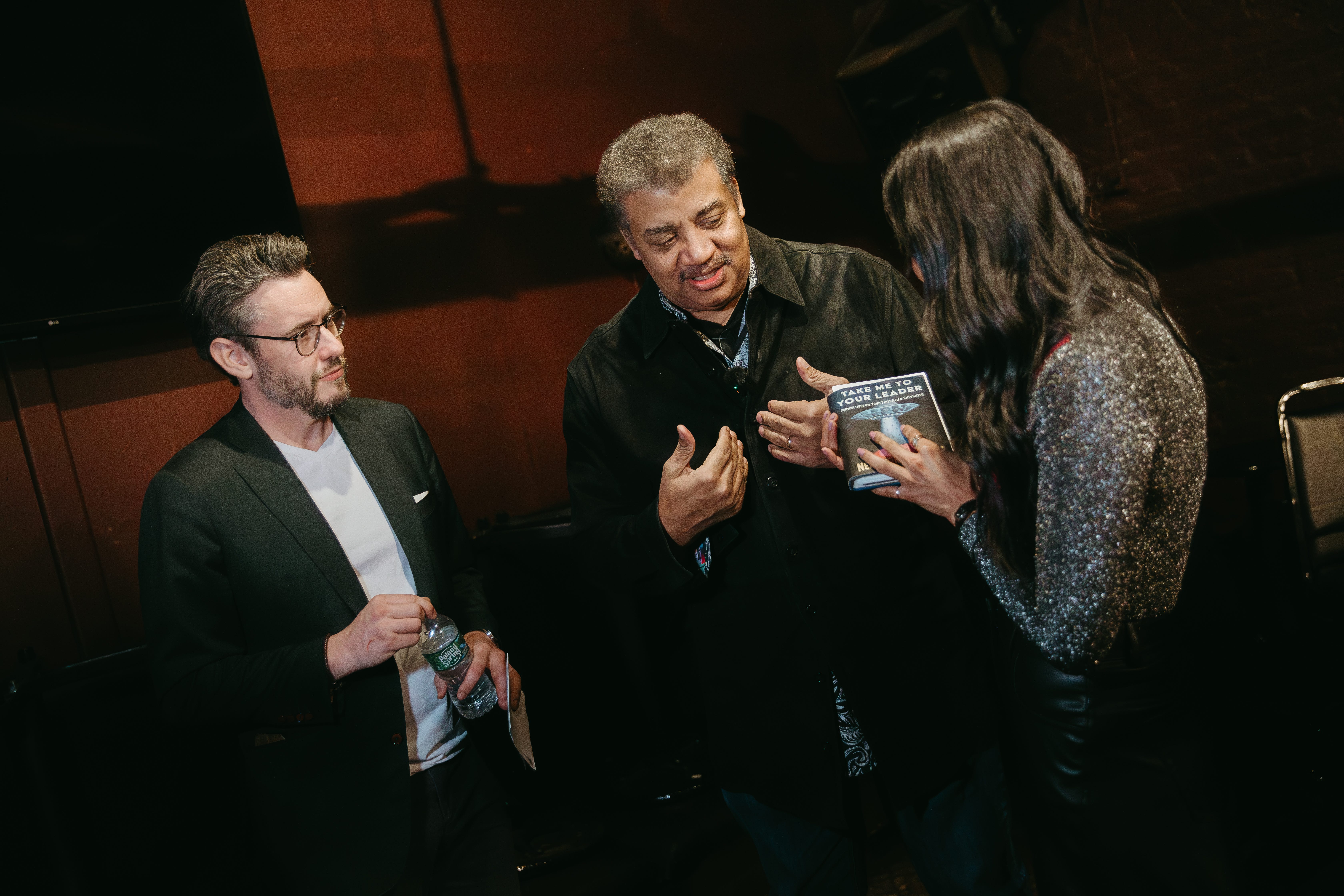
In the publishing world, the moment an author holds the physical copy of their book for the first time is practically a sacred ritual. Neil’s book had just come off the presses on Friday, and this was his first time seeing the Advance Review Copy. He’d only ever seen a rough galley to read the audiobook from.
He ran his hands over the cover. “The texture’s great,” he said, entirely ignoring the text. “It’s a match for me.”
Nayeema immediately started grilling him on the premise. The book is essentially an etiquette guide for close encounters; a manual from an astrophysicist who wants to meet the aliens as badly as we do.
“Do you really want to meet them as badly as you say you do?” Nayeema asked, pointing out that government accounts always seemed to be denying their existence. (Editors note: This was written before this happened.)
Neil, waving off the conspiracy theories, explained his stance with the kind of bulletproof logic that only a scientist can casually drop in a green room. He doesn’t need blurry photos or secret files. He just needs biological evidence. “If anyone has ever in the history of alien sightings brought forth an alien, no one would ever have to ask, ‘Do you believe in aliens?’” he said.
I agreed. He turned to me and asked, “Do you believe in elephants?”
“Oh, I’ve seen elephants in person,” I replied.
“Then we don’t have to ask, ‘Do you believe in elephants?’” Neil concluded. He noted that he is perfectly happy to accept the internet’s favourite theory that all the aliens are stockpiled or hidden by the government. “I’m just waiting for them to bring one out. That’s all.”
Part III:
Ta[l]king Up Space
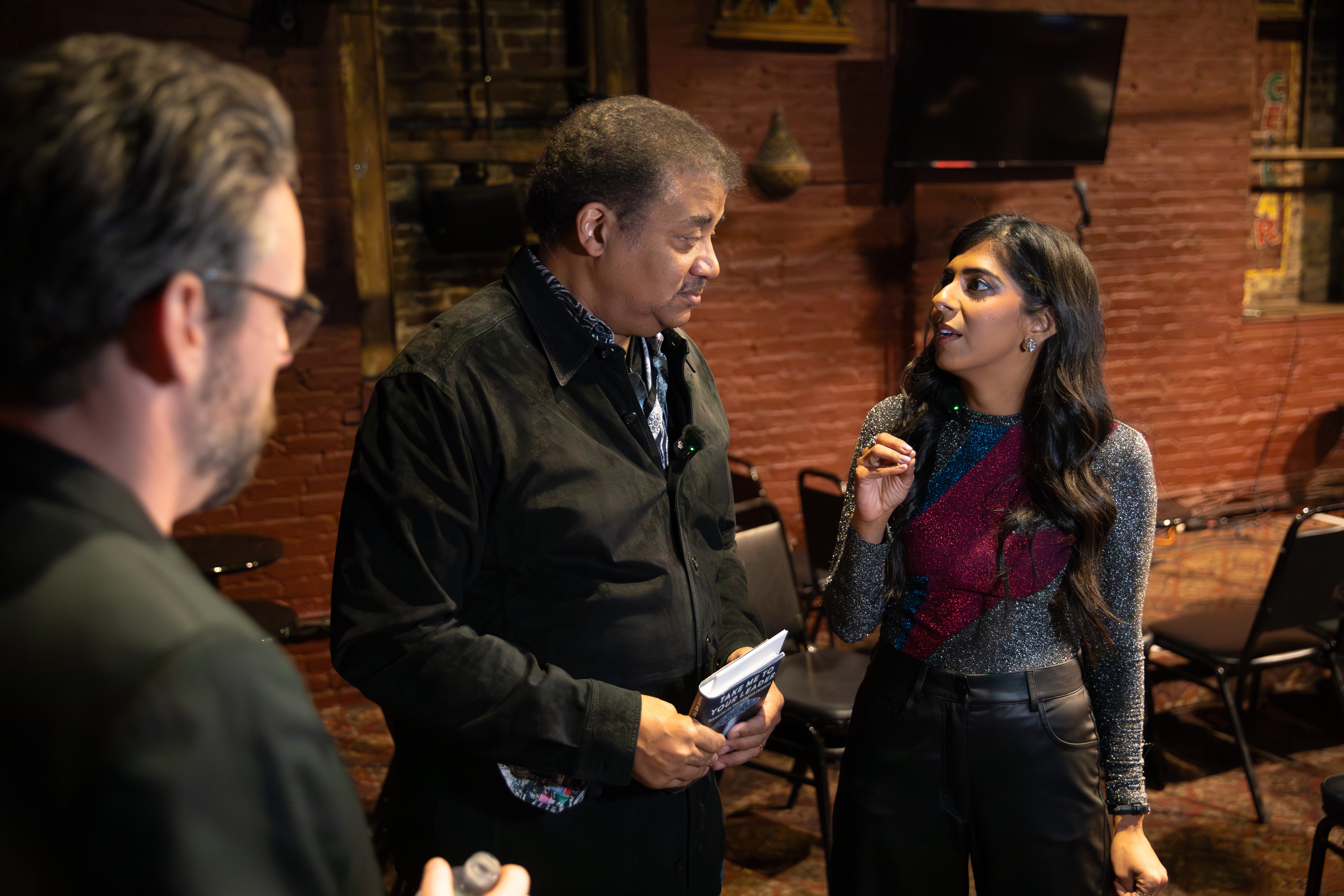
If an alien does land, the immediate question is: to whom do you take them? Nayeema joked about taking the alien to a celebrity, but Neil pointed out that if you’re the first human an alien meets, you’re officially on the hook to establish a baseline of universal intelligence…
You can’t just speak English loudly and slowly. They’re not French. You have to speak “Space.”
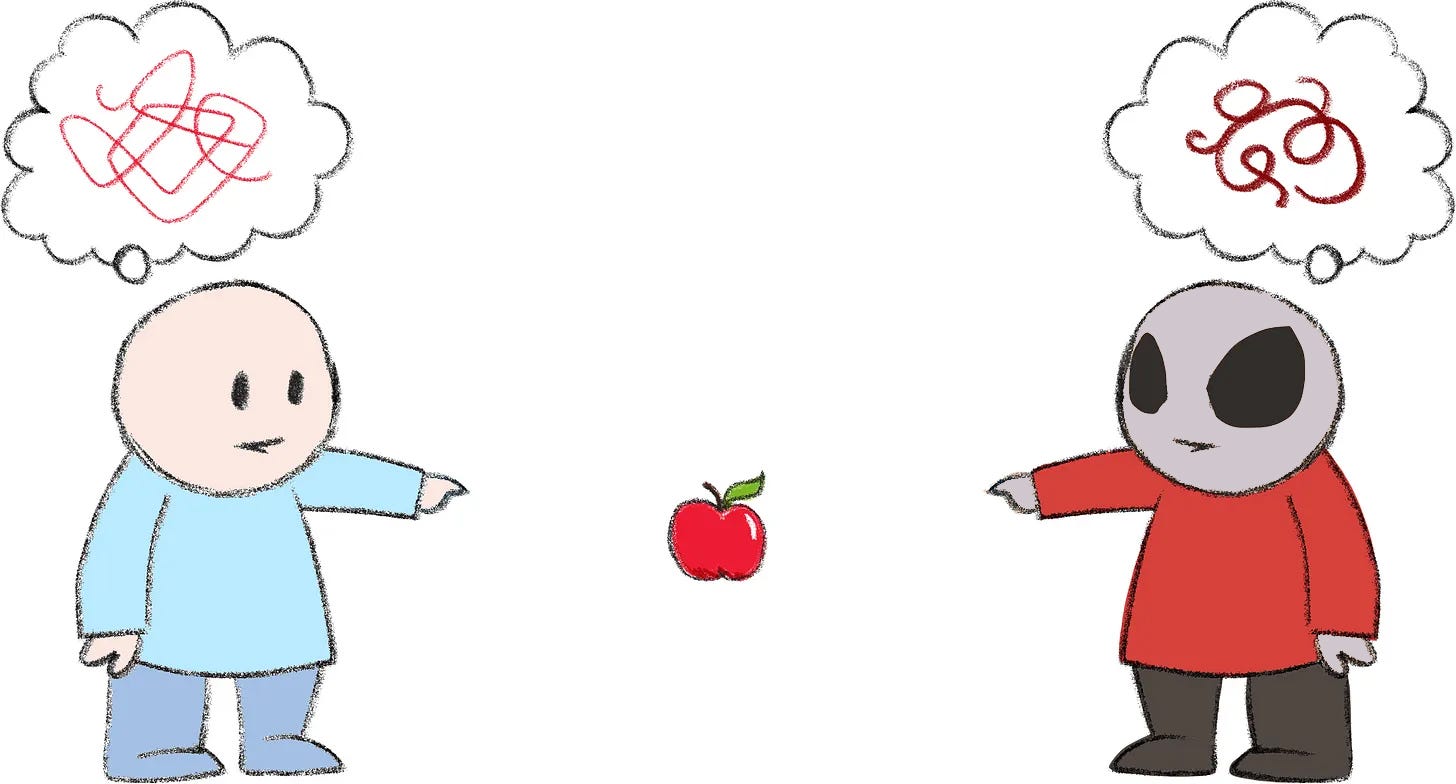
And how do you speak Space? You use the periodic table. Apparently.
“They will have the same periodic table as we do,” Neil explained. “Because these are the same elements across the universe. And if they have any understanding of them, it’ll be organised in the way we have organised it. That’s the only sensible way we can do that.”
Even if the aliens call the elements by different names, the underlying sorting code is universal. “It’s how many protons do you have?” Neil said. The universe has an ordering: hydrogen, oxygen, carbon, nitrogen.
If you want to talk to an alien, you don’t say, ‘Repeat after me…’ “You’re going to say, ‘Show me something that you might care about in the universe that is universal,’” Neil said.
And the ultimate universal language? Mathematics.
“If you are of this universe, you will be fluent in math,” Neil declared. “Because math is the language of the universe.”
Nayeema, realising the gravity of this, confessed that she might be utterly useless to an alien because she isn’t great at math. Neil, without skipping a beat, laughed. “Well, no, then you’re not as useful for the alien.”
Part IV:
The Vocabulary Constabulary
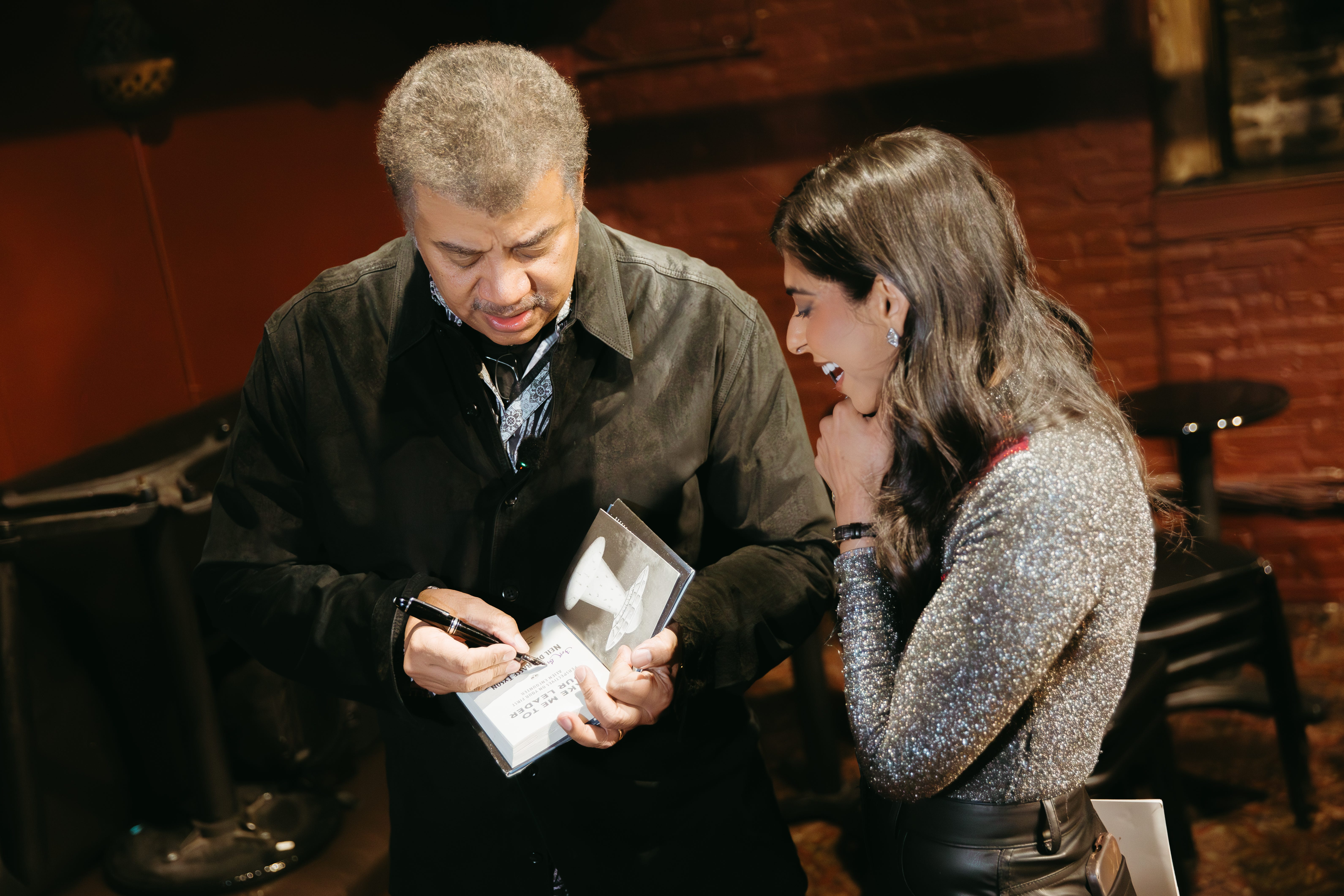
At this point, Nayeema asked Neil to sign her copy of the book. It was dog-eared, highlighted, and absolutely littered with handwritten notes.
As a chronic reader who always holds a pencil while I skim, I looked at her heavily annotated book and offered a compliment. “A good book should have marginalia,” I said.
The room stopped. Neil locked onto me like a heat-seeking missile.
“Marginalia?” Neil repeated, his voice rising in incredulity. “Why did… that word? What kind of—what’d you get on your... Is it Australian? Marginalia?”
I tried to defend myself. “Yeah, I’m going to be useless talking to the aliens, saying shit like that.”
But Neil wasn’t letting it go. “Tell me the last time you heard that word used... In the wild,” he challenged.
Maybe unless they’re “Sesquipedaliens?” I offered…
I had to admit defeat. Outside of a literature seminar or a pretentious attempt to sound smart, nobody uses the word “marginalia” in casual conversation.
“Only a pretentious nerd trying to sneak it into a sentence says marginalia,” Neil insisted triumphantly. I nodded. “Uh, yeah. That’s 100% me, dude.”
Nayeema, loving the fact that I was getting roasted by an astrophysicist, said, “Oh, yeah. He loves using big words.” I said, “I’m someone who uses a big word when a diminutive one will suffice.1” I smirked, thinking I was terribly clever.
Neil laughed, admitting that while he reads the word, he rarely speaks it. “I didn’t know how to pronounce it,” he confessed. It sounds like a paleontological term. “Yeah, there was a platypus in it,” he joked.
Which, of course, led to a complete dismantling of my home country…
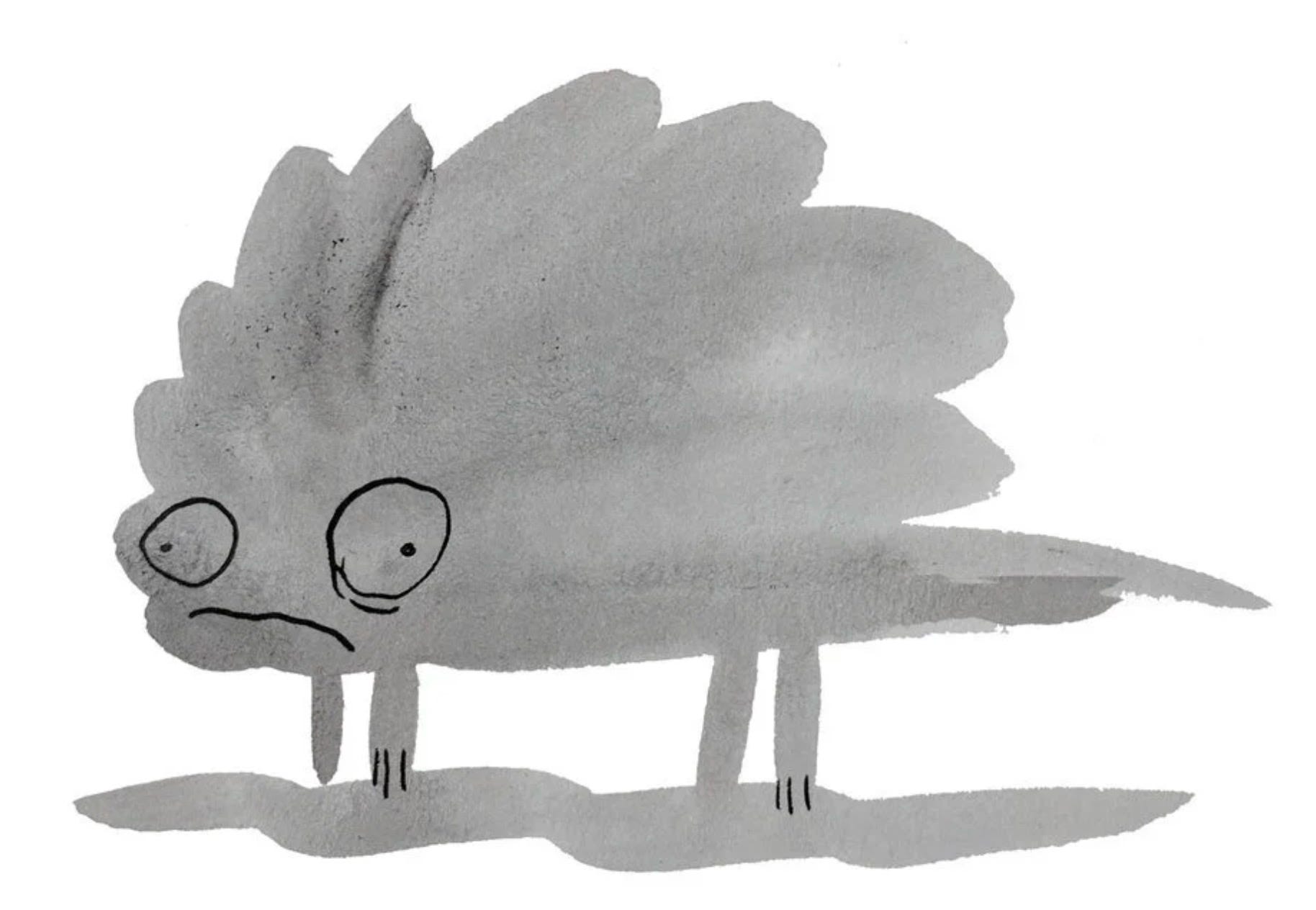
“It’s a joke we all played on the world,” I said about the platypus. “It doesn’t really exist. We made those up to fuck with everyone.”
He argued that the platypus is just the leftover evolutionary meatloaf of animals. I agreed entirely. “All the fauna are in Australia. It’s whatever was left in God’s animal parts bucket.”
We commiserated over the fact that both America and Australia started as colonies for the British, but America somehow managed to scrub the stain from their history with much better PR.
Part V:
The Declaration of Inde(pen)Dence
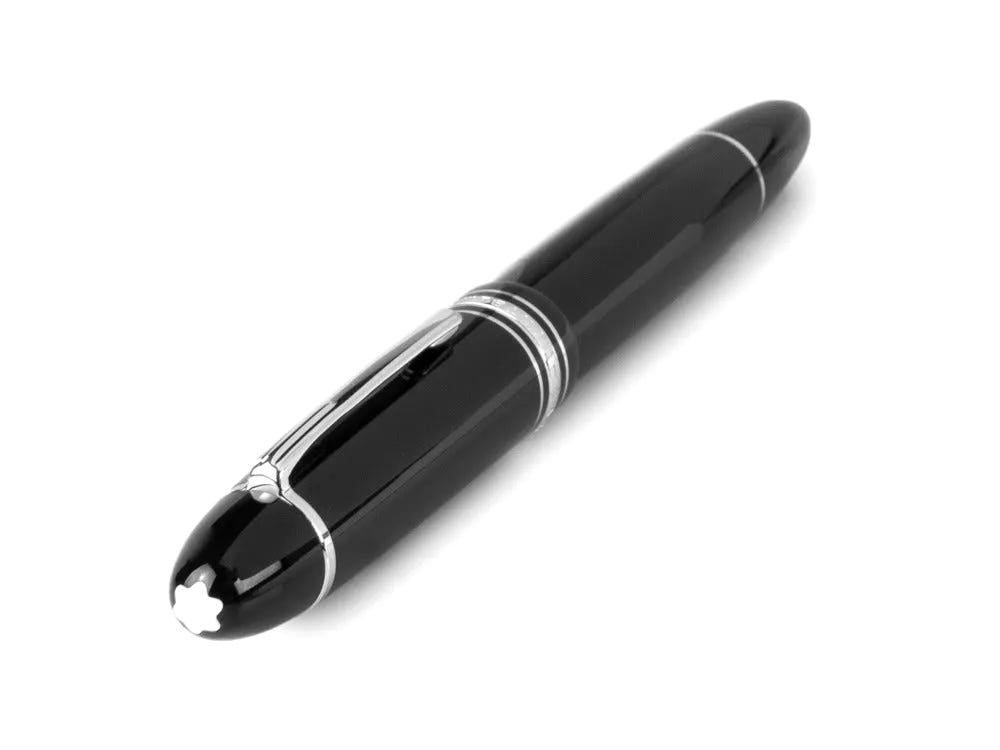
So. As Nayeema again asked Neil to sign her heavily annotated (sorry, marginalia-filled) book, he pulled out a pen. Not just a standard Bic. He pulled out a masterpiece. I said, “Is that the Montblanc Meisterstück?”
Neil immediately clocked it. “Oh, so you’re a stylophile, too?” he said. I rolled my eyes “Stylophile? What kind of pretentious douchebag uses that word?”
He chuckled. I then admitted that, yes, as a certified sesquipedalian stylophile and cartoonist, I often even write with a bronze-nibbed dip pen and ink. However, the Meisterstück is the Rolls-Royce of fountain pens. (See here for Wes Anderson explaining it the way only Wes Anderson can.)
This simple admission triggered one of the most brilliant, fascinating historical hypotheses I have ever heard… followed immediately by its spectacular collapse.
Neil asked me if I knew the Gettysburg Address. As an immigrant who had to pass the U.S. citizenship test, I arguably know it better than most Americans. He said, “Run a few lines for me.” So I started reciting it: “Four score and seven years ago our fathers brought forth on this continent, a new nation, conceived in Liberty, and dedicated to the proposition that—” “Okay, that’s enough.” Neil stopped me.
He told me to look at the phrasing of the speech:
Four score and seven years ago.
Our fathers brought forth on this continent.
A new nation conceived in Liberty…
“There are six, seven, eight-word phrases,” he explained. “That is as much ink as fits in a single dip of a pen.”
It was a staggering thought. Neil’s hypothesis was that Abraham Lincoln composed the speech rhythmically, dipping his pen, writing a phrase, pondering, and dipping it again. “Your listening ability matches the number of words a single dip of a pen will put on a page,” Neil said. “So that the rhythm of that speech is exactly the pen rhythm and a listening rhythm as well.”
It made perfect sense. It was a pentameter driven by the physical limitations of nineteenth-century ink. I asked him if it was true.
“Well.” He cleared his throat. “It’s a good hypothesis,” Neil hedged.

He then told the story of how he tested it.
During the Obama administration, Neil visited the White House and found himself in the famous Lincoln Bedroom, which holds the original copy of the Gettysburg Address. He walked up to the document, ready to confirm his brilliant theory about the ink dips and prove how clever he was to ‘Barry,’ who was standing beside him.
He looked closely at the paper, squinting incredulously.
“…Well, shit,” he spat.
“What is it?” Obama asked.
He put his face in his hands.
“It’s written in f*#ing pencil.”
I burst out laughing. “Your whole hypothesis... right into the toilet. In front of the President of the United States.”