


Hi again, friend.
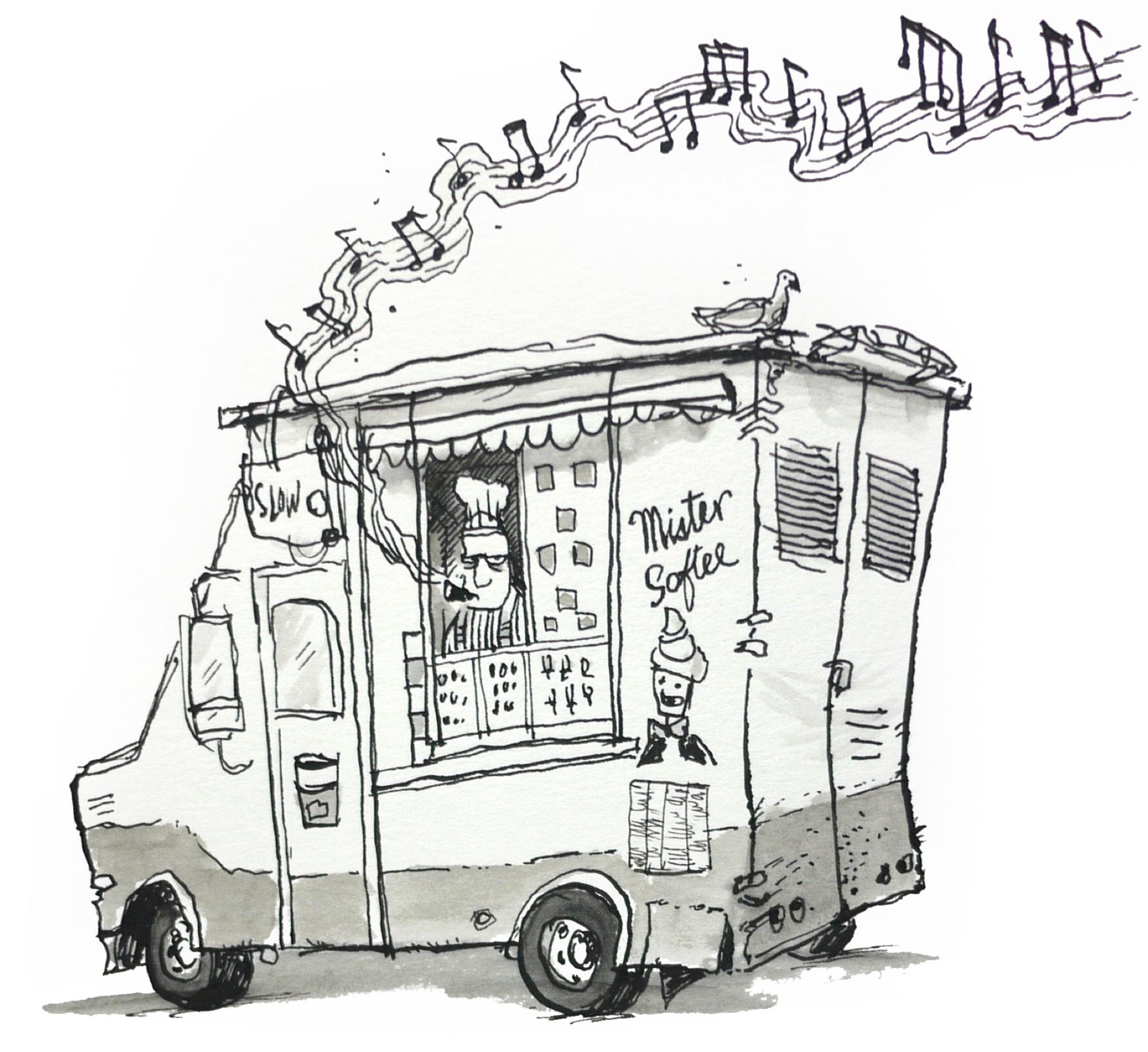
Hope you’re having a good afternoon in this sweltering crockpot of doom and you’ve managed to snag a Mister Softee. (Or better, a shaved ice from that guy who sits on the corner of Avenue C and e3rd.)
A bit of a local NYC conversation piece today. I want you to sound off in the comments if you have thoughts —agree or disagree— because this one is something I feel every day of my life here in New York, and it’s getting exponentially harder to ignore. This one’s been boiling away in me for a while now, and I guess I just wanted to hit publish to see what the conversation looks like.
Before I start, I want to remind you that this is an entirely reader-supported publication, and if you like what I do here, the best way to show your support is to take out a paid subscription for just $1 a week. It might not sound like much, but it makes a big difference.

The Infinite Culture Cycle
The data below is now 2 years old, but the influx percentage has only increased…
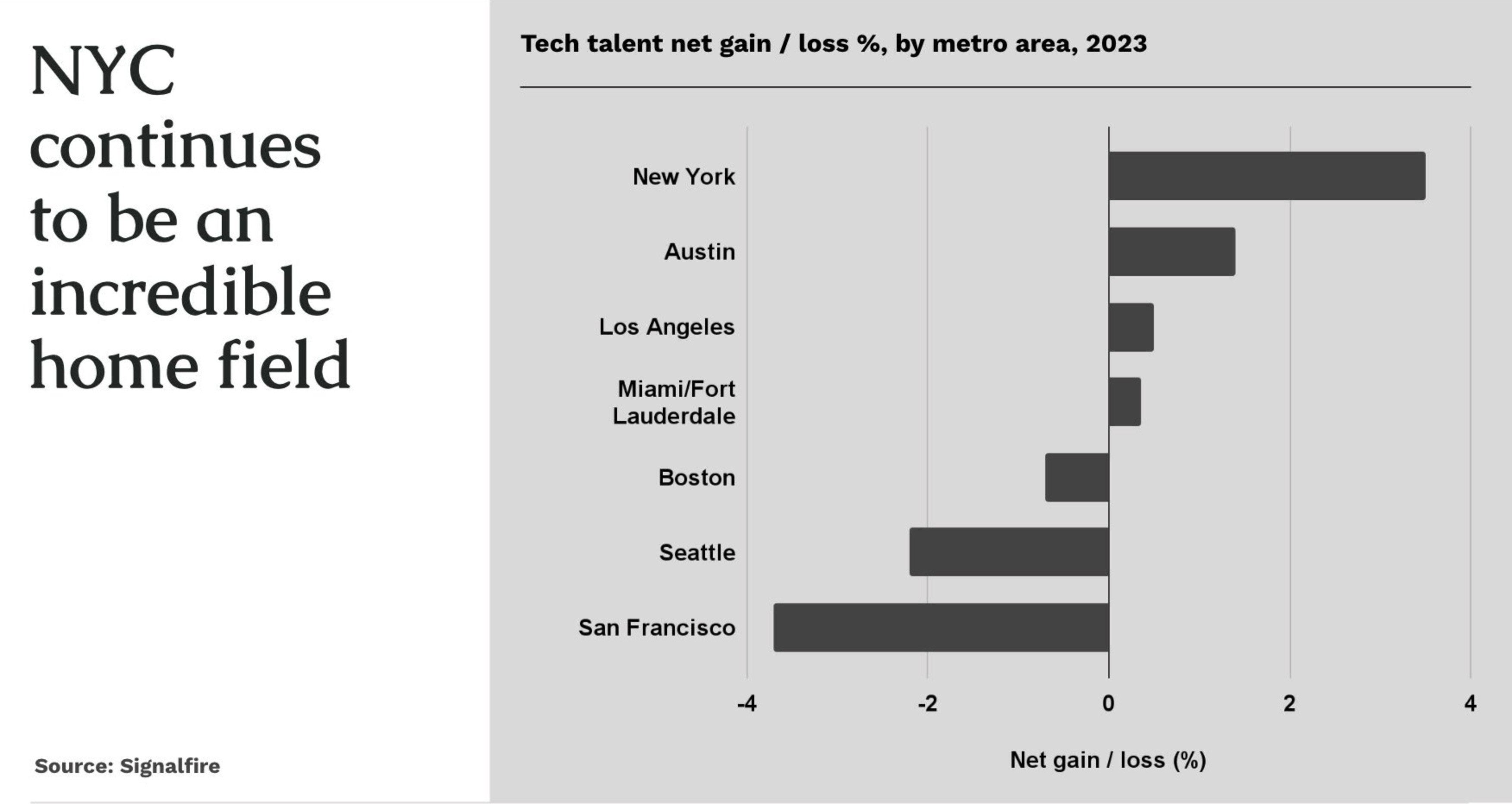
The ‘New York’ data point at the top aligns with my observations and experiences living in Manhattan over the past 11 years. The San Francisco net loss is more surprising to me, as the Bay feels “back” after a post-COVID slump. But that’s a different conversation.
I want to make 3 things super clear before I go any further:
I realise this trend has been happening for more than the 11 years I’ve been here, and I’m abundantly aware these cycles are so common they’re just considered boring by many who have lived here forever. (“The rent’s too damn high!” they cried in 1625.) But knowing this pattern of behaviour doesn’t make it any less of a bummer to live here in 2025. I’m also not calling people in tech/finance/law “uninteresting people” — I’m saying we’re all a different ‘type’ of person. (And that’s a good thing. In fact, these differences are the best thing about this city.)
I should be clear that I’m deeply aware that what I’m about to discuss can be critically referred to in Queens, The Bronx, and other boroughs as ‘Caucasian Manhattan Culture’. But I live in Manhattan. This is the borough I’m referring to when I talk about this— This is my home. I’m an artist trying to survive in the city, and this trend is a real issue for many in my cohort who live in Manhattan. (Brooklyn isn’t much better, but I’m going to bookmark that for now. Also, yes, this is gentrification-adjacent, but it’s not entirely accurate to call it pure gentrification.)
I’m aware of the irony, whingeing about tech saturation on a literal tech platform, and one that has an office and employees in New York. But Substack’s employee-base is largely remote— it isn’t one of the giant Google/Meta-esque bohemoths taking over giant swathes of property in Manhattan to house their army of employees, and it isn’t employing literally thousands of people my age and younger who remain the only ones who can actually afford the ridiculous costs of dining, rent and day-to-day expenses in Manhattan. I get that it’s tough out there for grads, and many of the jobs available for those who want to live in NYC are limited to tech, finance or law. But the fact remains that it does have a dampening effect on the culture of the city.

This effect was succinctly explained in this video posted by @newyorkers yesterday, where local artist, Jeff Magid described the cycle, after his friend in hospitality explained the life-cycle of a New York club:
⸻
The three stages to a New York night club:
“First: The artists come. Second: the Wall Street guys start coming. And then Third: Shut it down.” I said, “That’s the first time I ever heard that. What’s that mean?”He said, “Think about it— The first stage, you don’t really make any money. But this is where the culture builds, it’s word of mouth. People that are cool and interesting and creative, they build the community. They’re telling each other about it. And it’s where they wanna be.”
“Then, the people who pay for culture hear about it because they were willing to pay to be in the place where the cool and interesting people are. And that’s where you make your money as a nightclub owner. You can raise the prices, you can start charging for bottle service. Because this is the place that has built the culture that’s known to be exciting, and people are willing to pay for it.
But you’ve gotta be careful.
Because if you raise the prices so much that all of a sudden, the people that made it cool and interesting in the first place can’t afford to be there. Then one day, you might wake up and who comes are just Wall Street guys. And people will say, ‘I don’t see the interesting people I came to be with. I just see a bunch of other Wall Street guys.’ And then they stop coming. And then you gotta shut it down.
That’s the path.”
He continues:
To me, this is an interesting metaphor for a lot of different things. It makes me think of a dinner party I hosted where three of the people I invited were people who were successful in the tech industry. And one by one, before the party, they called me, each one. And they were like, ‘Hey, this might be weird, but I’m not going to be sitting with all tech guys. Am I?’’
And I realised maybe we got it wrong that the rich, successful people just want to be with other people just like them. Maybe it’s the exact opposite? What keeps things interesting in our culture, in our communities -from dinner parties to whole cities- is a diversity of backgrounds of people that built the culture that’s known to be exciting with people willing to pay for it.

⸻ The painter, Ann Harris made a good point about this cycle:
Artists move into empty raw spaces because it's all we can afford. We then make those spaces usable for us. Others think this is "cool," because our culture thinks artists and art studios are cool, despite not supporting artists in general (half the country, including the current president, views us as parasites). Then the owners of the buildings kick the artists out because they can rent/sell those spaces for a lot more money. Then the artists move elsewhere, and it starts over again.
No, a lot of artists do not view "success as an artist" as "ascending to the highest echelon of people." Success for us means we can keep making art while paying our bills like responsible adults, while getting respect from people we respect, while maintaining the integrity of our work.
If cities want to break the cycle they should have rent control, plus policies/incentives that allow artists (and others with lower incomes) to continue living in thriving neighborhoods.
The promise of New York, with its bustling culture, creative people bumping up against each other and creating epic, iconic ideas and art, is being drowned alive by the flood of tech, finance and legal workers who are the only ones left to afford to live here. The COVID-exodus of artists notwithstanding, the likelihood of you being seated at a table next to someone who works at a start-up or a big tech firm is far higher than ever.
It feels just as suffocating as the exponential increase in delivery drivers on the street, thanks to the tech-enabled food delivery apps that are used so frequently by these residents.
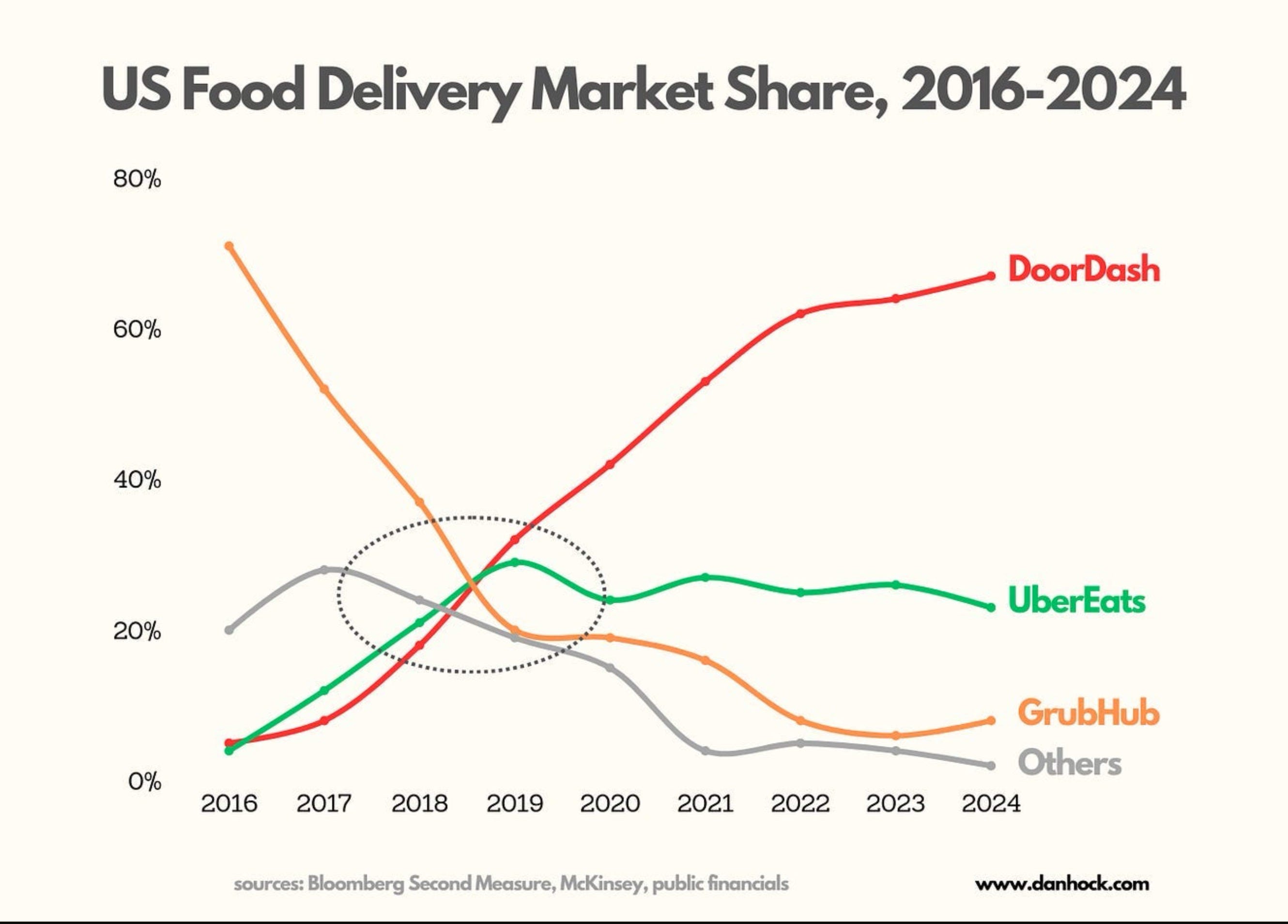
Yes, some of these apps help keep restaurants afloat by increasing their customer base beyond the seats in their physical locations, but they also make crossing the street a harrowing stunt from a Mad Max film. You’re dodging motorised weapons that run lights and clog up bicycle lanes so someone can get their fresh ramen delivered within twelve seconds of ordering. There don’t need to be this many delivery bikes. There just don’t.
My point is, there needs to be a balance, and things are at an extreme right now. The balance is off, and it needs correcting. Will a new mayor fix the problem? Maybe. But let’s be honest, probably not. It’s something that needs to be raised more than just at community meetings and online neighbourhood forums, where the issues get acknowledged and the suggested solutions summarily ignored.
Ann is right; if cities want to break the cycle, they should have rent control and policies/incentives that allow artists (and others with lower incomes) to continue living in thriving neighbourhoods. Not locking them out so that the only people left are the ones making the most money.
Anyway…

I wish I could leave an optimistic comment. But maybe AI will take all the jobs and the only thing being done by humans is music and painting. Then we’ll be the rich ones!
Albuquerque…. City sponsored a meeting downtown years ago, waaay pre-Covid…. Talking up getting artists to move in downtown and “cool it up “… a few have since done that, and the cycle is probably going to do a “Burque version”… but the interesting thing at that meeting was a general consensus… “Nah… we know what you developer types are up to… we’ve seen it all before… not gonna fall for it again…. You will price us out as soon as we cool it up for you”…. There has since been a bit of downtown art slowly building… but I do emphasize slowly… and many many false starts… it was fascinating. Since I’ve lived here all my life, I never felt a need to follow the art… it’s really everywhere here….