


Saturday, Feb 21, 2026
New York, NY
I have a confession to make: I’ve been sitting on this post for months.
Usually, when I see something brilliant in the city, I want to shout about it immediately. But “A Century of The New Yorker” at the New York Public Library felt different. It felt like a secret best shared in person. I didn’t want to spoil the experience for anyone by posting too many photos or giving away the best gags. I wanted you to go see it for yourself.
But today is the last day. After a full year, the exhibition is closing, and if you haven’t had a chance to wander through the hallowed halls of the Stephen A. Schwarzman Building to see it, I want to take you there now.
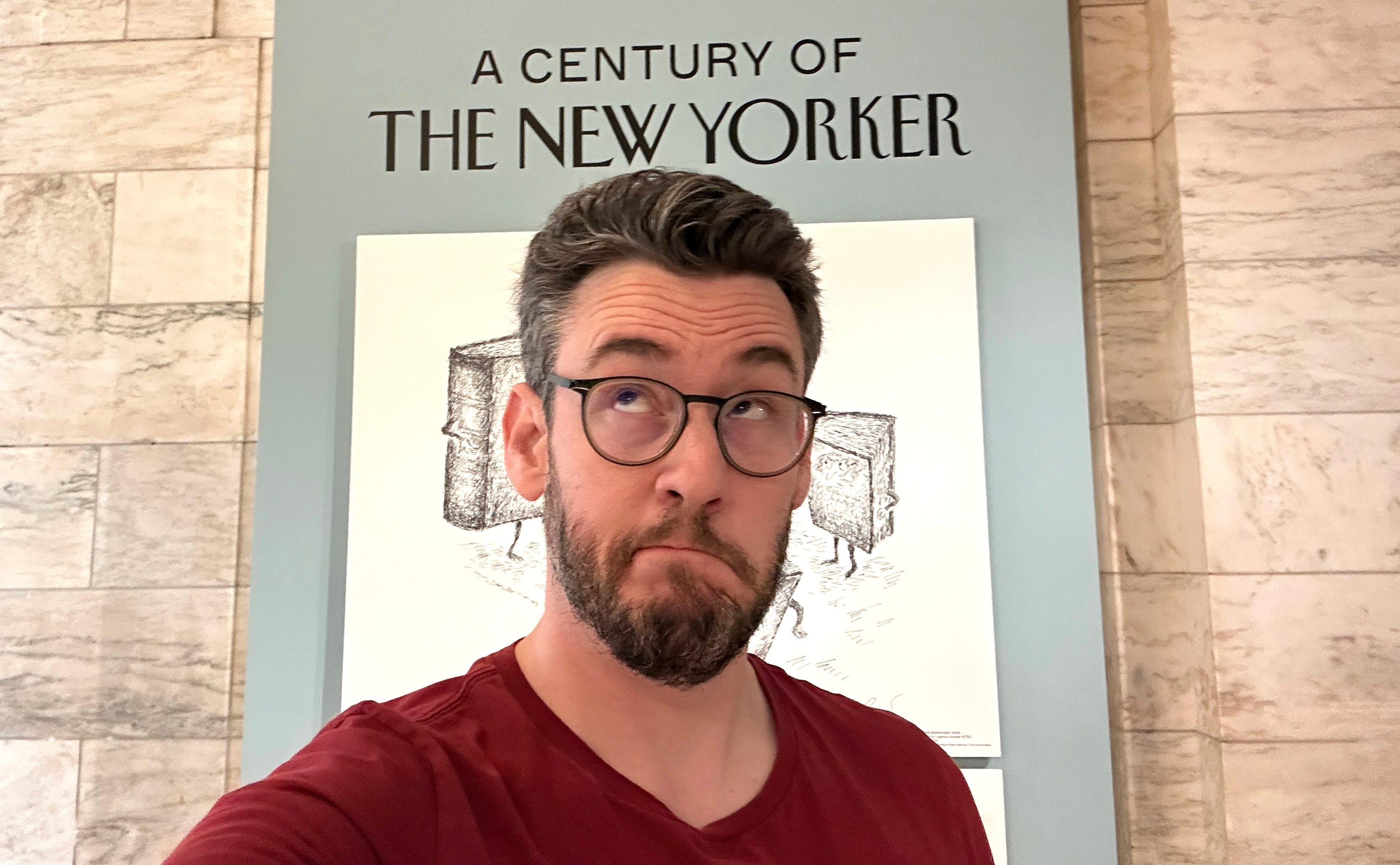
If you’ve followed my somewhat desperate journey into the magazine -the years of submitting to Bob Mankoff and Emma Allen, the rejection slips that could paper a small apartment, and the sheer, bloody-minded persistence it took to get an “O.K.” -you know this isn’t just a gig for me. It’s the Everest of cartooning. I’ve written about the “Mankoff Era” and my last day of submitting in person before, but seeing the history laid out on the walls made the whole absurd struggle feel incredibly real.
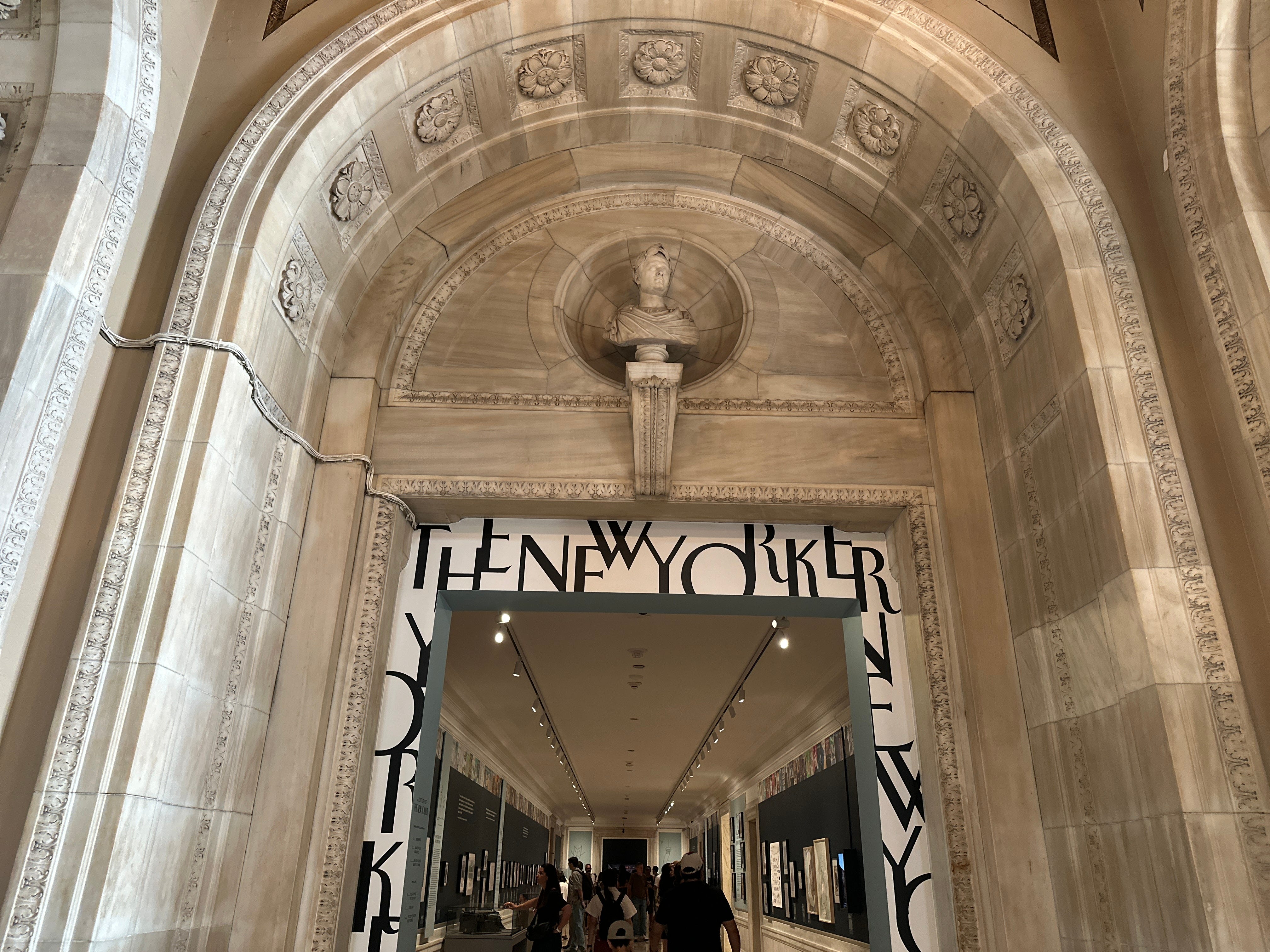
The New York Public Library is, without hyperbole, one of my favourite buildings in the entire city. A cathedral of curiosity. Also, tote bags. For years, I used to make a weekly pilgrimage to the Rose Main Reading Room, sitting under those soaring, cloud-painted ceilings to write my comic strip. There is a specific type of hushed silence in that room- a heavy, studious quiet that smells of old books and intense concentration. But walking into the Gottesman Hall for this exhibition, the soundscape was different. It wasn’t silent.
It was giggling.
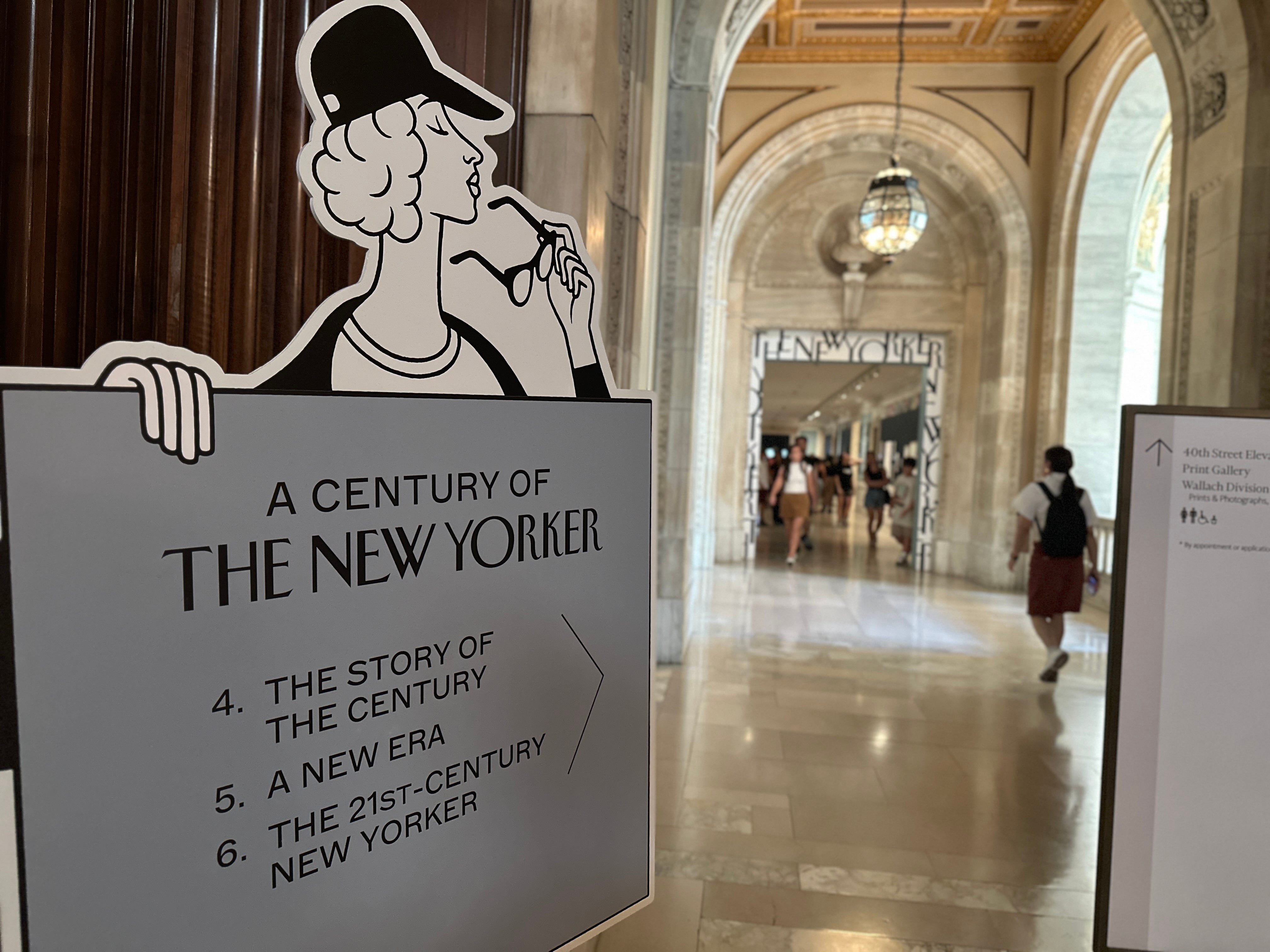
The exhibition is broken up into six parts, but for me, it was a blur of nostalgia and red ink. The Beginnings part was interesting, not the least because I now live about two blocks from the Ross House in Hell’s Kitchen, where Harold Ross and Jane Grant started of the magazine in 1925.
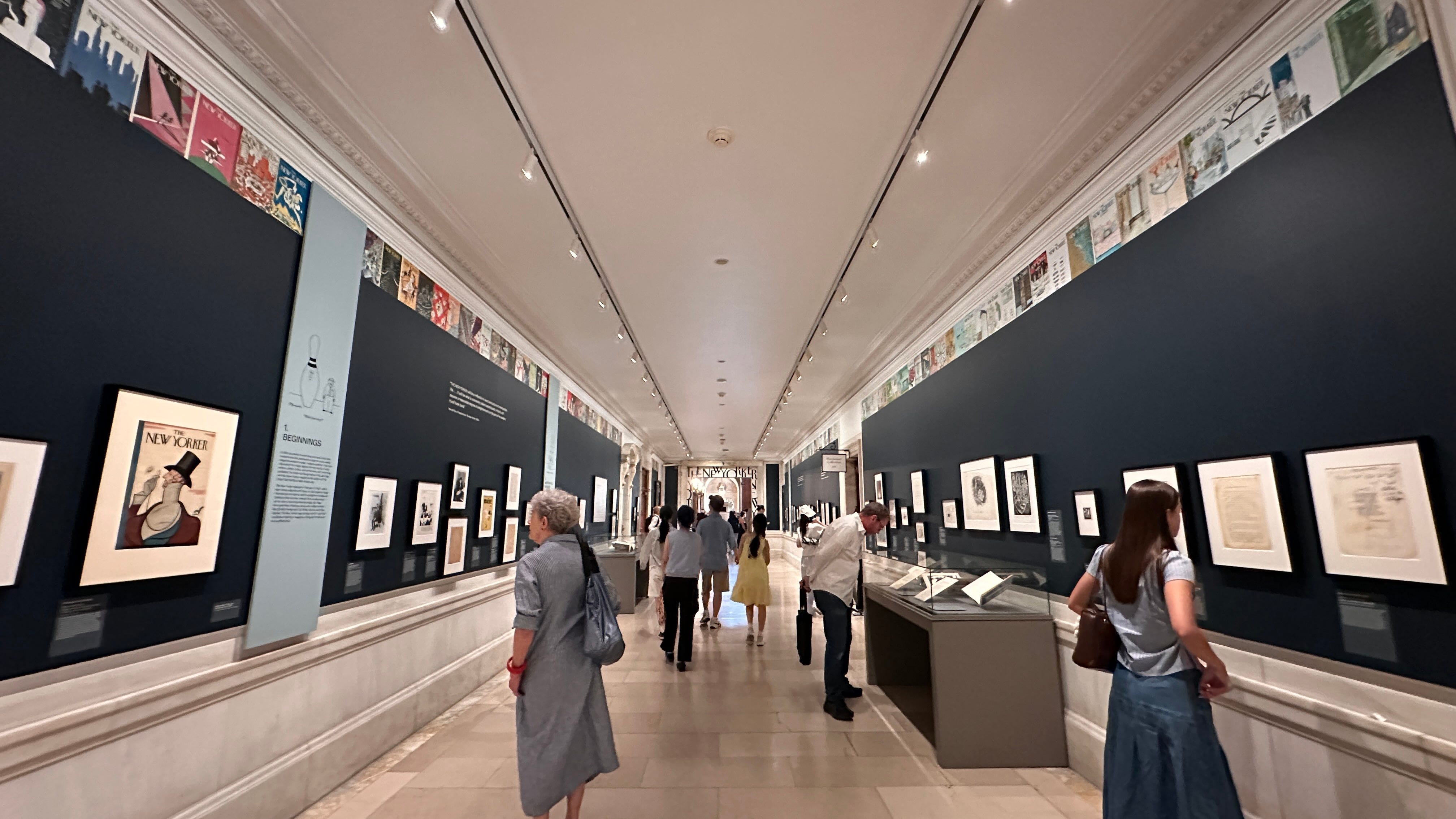
The Anatomy of a Magazine
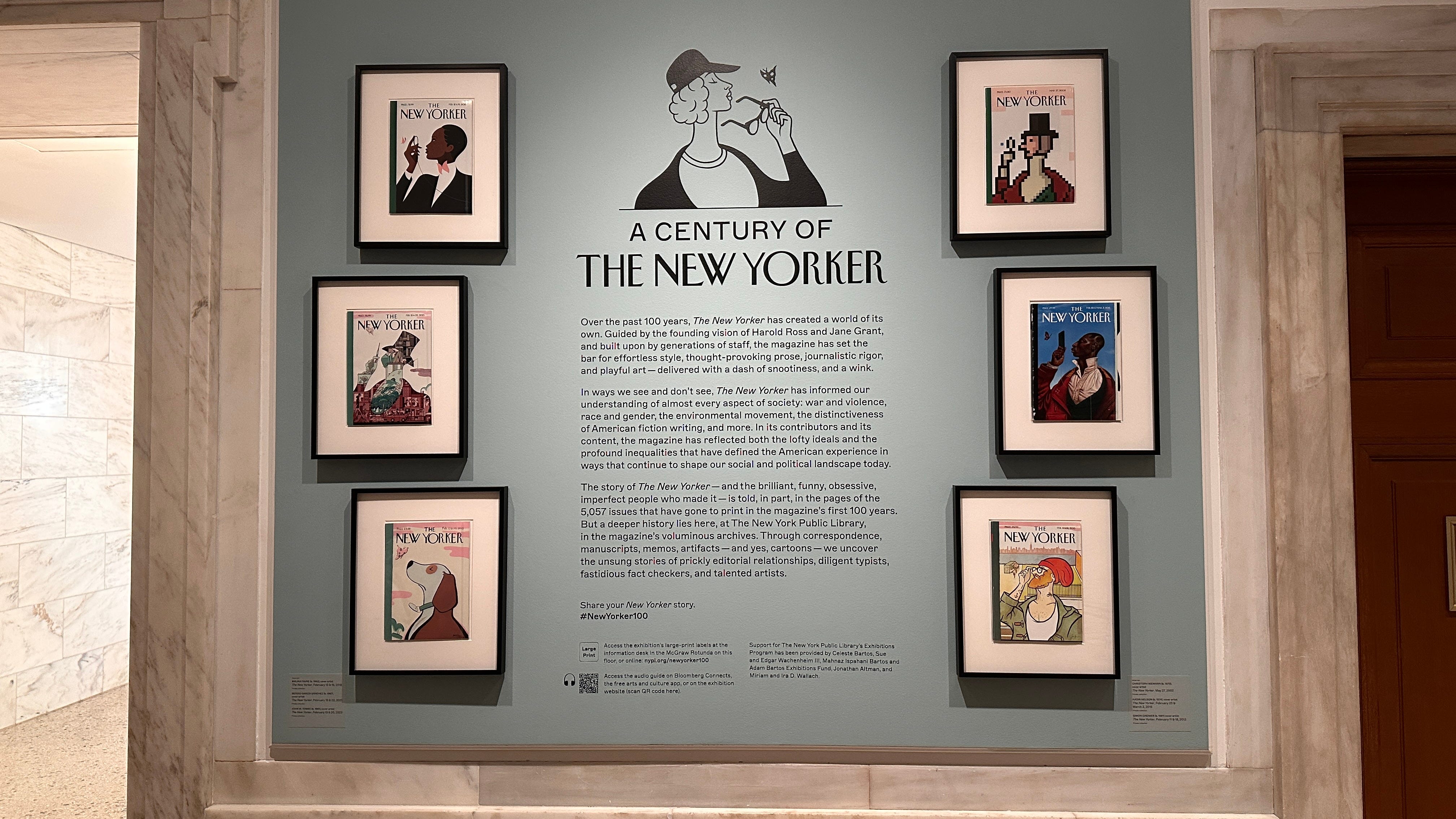
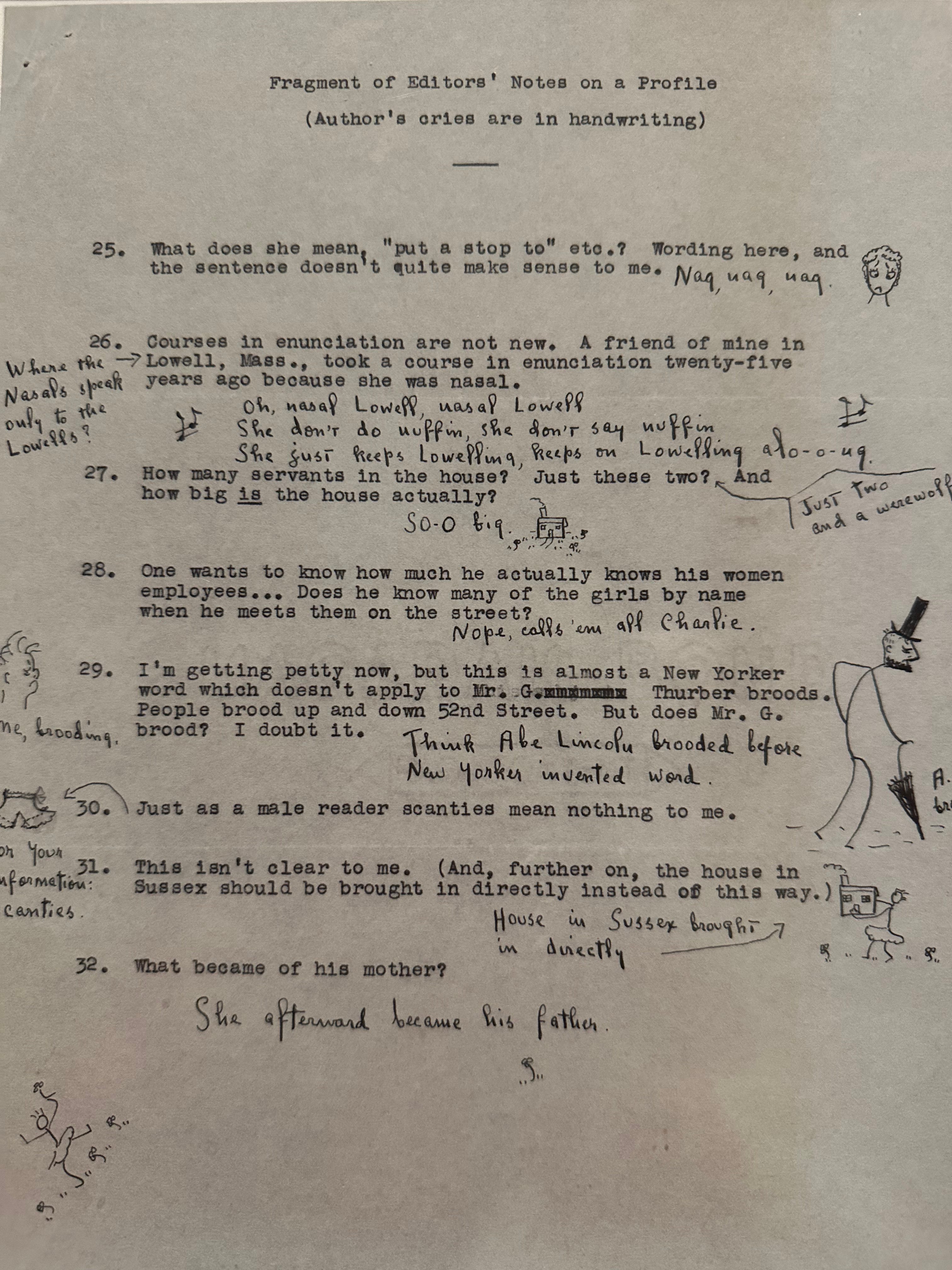
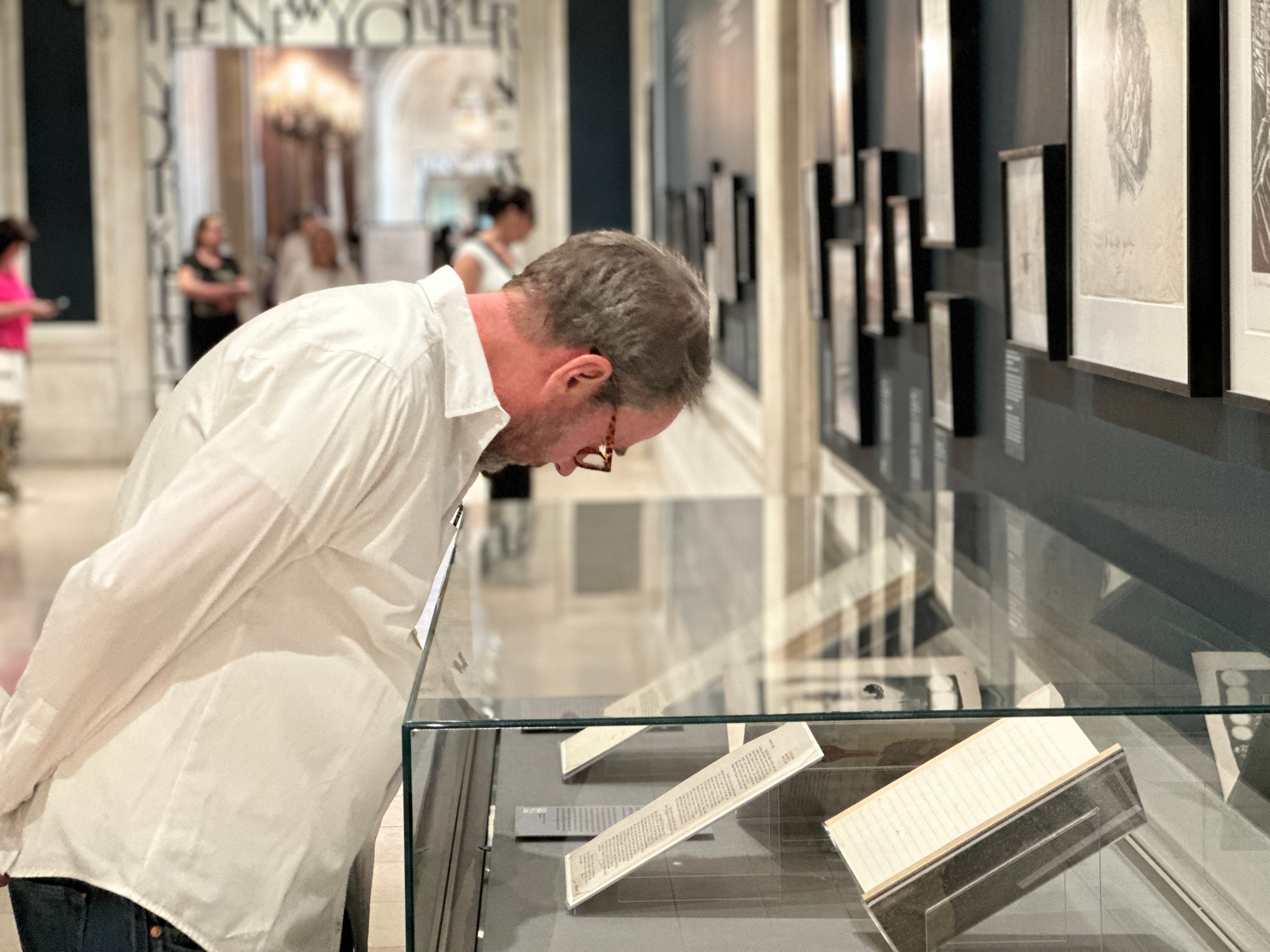
The section that really got me was “Anatomy of a Magazine”. They have the actual manuscripts on display, marked up with red pens and pencils by the editors and fact-checkers. It showed the messiness of creation. It displayed correspondence, manuscripts, memos, and artefacts that uncovered the “unsung stories of prickly editorial relationships, diligent typists, fastidious fact checkers, and talented artists.”
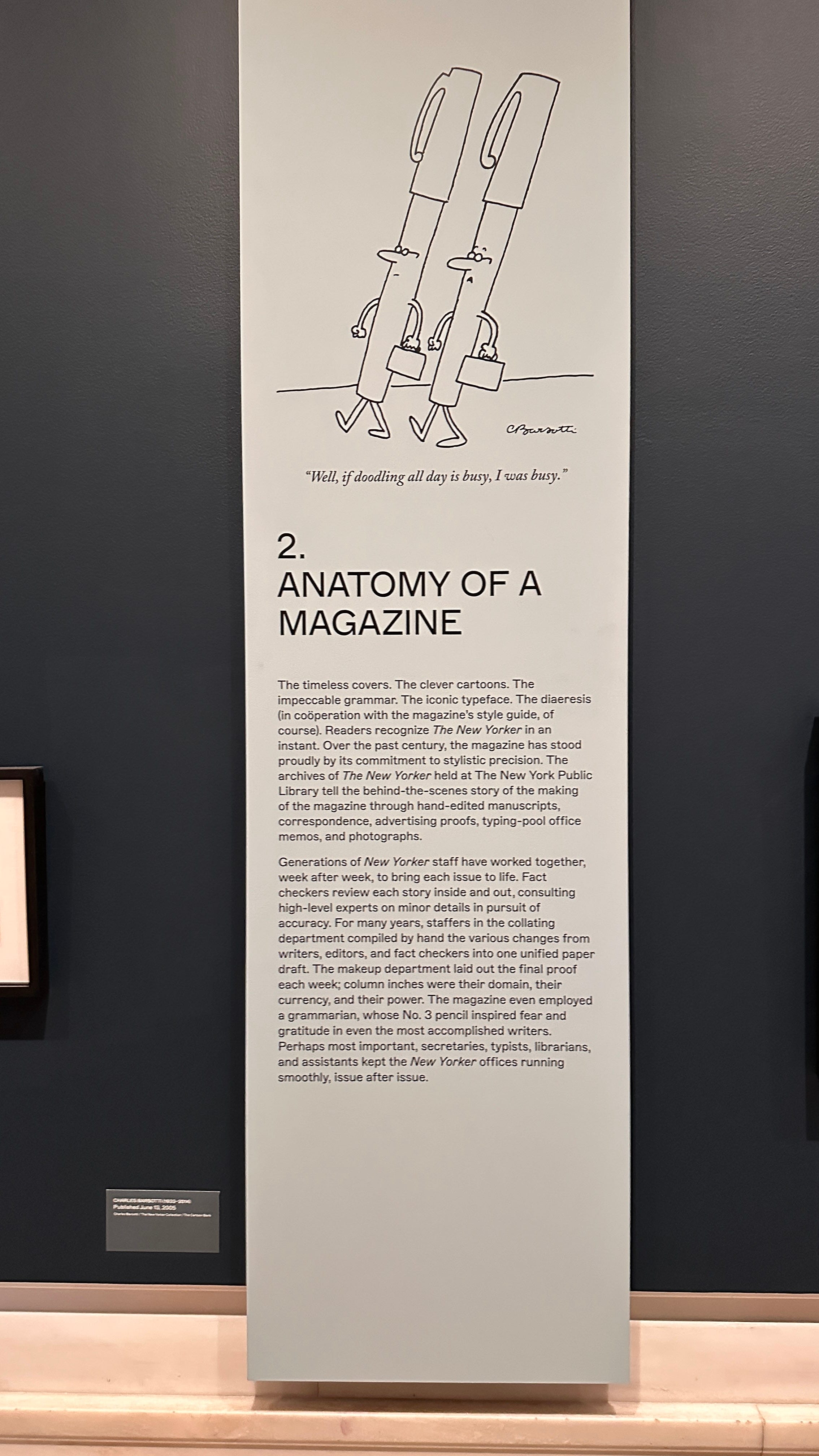
To a normal person, this looks like editing. To a contributor, it looks like a crime scene. You see the obsessive attention to detail—the “impeccable grammar,” the “iconic typeface,” and the terrifying “No. 3 pencil” of the grammarian. It’s a reminder that The New Yorker isn’t just written; it is engineered. It is built by people who care deeply about whether or not you used the diaeresis correctly in “coöperation”.
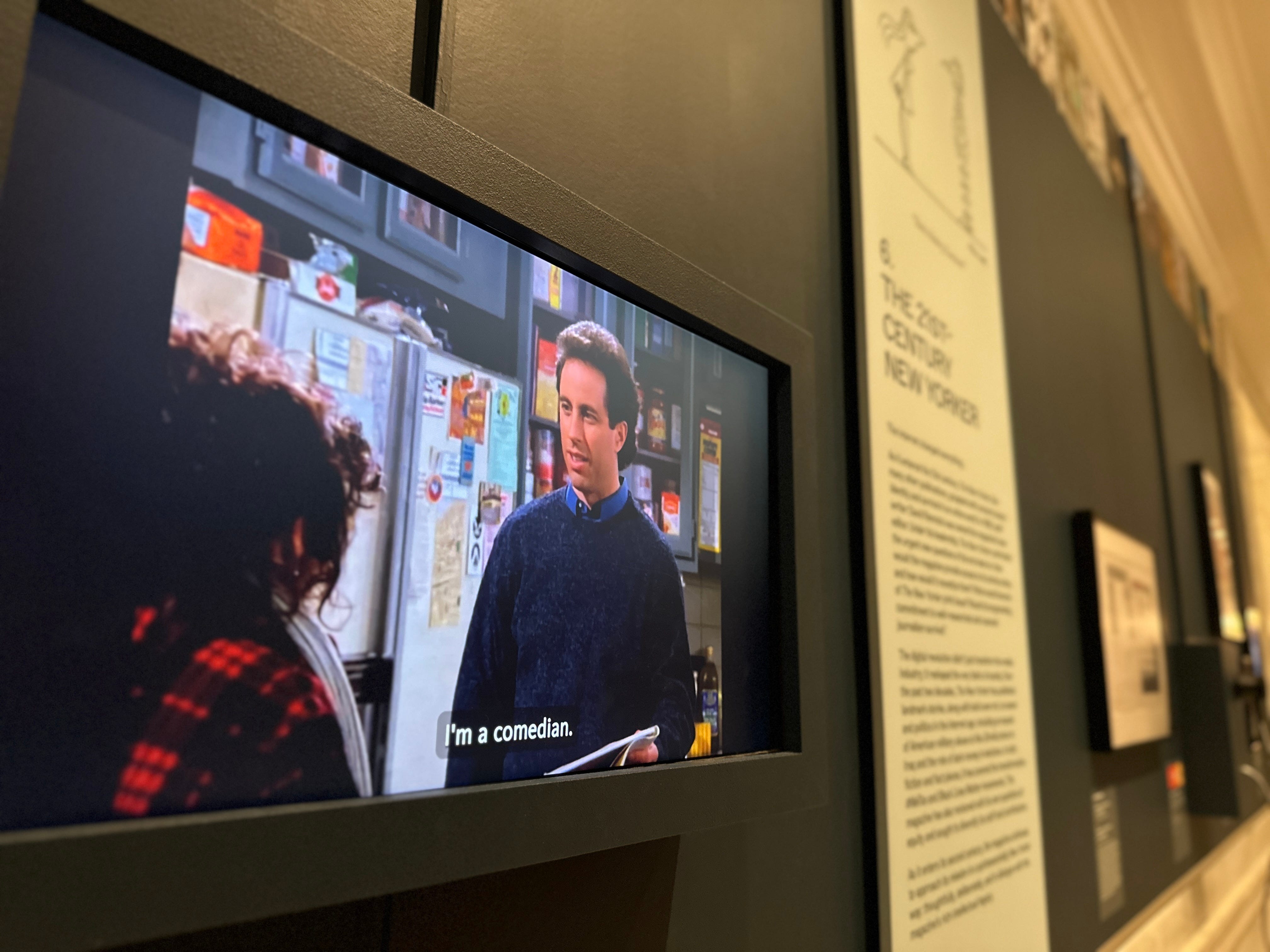
And then, amidst all this high-minded literary history, there’s a tiny TV playing the Seinfeld episode “The Cartoon” on a loop. You know the one. It’s a surreal moment: watching Elaine Benes scream about a cartoon not making sense while standing in a room dedicated to the people who actually make them.
The Hall of Covers
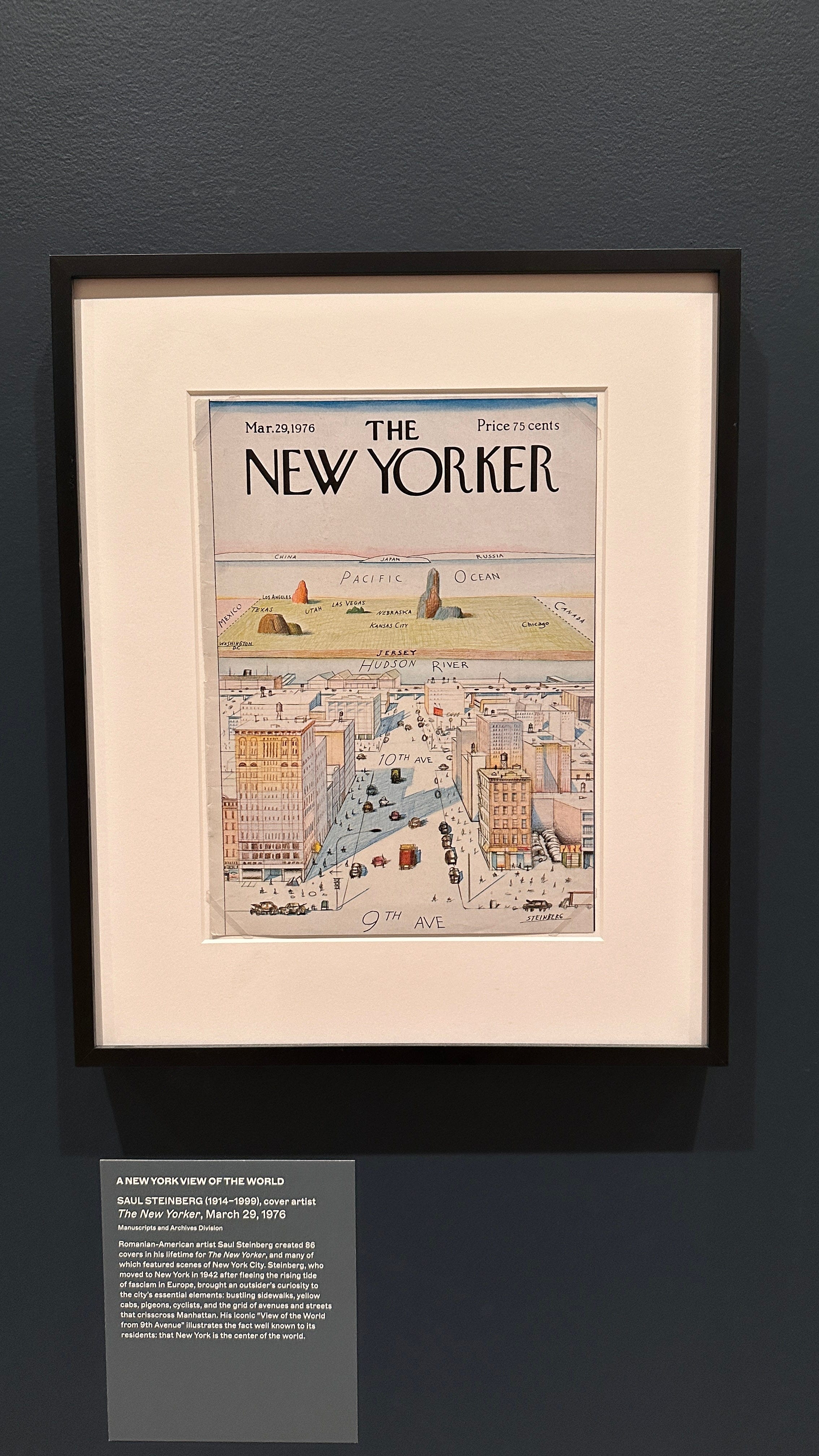
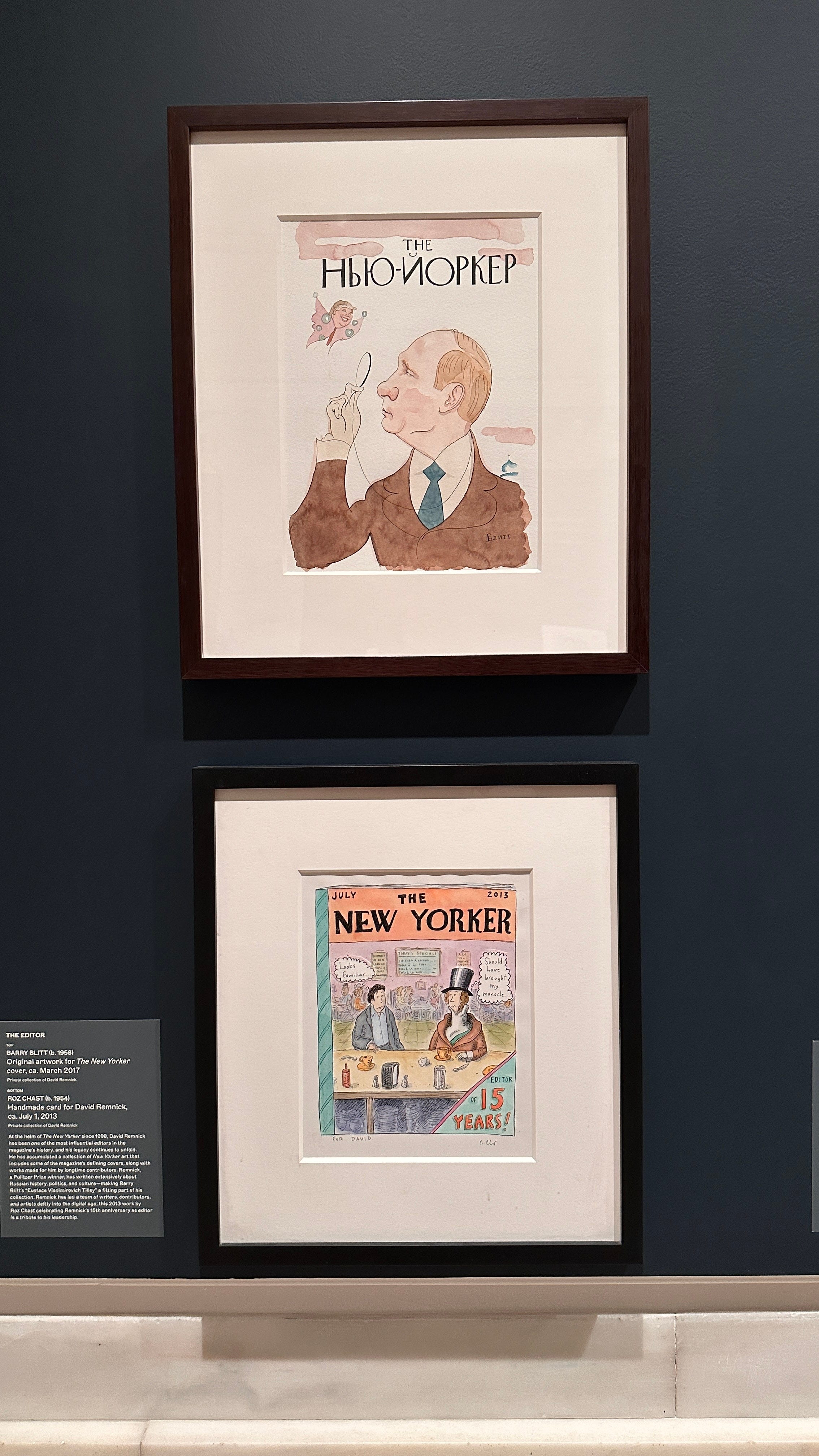
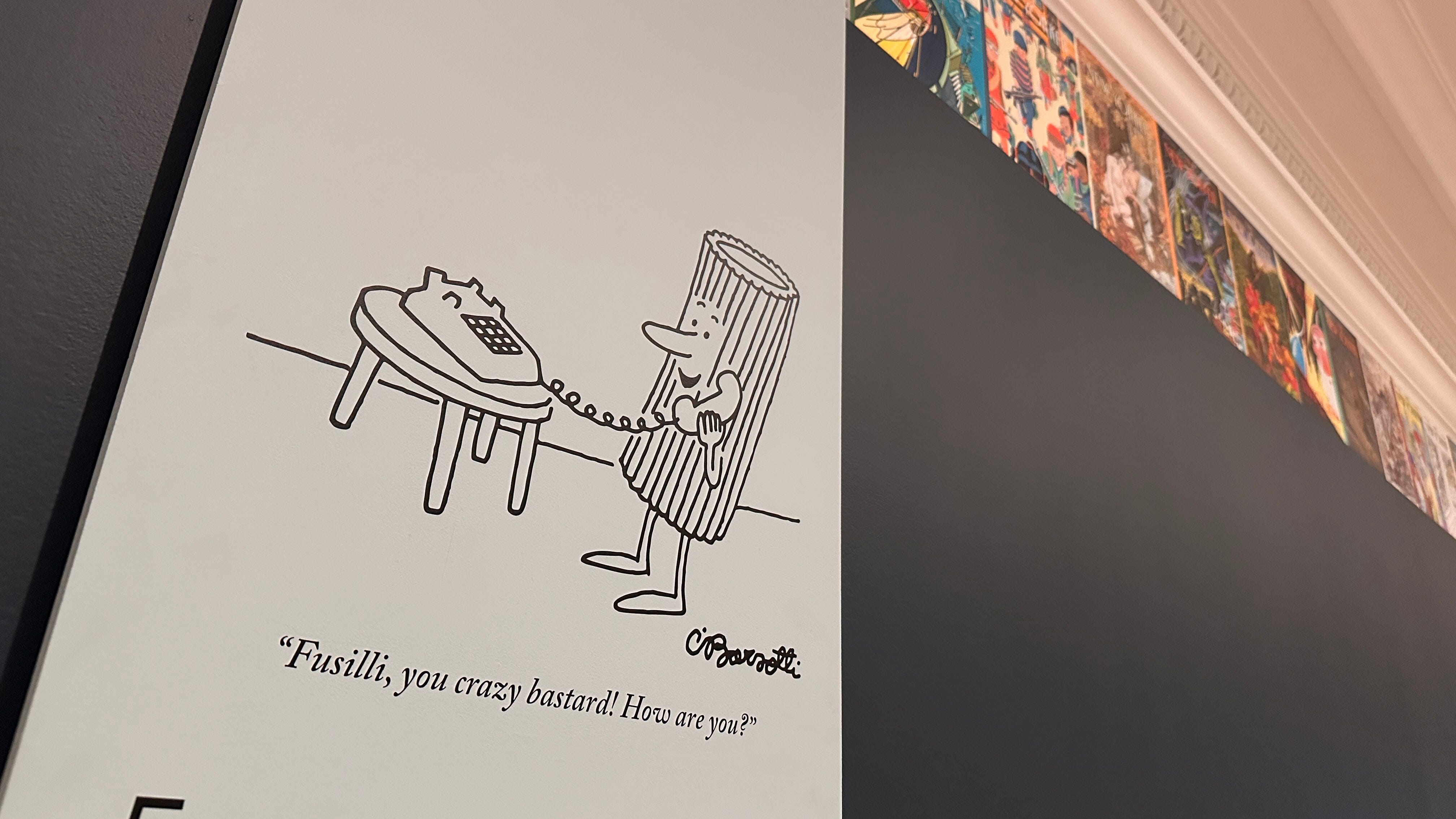
Lining the top of the corridor is a parade of New Yorker covers. Seeing them all together is overwhelming. You see the evolution from the Jazz Age “Eustace Tilley” to the dark, biting satire of the Trump years. It’s a visual timeline of the last century: the wars, the protests, the quiet moments of city life, and the occasional anthropomorphic rigatoni*.
What was truly heartening, though, wasn’t just the art. It was the people. The place was packed. Real, human people, standing in the same room, reading the captions, laughing at the cartoons (or pretending to get them), and soaking it all in. In an age where we’re told print is dead, and everyone is just scrolling TikTok for dopamine hits, it was genuinely moving to see so many people caring about a weekly magazine.
From the Museum to the Bar
Walking through the “Beginnings” section, seeing the photos of Harold Ross and the Algonquin Round Table, I couldn’t help but think back to the Centoonial Party we just had.
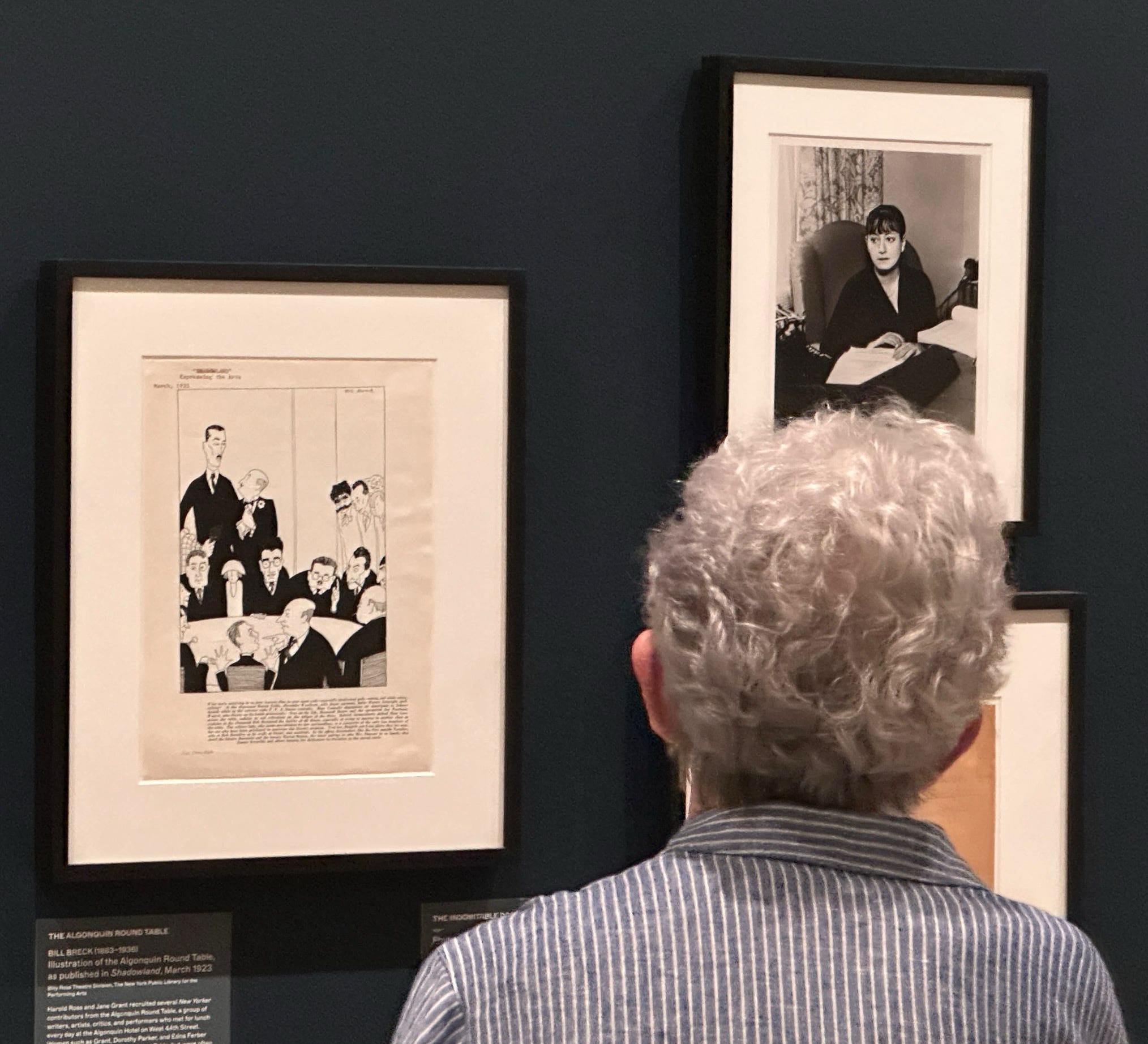
Standing in a room with my fellow cartoonists- the people who are currently keeping this 100-year-old tradition alive- felt like a direct line back to those black-and-white photos. We may not wear three-piece suits and smoke as much (well, some of us might), but the DNA is the same. We’re still a bunch of neurotic observers trying to make sense of the world with a pen and a scrap of paper.
Related Reading:
The New Yorker Cartoonists Centoonial Party

This is the final post celebrating the New Yorker’s Centenary Week— one epic blowout party to round out a century of cartoonery. Read my other post on the anniversary here.
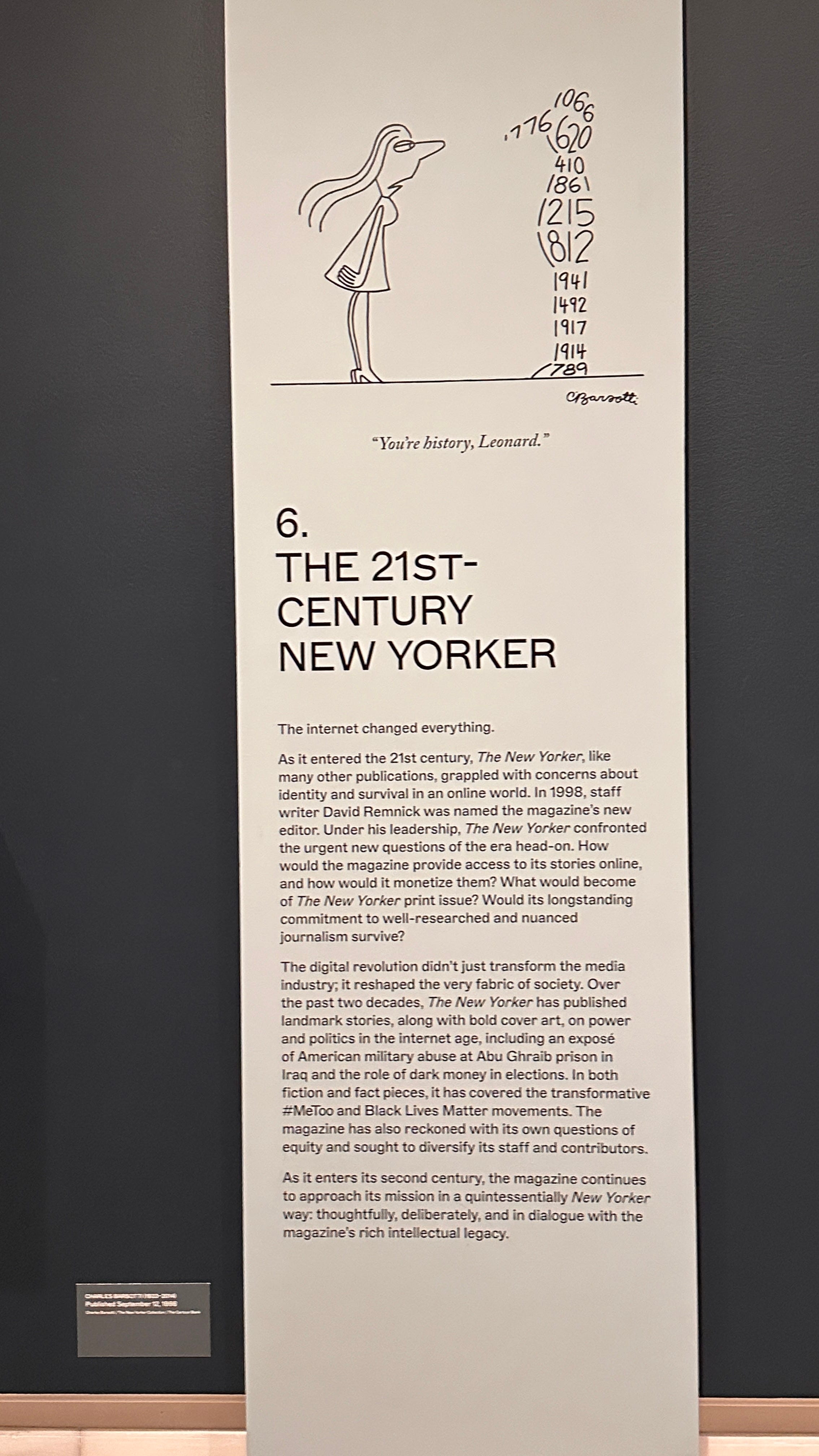
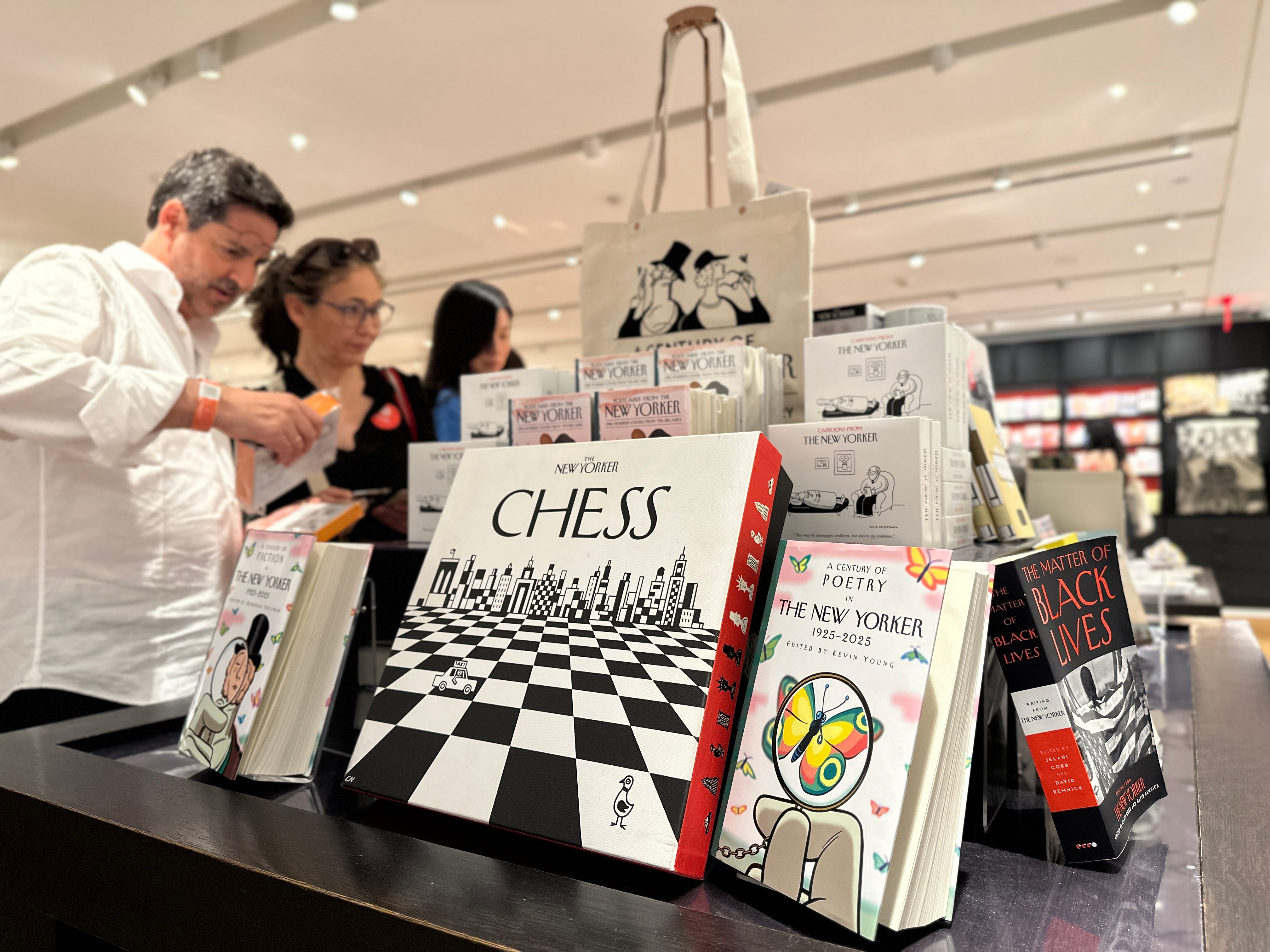
I walked out of the library (through the gift shop) and into the slush of 42nd Street feeling a strange mix of pride and terror. Pride that I managed to sneak into this club, and terror that I have to keep being funny for another week.
So, if you missed the exhibition, I hope these photos give you a small taste of what it was like. It was a celebration of a century of brilliant, funny, obsessive, and imperfect people making something that matters.
‘til next time
Your pal,

For the full gallery, see below:
