


I’ve been very doomer-y this week. Sorry. I thought I’d cap the week off with something positive…
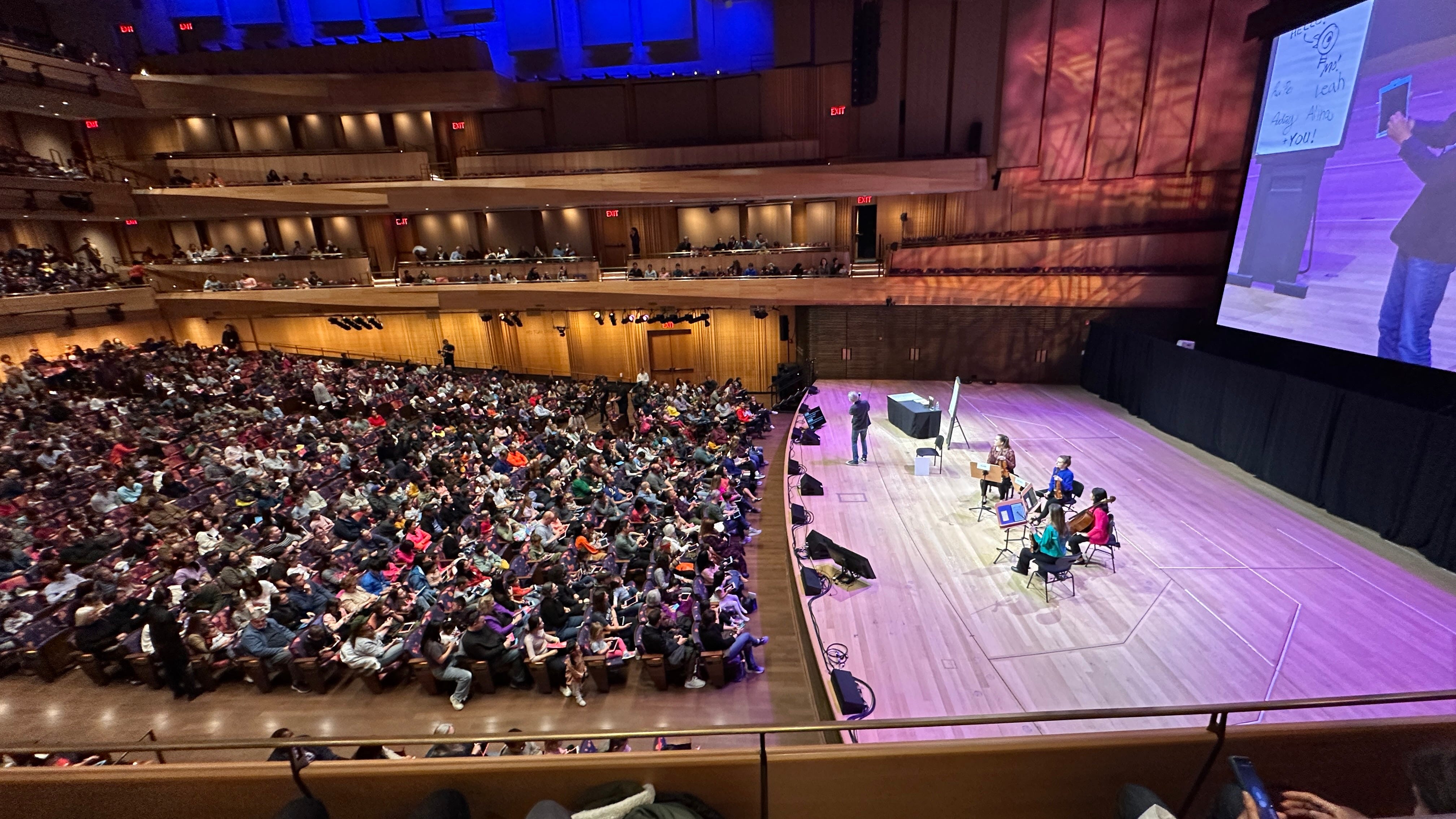
October 27, 2024
Lincoln Centre
New York, NY
My ol’ pal Mo Willems1 is on stage, killing. (A troubling verb for a room full of children, but there is no other word for it.) Several hundred people under the age of eight, screaming for a man who draws a pigeon live at Lincoln Centre. I’m in the balcony, among the only adults who arrived without a child as cover, in awe.
He’s a great role model, and a prolific artist. The kids excitedly run up to him to show them their artwork (yes, drawn on screens, but let’s meet them halfway) as he sits at the edge of the stage, trying to cultivate a new generation of humans who don’t sit in front of a laptop all day and learn to ‘vibe code’.
Anyway. This week Austin Kleon posted something Mo says about ants.
The short version:
“An ant finds food and broadcasts the news out of its butt, and the whole colony forms a line and marches the trail until the food runs out. Which it always does.
The colony survives because of a few ants who ignore the trail entirely, wandering off at angles, turning up on your kitchen bench, getting stepped on. “Those are the artists in our culture,” Mo says.
“We are the random ants.”
I have never felt so seen by an insect.
I’ve been stepped on a fair bit this year. But nobody finds new food by walking in a straight line …and that’s the job now.
That’s. The fucking. Job.
‘til next time!
Your pal,

PS. Look, if this actually did something for your brain (or at least distracted you from the creeping dread of your own inbox for six minutes), please consider restacking this and sharing it with your people. It’s the only way the word spreads.



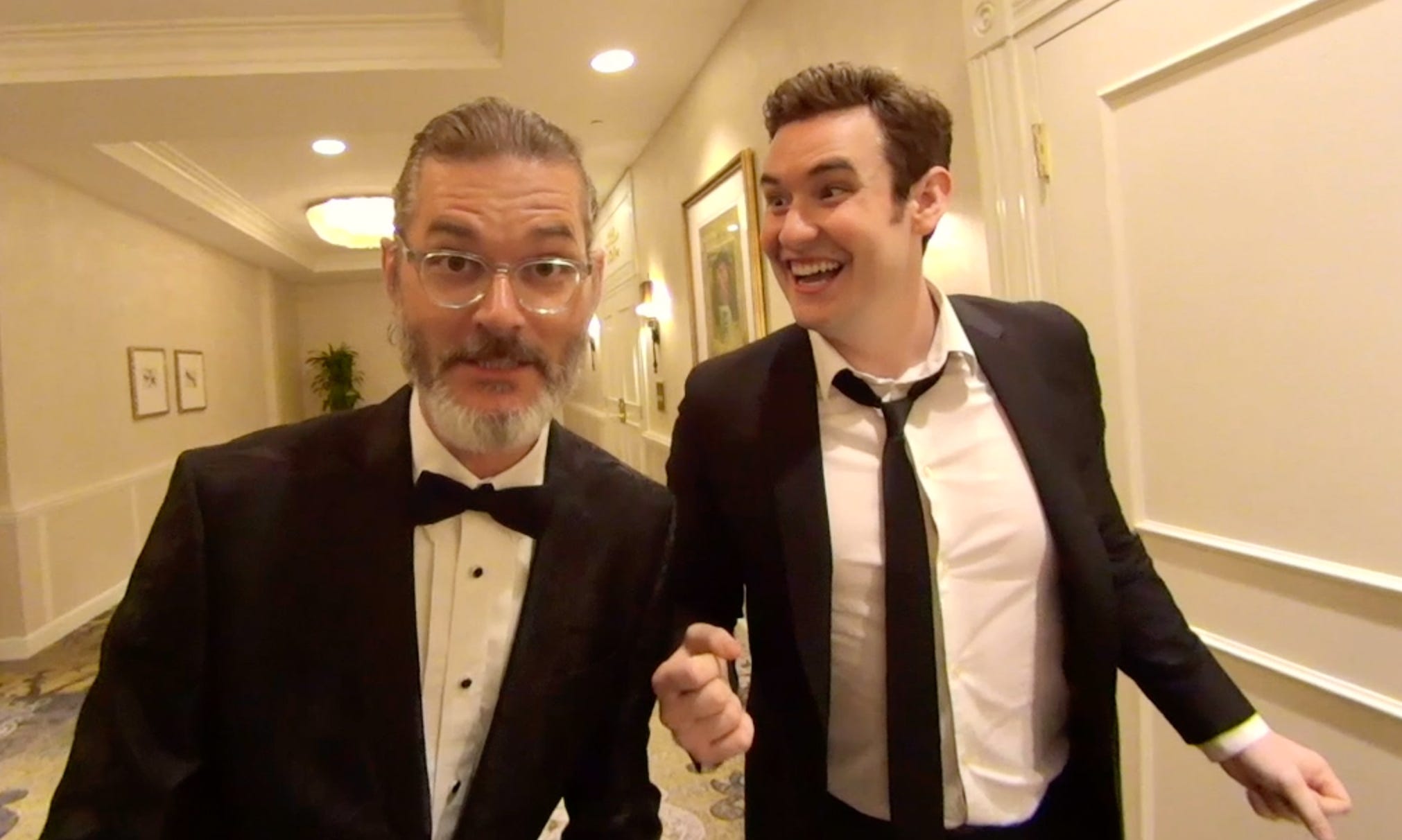
I first met Mo at the NCS Reuben Awards, where we got to shoot some funny sketches together. We’re part of the very small ‘Reubens Hosts Club’, pictured below:

He’s a prolific author and an inspiring guy. You can watch his whole episode of The Idea Garden below.
You can watch my episodes with Austin Kleon here:
I love Mo Willems and I love this analogy about the ants!
WHAT DO YOU KNOW ABOUT PROPORTIONAL REPRESENTATION?
AND WHY IS IT NECESSARY TODAY?
Wikipedia defines it as: proportional representation (PR) is an electoral system in which subgroups of an electorate are reflected proportionally in the elected body.
That sounds easy to say, but what does it mean? The two key terms are proportional and representation. Proportional means that if a quantity exists in one place, a corresponding amount exists in another. If 30% of Americans vote for one party, that 30% should translate into seats in Congress. Representation refers to our representatives in Congress. So, proportional representation (PR) is an electoral system in which subgroups of an electorate are reflected proportionally in the elected body. If 30% of our citizens hold a position, can that position be reflected in the seats in Congress? About 94 countries use PR for national elections; we don’t. PR comes in many forms.
Another way to think about it: If I want a product to keep its proportions, then if I am making a cake for three people and I want to make a larger cake for ten people, I have to make sure I use the same proportions as I did in the smaller cake; the larger cake must have the same ratio of water to flour, etc.
Some facts
“Proportional representation is the most common form of democracy worldwide today. Proportional representation isn’t a single electoral system, though; it’s the principle that the strength of each faction in parliament should closely match its popularity in the country. For many people, that is what living in a democracy means. Over 130 countries use either proportional representation or a mixed system to elect their lower chamber. Of the top 10 countries on the 2024 Human Freedom Index, which measures 86 indicators of personal and economic freedom, 9 use a form of PR in their elections (Switzerland, New Zealand, Denmark).
Proportional representation voting (PR) is the main rival to plurality-majority voting. Among advanced Western democracies, it has become the predominant voting system. For instance, in Western Europe, 21 of 28 countries use proportional representation, including Austria, Belgium, Cyprus, Denmark, Finland, Germany, Greece, Ireland, Luxembourg, Malta, the Netherlands, Norway, Portugal, Spain, Sweden, and Switzerland.
We use the first-past-the-post system, or plurality-majority system, to choose our representatives. In a state where the first party with a majority wins the election, let’s say they win with 52% of the voting public; that means 48% of that district has no representation in Congress. Do you think that is what the Founding Fathers wanted? 48% of citizens are not represented in Congress.
Proportional representation has pros and cons. Pros include reducing gerrymandering, improving minority representation, and reducing polarization. Cons include gridlock, fragmentation, and chaos.
Headlines today reference states attempting to gerrymander, which is changing district configurations to benefit one party over the other. Gerrymandering would be regulated with PR.
Where is the discussion of PR, and why is it not even mentioned? When we think of fundamental changes that must be made to eliminate oligarchs, why is proportional representation not the first to be discussed