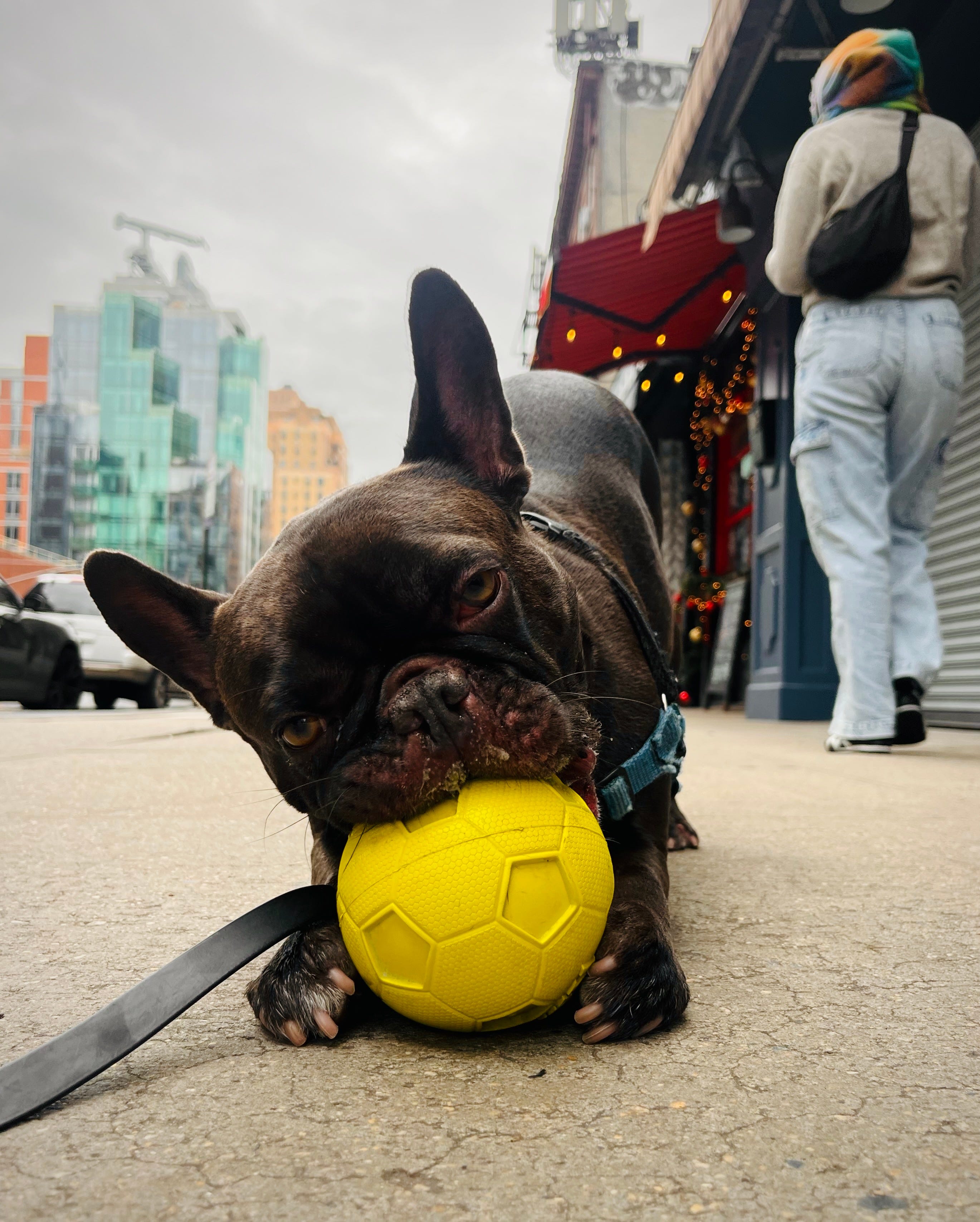
Michael Maslin has been in The New Yorker for 49 years…
He has catalogued every cartoonist who ever drew for the magazine, and wanted me to know that, off camera, he is surrounded by “a lot more books.” (Not his books. Just books. A man after my own heart.)
Thank you to everyone who tuned in and left comments during our live stream— a reminder: the live streams are, and will always be, free. If you missed it live, the replay is above. And the recap is written out below.
Here’s what happened, (with the links down the bottom…)
(This takes me a long while... so I paywall this part. I hope you understand.)
First, a correction to my own promo post (oops). I told you the magazine didn’t let him draw his first sale. Wrong. He did draw it. It went in with a regular batch, Lee Lorenz saw the drawing, and then came the note: “We’re just taking the idea.” Whitney Darrow Jr. would draw it instead…
“You want your foot in the door, but this wasn’t the foot in the door. This is a toe.”
He didn’t even tell his friends. Too confusing to explain. These days, people get a credit line beside the artist; back then it was “kind of hush-hush.”
The cartoon, you’ll remember, was a fortune teller telling a man, “Nothing will ever happen to you.” Decades later, Bob Mankoff asked if Michael still had his own drawing of it, and ran it online. “So it got its day in the sun.”
His first cartoon under his own name, in April 1978, was a man at a deli counter: “I’ll have a quarter pound of your most reliable cheese.” It would not have been his pick. (Same, Michael. They never take the one you’d pick. Mine was “Vlad The Employer ffs) But he said, “I was extremely glad, of course… that my life changed.”

Michael told me he submitted for something like six or seven years before anything sold. His very first batch was drawings with no captions at all, nothing to do with cartoons, sent in because a friend told him to. It came back with the standard rejection slip, and someone at the magazine had pencilled a note along the bottom: next time, send an SASE.
He didn’t know what an SASE was. He was a kid. “But the next time you send in is what I focused on.”
They haven’t stopped hearing from him since. They created a monster.
He moved to New York for one reason: to get into The New Yorker. He was sending 50 or 60 ideas a week on index cards. (He still has the index cards. Of course he does. He’s Michael friggin’ Maslin.) After many, many… many months of nothing, he got a phone appointment with Lee Lorenz and asked what he was doing wrong.
“You’re just not right for the magazine.”
End of discussion. He thanked Lee for his time and hung up.
And then, instead of pursuing some other line of work, “I decided that he was wrong.” He doubled down. (He kind of tripled down.) A few months later, they bought the idea.
(The control subject here is David Sipress, who submitted to Lorenz for years without a sale, then sold the moment Mankoff took over. Michael confirmed. Make of that what you will.)
The twist is that Lee went on to become “this wonderful editor,” and Michael says he has him to thank for his life here. All of this, by the way, is in the memoir he’s still writing. He just keeps adding to it.
Count the bosses: art editors Geraghty (who bought nothing), Lorenz, Mankoff and Emma Allen, plus editors William Shawn, Robert Gottlieb, Tina Brown (eep) and David Remnick. On Tina, Michael was diplomatic: “Tina was just …challenging because, well… Tina was Tina.”
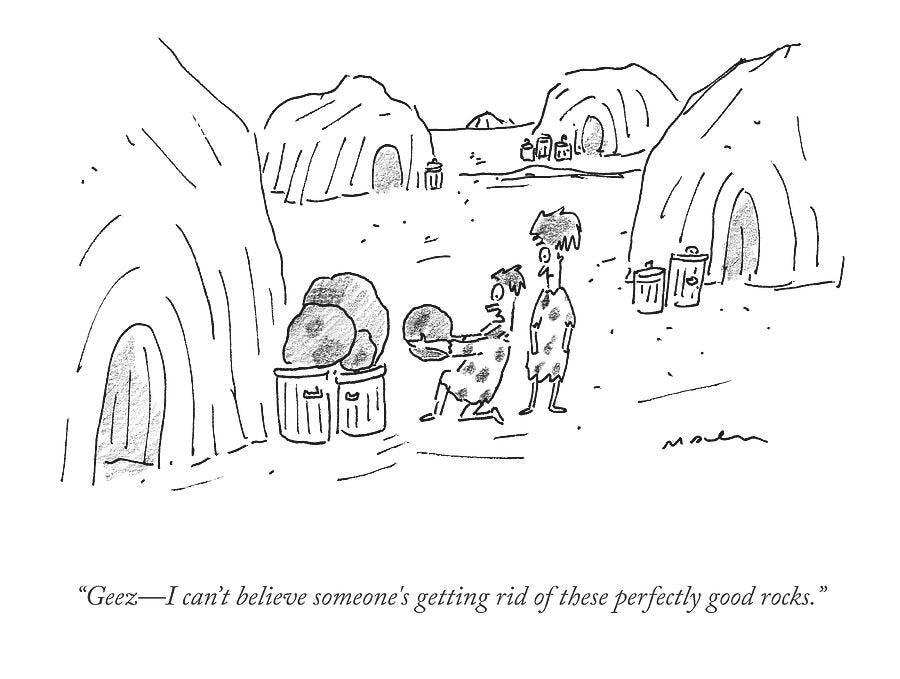
In the early years he worked at it. Thesauruses. Labour. “It was work. And it was laborious. And I don’t think the work was that good. I know it wasn’t that good.”
So he gave that up, a long time ago, and now he just sits and draws and zones out and waits for a word or an image to arrive. “I am so dependent on Lady Luck.”
He still puts a batch together on no-meeting weeks, when there’s nobody to send it to. “It’s an addiction.” He wouldn’t know what to do with a week off. And then he said the thing I’ve been trying to say in lectures for a year:
“I look forward to seeing what’s going to happen on that piece of paper.”
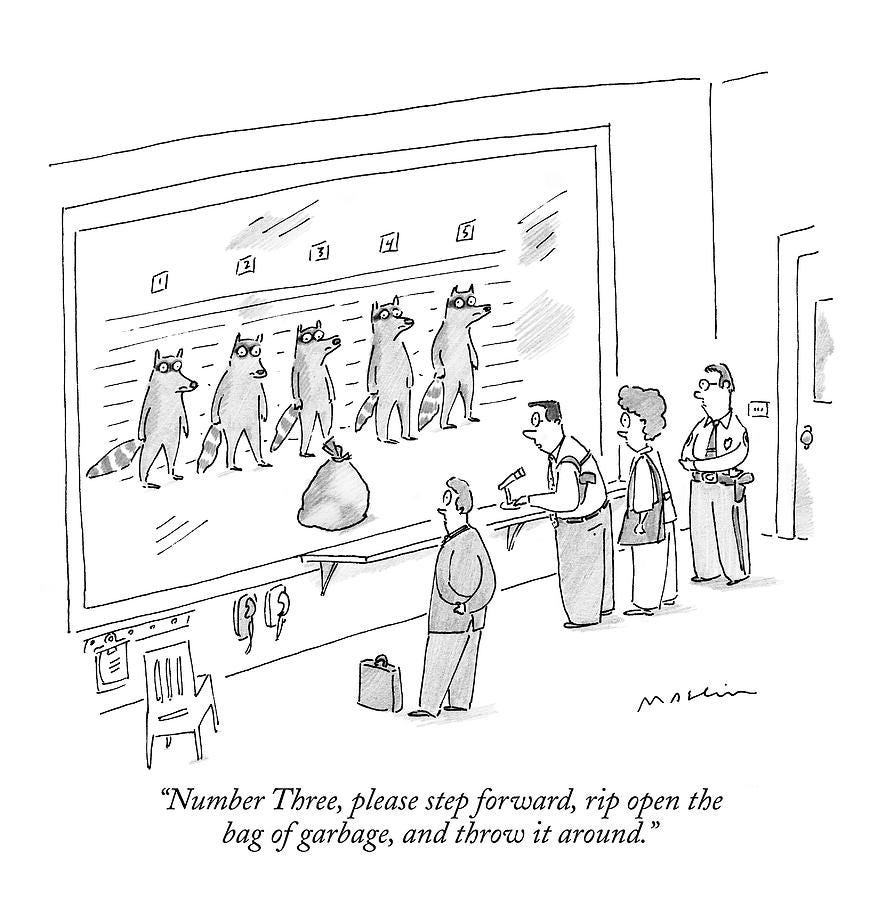
I told him about Mankoff asking me how I decide on my hair in the morning. (Yes, the hair story again. Long-time readers can mouth along.) The point being, Michael’s blog is where I went to figure out what my own hair looked like, cartoonically speaking. (Yes, that’s a word.)
Where did it start? Age four or five. His older brother John, who usually only approached him to punch him in the stomach, turned up with a pad of paper and asked if he wanted to learn how to draw a face. Circle, two eyes, a mouth, some hair. “It was kind of like that religious conversion moment.”
“I’m in there, and I could make this face do whatever I want it to do.”
Every cartoonist I know has that moment. Most of us got in trouble for it at school. Michael’s high school strip, Our Table, got him in trouble too. The lunchroom, he was told, is for eating your lunch and then leaving.
Michael and Liza Donnelly (who, he sais “I’m married to, and she’s married to me, that works great both ways”) bonded over James Thurber’s drawings. There was already a Thurber Prize for humour writing, and they kept saying there should be one for his cartoons too. So they pitched it to Thurber House, which said yes.
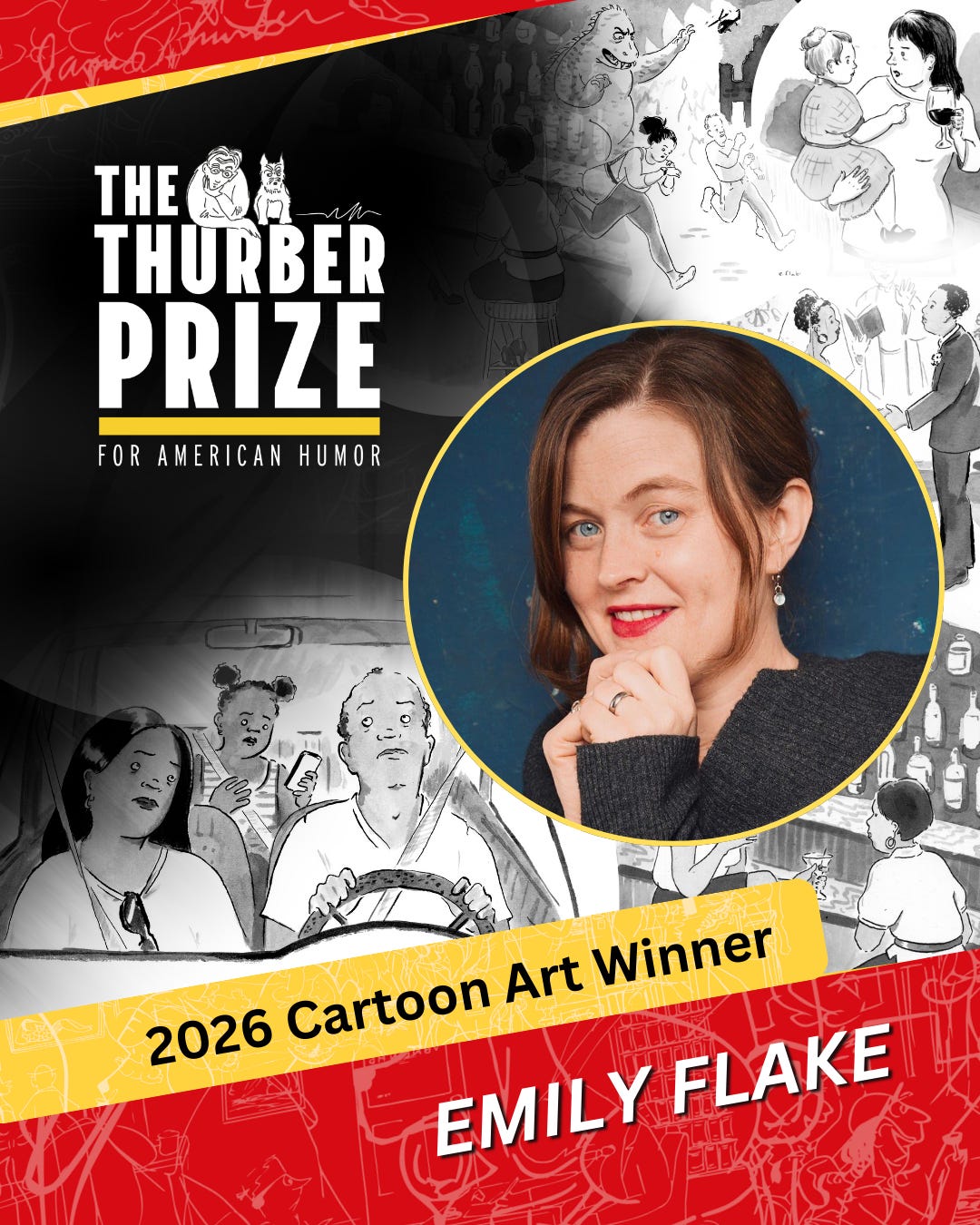
The Thurber Prize for American Humor in Cartoon Art has gone to Roz Chast (2024), Paul Noth (2025, rhymes with both) and Emily Flake (2026). Michael and Liza still help with the nominating. They won’t tell you how. I asked.

Then we got to the thing every cartoonist is talking about this week. Nieman Lab reported that ChatGPT has been putting real cartoonists’ signatures on fake New Yorker cartoons: Brendan Loper , Pat Byrnes , Jason Katzenstein . Even the late George Booth…


Michael called it an abomination on Ink Spill. On the show, he was blunter: “It’s out-and-out theft, and it’s dishonest.” Then he put his finger on the actual problem. “You can’t go to the internet court and make a case. I don’t think there’s an internet court yet.”
On Brendan, whose name is now attached to drawings he never made: “He’s not responsible for that, but yet he’s attached to it.” And on the whole business: “It’s all the bad things. There’s nothing good. There’s not one good thing about it.”

Michael told a story he’d heard at Sam Gross’s memorial. Sam was grumbling one day about somebody using one of his cartoons without permission. His assistant, Patrick, sat him down at a computer and typed “Sam Gross cartoons” into Google. You can imagine. Endless pages of Sam’s work, none of it authorised. A great big cat, well and truly out of the bag.

But that, Michael said, was just using without permission. This new thing is worse. Someone can make a horrible cartoon about a terrible subject and put your name on it. Sarah Andersen knows that one too well: trolls doctored her comics and passed them off as hers years ago, and now the machines can do it in her style on demand. She’s one of the artists suing Stability AI.
I told him I’d asked Emma Allen on stage at the Reuben Awards in 2023 whether she was already getting AI-generated submissions. She was. Now it’s a bottomless pit of slop, run on the honour system.
And then Michael had the best idea of the hour: “This is an argument for perhaps having in-person visits again, where you can meet a person and talk about the work.” I’d never thought of it. The cure for the robot might be the lunch table. ( Paul Noth called this show “a digital cartoonist lunch” two episodes ago. I’m starting to think we’re onto something…)
A reader in my Substack Notes recently explained that he can’t draw, but he’s “a bit of a gag man”, so he uses ChatGPT and tells it to sign the cartoon ChatGPT. Very honest. Except the cartoon he showed me was in the style of Ben Schwartz. Michael’s take: learning by copying a role model is fine. This is “a new form of plagiarism, really.”
I’d just come back from Saint-Just-le-Martel in France (with Liza) and the Lakes International Comic Art Festival in Kendal, where Terry Anderson of Cartoonists Rights and I took a straw poll on AI. Cartoonists from a dozen countries, and not one optimist among them. Everyone is trying to wrap an old medicine around a new disease. Alex Hallett in the chat suggested cease-and-desist letters, which is one avenue, but as Sam found out, the problem is volume…
Michael’s conclusion: if this were happening in Hollywood, with somebody else’s name in the credits, it’d be shut down overnight. “But we are lowly cartoonists.”
While we talked, I drew a monster vacuuming up everyone’s cartoons. Michael diagnosed it as Godzilla in a city. Fair.
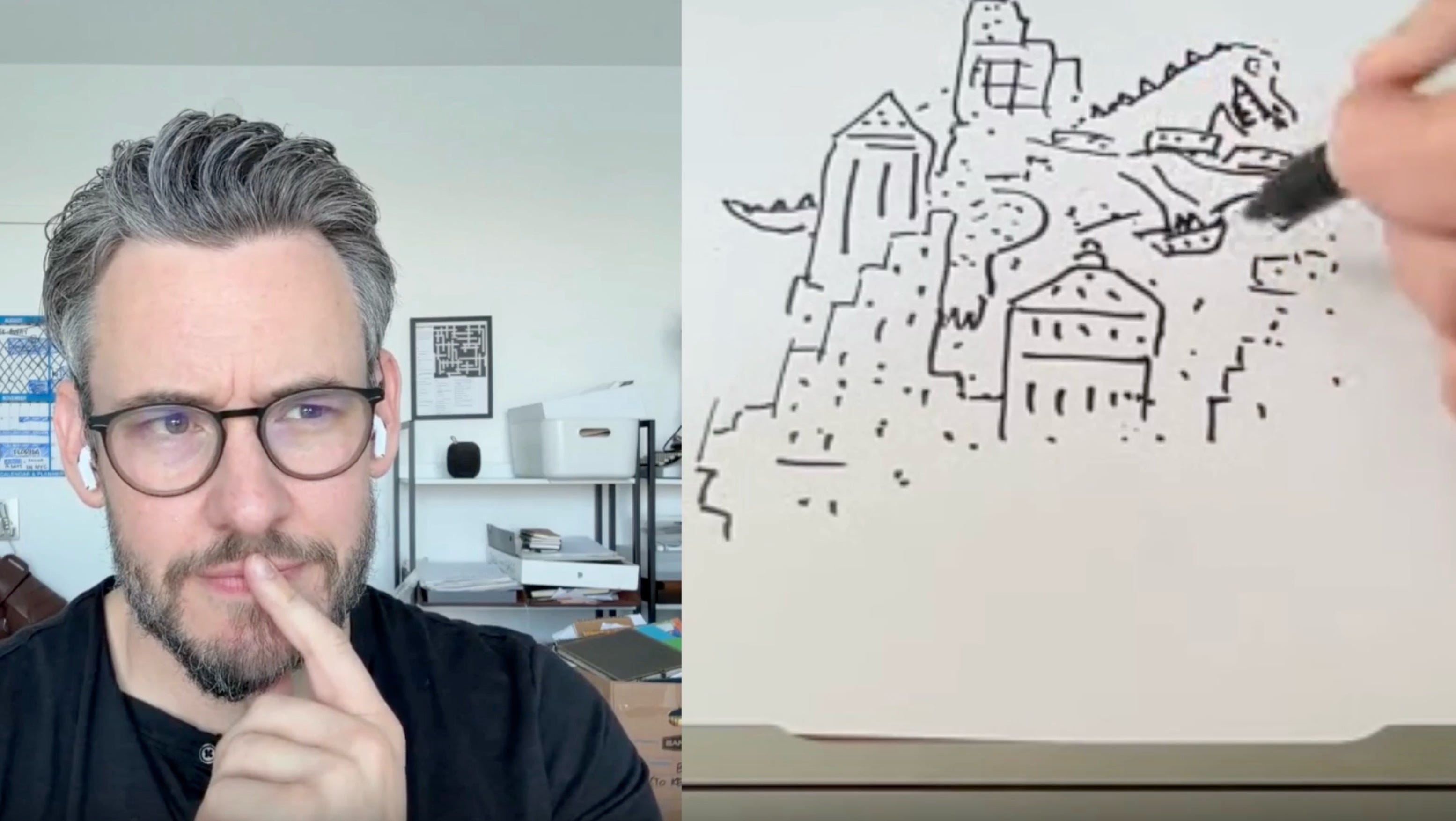
Then he did something no guest has ever done in 59 episodes: he tried to draw my drawing upside down, from his side of the screen. Which sent me straight to Mr. Squiggle, the Australian TV puppet with a pencil for a nose who turned kids’ scribbles into drawings, upside down, and was the reason I wanted to do this job. (I met his creator, Norman Hetherington, years later through the Australian Cartoonists’ Association. It was like meeting Elvis.)
Michael’s upside-down King Kong, held up to the camera at the end, looked, in his words, “like an amoeba or something upside down.”
It’s better than slop. I’ll give him that.
“We try, don’t we, Jason? We try.”
We do. Nearly 50 years after a fortune teller told him nothing would ever happen to him, Michael is still at the paper every day, still sending batches nobody asked for, and still writing down every single thing that happens to the rest of us. I asked him for 45 minutes. He gave me more. His last words on the subject were the right ones:
“Onward we go, and it’s a good fight, and we will fight it.”
‘til next time!
Your pal,

Aaaaand Now, the promised linkie dinks…
Subscribe to Ink Spill on Substack: michaelmaslinsinkspill.substack.com (and the New Yorker Cartoonists A-Z at michaelmaslin.com)
The Thurber Prize for American Humor in Cartoon Art: thurberhouse.org

PS. Look, if this actually did something for your brain (or at least distracted you from the creeping dread of your own inbox for six minutes), please consider restacking this and sharing it with your people. It’s the only way the word spreads.