

Notes on Notes (and Why I’m Cautiously Optimistic about Substack)
A Sermon for the Algorithmically Wounded

October 22nd, 2025
Substack NYC Headquarters
Flatiron, New York
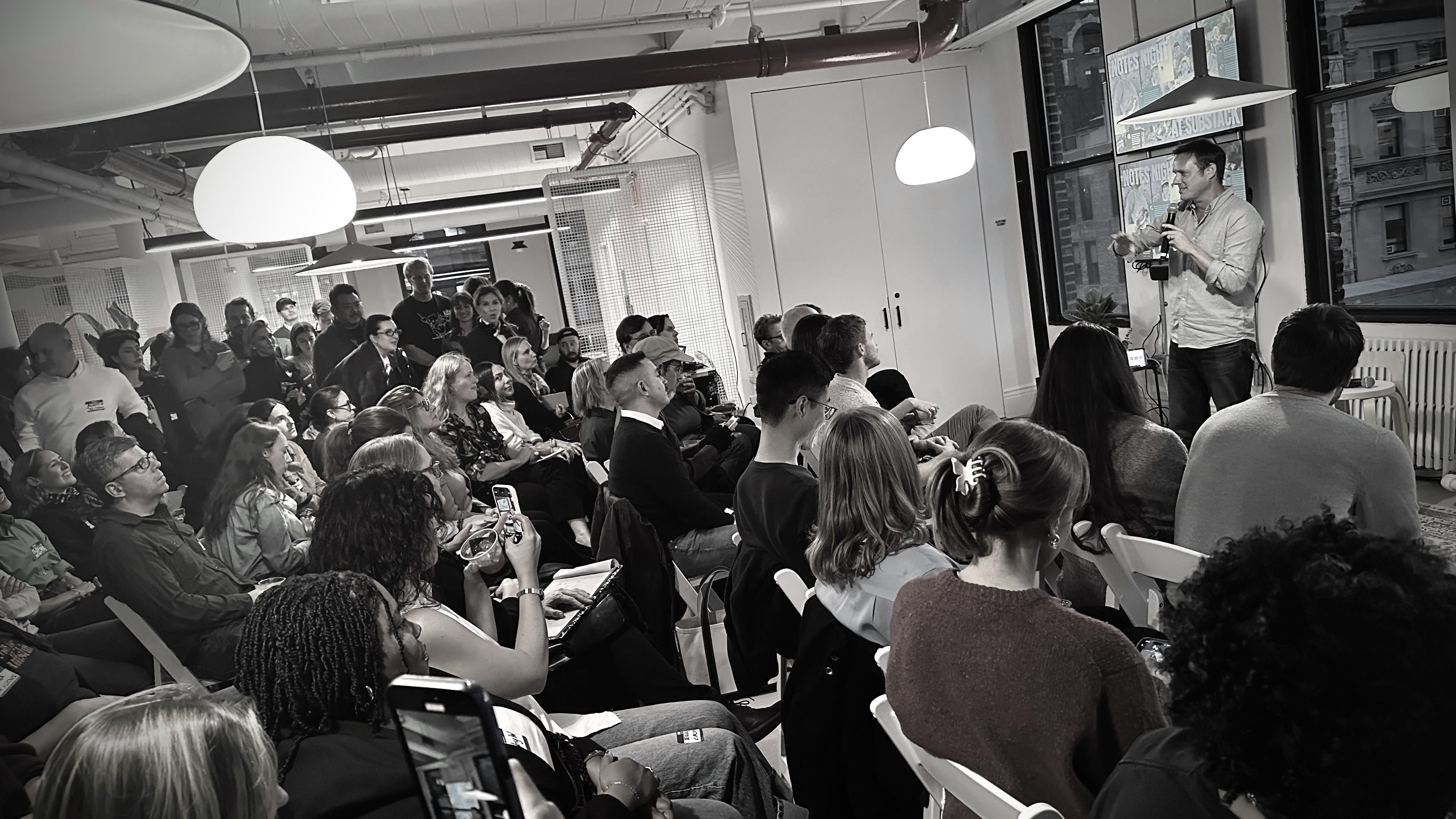
It’s not every night you find yourself in a Flatiron loft hanging out with the people who built the platform you publish on, especially one that hasn’t (yet) sold its soul for ad revenue and chaos.
Tonight’s Substack event felt less like a tech presentation and more like a support group for people who still believe words matter. There was even free booze, which always helps the optimism flow.
Hamish McKenzie, Substack’s co-founder -and, conveniently, a fellow Southern Hemisphere exile -opened the night with a quiet, clear sermon: “Most platforms don’t really care about writers and creators,” he said. “They keep you trapped in a big, closed garden where you don’t own your audience, your relationships, or even your content.”
(For the full transcript of his speech, check the footnotes below.)
This is the kind of talk that hits differently when you’ve spent a decade being emotionally gaslit by algorithms. “We only make money when you make money,” he continued, “and you have the freedom to leave whenever you want.” I underlined that twice in my notebook, partly out of hope, partly out of habit. It’s been a long time since I trusted anyone holding the keys to a social network.
Hamish talked about how social media went wrong -how what began as a tool for connection became a casino for attention. “They deserve to be challenged,” he said, “and our way of doing that is to build a system that connects real people with each other, not just with ‘content.’” I wanted to clap, but didn’t want to spill my whiskey.
Related Reading:
Why I bailed on social media to focus on something way better.
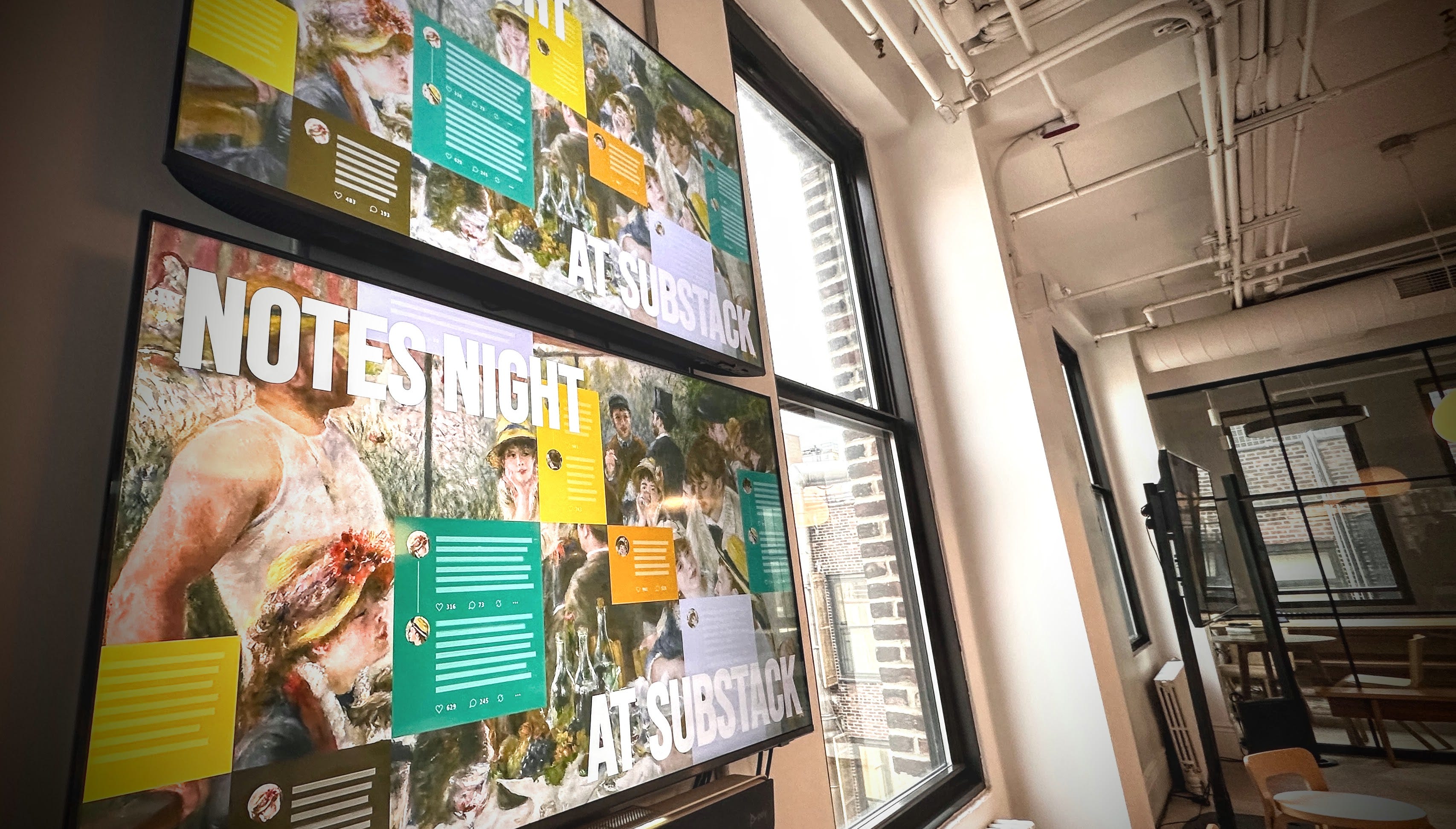
Then Randa Sakallah, Substack’s editorial lead and head of social media, took the mic. (“Yes,” she said, “that’s a controversial job title around here.”) She broke down Notes—the in-app social feed—with infectious enthusiasm. “Think of Notes as the town square,” she said, “where writers, readers, and ideas mingle.”
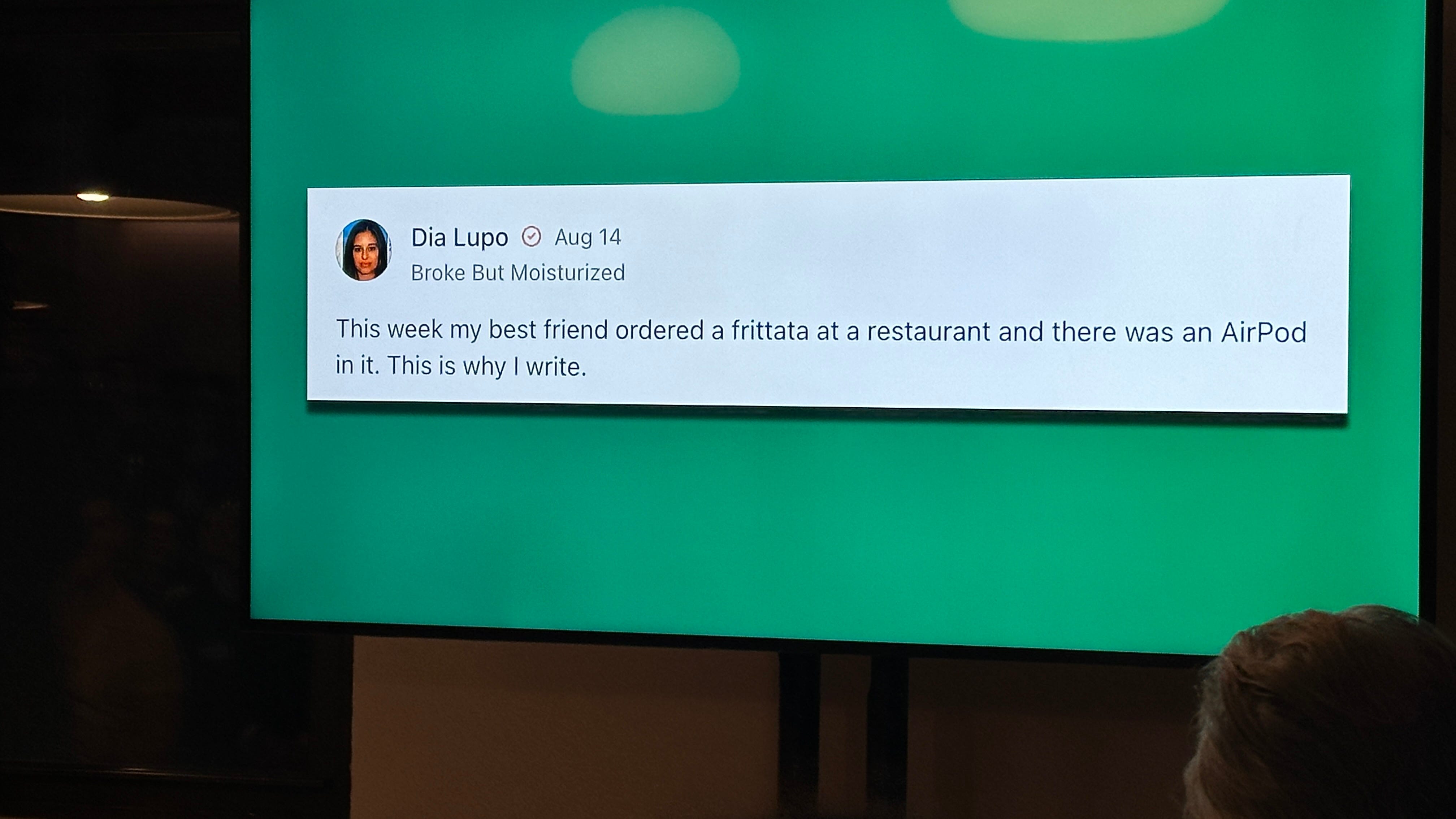
She even listed the archetypes: “Conversation starters. Techno-optimists. Satirical commentators—formerly known as ‘shitposters.’ And the wholesome crowd, who are just… nice.” It was the first time I’d heard a tech company admit that “nice” is still on the menu.
As she talked about posting consistently, re-stacking generously, and actually replying to people, I had a thought: She wasn’t just demoing features; she was describing a culture. Notes, at least in theory, is what Twitter might have been if it had kept its soul and its vowels. It feels like what Twitter was like in the early 2010s.
(For the full transcript of her speech, check the footnotes below.)
Then came Mike Cohen, the head of AI and machine learning -the guy who literally decides what we see when we open the app. Usually, when someone from “machine learning” gets up to talk, I brace for PowerPoint-induced sleep paralysis. Instead, Mike was funny, lucid, and occasionally alarming.
He explained how their algorithm “biases toward signal over sludge,” how it rewards genuine interaction instead of outrage. Later, when we were talking and looking out the window at the incredible view of the most recognisable building on Earth, he asked what my favourite colour is. I said teal. I don’t know why- that’s not my favourite colour, but that’s what came out of my mouth. He pulled out his phone and said… “Watch the spire.” He tapped a few buttons on his screen, and the Empire State Building outside the window changed colour in real time. I don’t know what’s weirder—that he could do that, or that I immediately went to ‘teal.’
That’s when the event’s videographer waved me over. “Can you say a few words about your favourite writers?” I did, and as usual, the moment the camera stopped rolling, I thought of three much better lines. Somewhere out there, there’s footage of me earnestly saying “community” too many times.
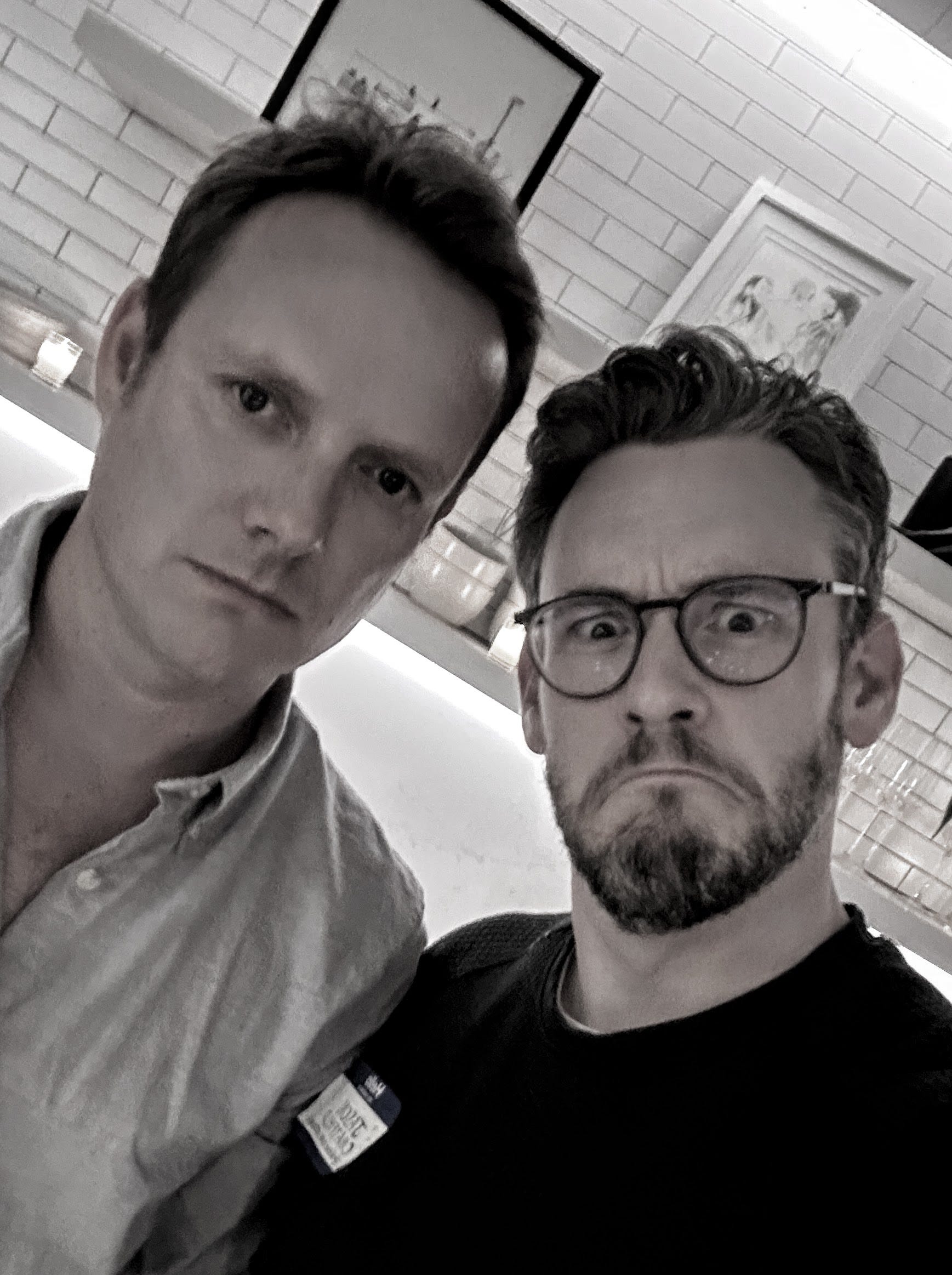
Afterwards, I found myself talking to Hamish. He’s from New Zealand; I’m from Australia. We bonded over our shared addiction to good journalism, free speech, and people who still risk saying dangerous things out loud. I told him that after years on Facebook, Instagram, and Twitter, I’ve developed a kind of algorithmic PTSD. I spent years renting space on someone else’s property, only to wake up one day and find the landlord had changed the locks.
Substack, by contrast, feels like owning a small patch of creative land. I can plant what I like, grow what I can, and leave anytime I want -taking my readers and my work with me. It’s the first thing I’ve ever been early to, and the first thing that’s made me feel like I’m doing something that makes sense.
New York Cartoons is a reader-supported publication.
This is all I do now. Please become a free or paid subscriber for just $1/week.
I left the event with a head full of ideas and a healthy dose of scepticism. I’ve been hurt before by platforms with smiling founders and slowly tightening nooses. But tonight, watching the spire change colour over Manhattan, it hit me that maybe -just maybe- this one’s different.
Substack might not save the internet. But if it keeps giving writers a home, a voice, and a room full of people who care about words, I’ll happily keep tending my patch.
Just… maybe not in teal.
‘til next time
Your pal,



Hamish’s Speech:
“The way most people build their revenue — with some exceptions, and congratulations to those who don’t — is by going on social media to try to get exposure.
The problem is, those other social apps don’t really care about writers and creators. Their interests lie in creating a big, closed garden where you’re not in control — where you don’t own your audience, your relationships, or even your content.
So we wanted to create another option. Not necessarily a replacement, but a place to have your work discovered and talked about while still being in control. A place where you own your audience relationships, you own your content, and you have the freedom to leave whenever you want.
Social networks have gone in a strange direction. They’re designed to keep you trapped in an endless scroll because that’s what their business model requires. They need you to never leave the app. They don’t want you to go find a long-form story or build trust with a writer. They just want you to keep scrolling.
That’s a terrible direction for culture and media. Many of these platforms have even replaced real writers with AI bots. They deserve to be challenged — and our way of doing that is to build a system that connects real people with each other, not just with “content.”
We want you to grow. We want you to reach as many people as possible, influence as many people as possible, and make as much money as possible. And we’ve built our business model around that — we only make money when you make money. You have the right and ability to leave anytime you want.
So we’re building a social layer that helps you do that — discovery, discussion, connection — but one that works in service of writers and readers. A network that gives creators power and gives readers the ability to vote for the culture they want to support by voting with their dollars.
You might remember when social media actually felt fun. Twitter, Facebook, Instagram — those early days were exciting, even wholesome. But as the business models evolved, they prioritised engagement over humanity. The game became: maximise addiction, not connection.
Substack’s version of a social network is an experiment in reversing that — in giving power back to writers and readers. We’ve designed a system that rewards deep relationships rather than fleeting attention.
And it’s working. There are now over 32 million free subscriptions on Substack and nearly half a million paid subscriptions in just the past three months.
Subscribers using the Substack app are seven times more likely to share, like, comment, or re-stack your work. The app is now the top source of subscriber and revenue growth for Substack publishers — even higher than recommendations. Over a million posts are discovered every day through the app.
It’s still small compared to the big networks, but it has one huge advantage: the others are shrinking — and, frankly, it’s shit — while this is growing, and it’s good.
So that’s the story of Notes, the story of the app, and where it’s headed. And now, to show you how to make the most of it, I’d like to invite my colleague Randa Sakalla to share her secrets for using Notes effectively.”
Randa’s Speech:
“Hello everyone! I’m Randa Sakalla. I’m on the editorial team here at Substack, and I run our social media — which, yes, is a controversial job around here.
Tonight I’m going to walk you through best practices, share some funny and educational examples, and give you a sneak peek at upcoming product features.
In the last three months, as Hamish mentioned, the Substack app has driven nearly half a million paid subscriptions and over 32 million free subscriptions. Notes — the social feed you see when you open the app — is a huge part of that.
Think of Notes as the town square of Substack. It’s where writers, readers, and ideas mingle — where conversations, jokes, and discoveries happen.
You’ll find all kinds of posters there:
– Conversation starters who spark thoughtful debates.
– Techno-optimists, who post wild new ideas or robots they’ve met.
– Satirical commentators (formerly known as “shitposters”), who keep things funny.
– And the wholesome crowd, people who are genuinely supportive and kind.
You can post text, photos, or videos. Unlike other platforms, we don’t force a format — the audience decides what they like. You can format posts with bold text, italics, or bullet points; you can share photo galleries, short videos, or re-stack others’ posts.
Re-stacking is one of the most effective ways to grow. When you re-stack someone else’s note or post, you’re endorsing them — and often that generosity loops back to you. It builds relationships and subscribers.
Now, about marketing your work — I know not everyone likes doing it. Writers and artists usually just want to make their work, not promote it. But if you don’t share it, you’ll grow much more slowly. Notes is the best place to communicate the value of your Substack in an authentic, conversational way.
We’ve seen amazing examples: creators gaining tens of thousands of subscribers and thousands of dollars in revenue from a single clever note. Sometimes it’s a short, funny observation; sometimes it’s a post that visually shows what your newsletter offers — like an illustrator showing sketches, or a cook sharing a recipe video.
The point is: post consistently. Engage with your community. Reach beyond your current audience. Cross-post to other platforms so people can discover your Notes and follow you back here.
And please — talk to people. Reply, restack, like, DM. Those small acts build momentum.
Now, a few new features I’m excited about:
• Post as… – If you run a publication with multiple writers, you’ll soon be able to choose which author a Note is posted under. This was one of our most requested updates.
• Improved sharing tools – We’re making it easier and cleaner to share your Notes to platforms like Instagram, LinkedIn, and X — so your posts look great and draw more people back here.
“I don’t know what’s weirder—that he could do that, or that I immediately went to ‘teal.’” Yeah I’m wondering that too…
This is a great and useful summary, Jason. Thank you.