Thank you Dana Jeri Maier, Bear Edwards, Jenifer Douglas, Janice Driver, Sudarshan Cadambi, and many others for tuning into my live video with Michael Gerber!
“You can’t write a line of code that replaces the invisible labour, the thousands of terrible rough sketches, and the deeply human derangement required to make a truly great cartoon.”
If you try to launch a print humour magazine in the 21st century, most financial advisors will tell you to just set your money on fire instead; it’s faster, it requires less paperwork, and it keeps you warmer in the winter.
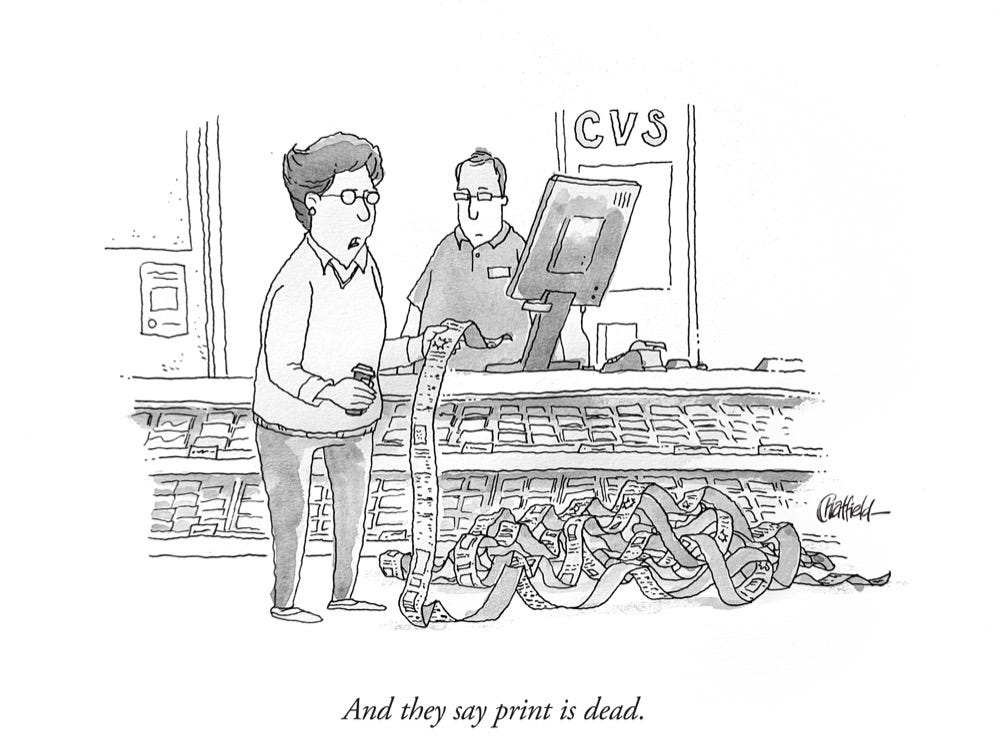
We live in the era of the digital churn. We live in an ecosystem where corporate media conglomerates are continuously gutting their editorial staff, pivoting to video, pivoting away from video, pivoting to AI slop, and generally treating the written word and the drawn cartoon as disposable ephemera. The conventional wisdom is that print is dead…
But!
…if you’ve been reading this newsletter for more than five minutes, you know I’m obsessed with the messy, unglamorous back-end of making a living as an artist. I love pulling back the curtain on the creatives who look at the “churn,” laugh, and figure out how to keep the lights on without selling their souls to the algorithm.
This week on Draw Me Anything, I brought in a guy who looked at a sinking ship and decided to build his own lifeboat.
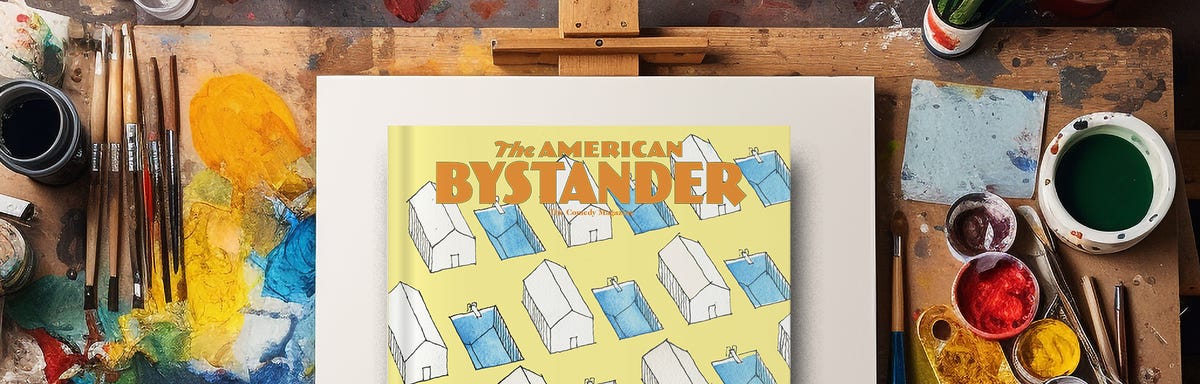
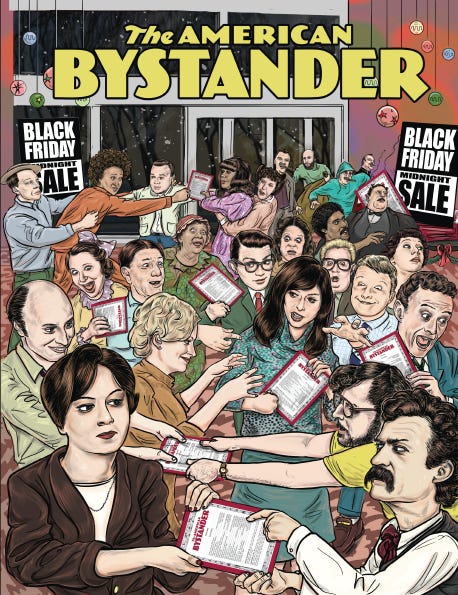
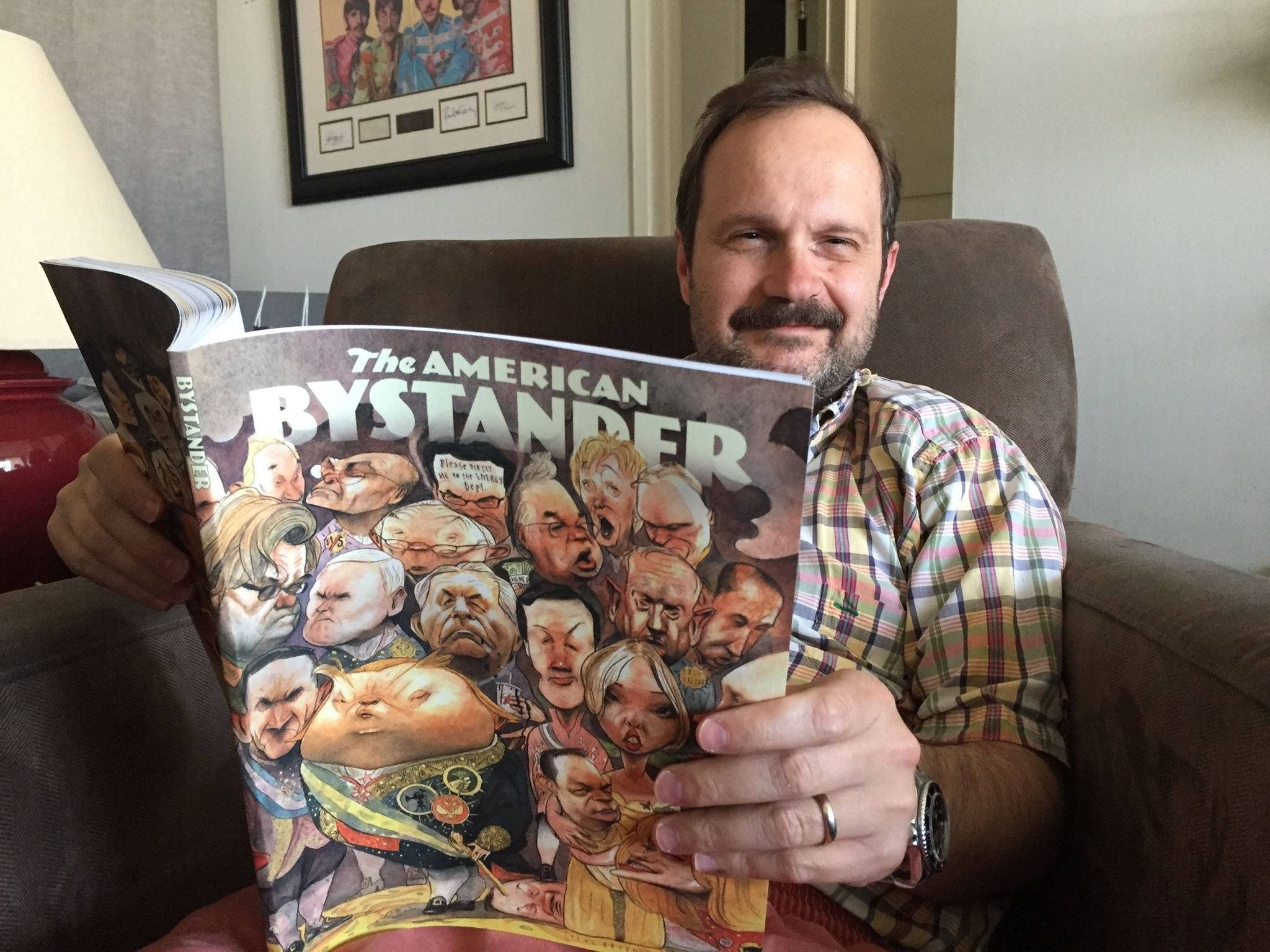
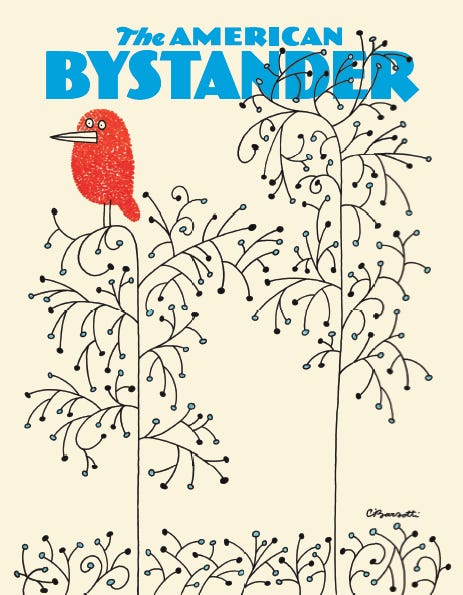
I was thrilled to host the brilliant Michael Gerber. Michael is the publisher, editor, and mastermind behind The American Bystander, a publication that Newsweek literally called “the last great humour magazine.”
During the stream, we dug into exactly how you resurrect a print humour magazine in the 21st century without setting mountains of corporate cash on fire. It is a story of grit, absurd luck, and a publishing model that bypasses the corporate overlords entirely. But before we get to the Chinese oligarchs and the naked Kickstarter launch, we have to go back to a very small room in the One World Trade Centre…
Sam Gross, The Everest of Cartooning & the Mouse in the Car
My introduction to The American Bystander didn’t happen on a newsstand. It happened in the absolute epicentre of the New York cartooning world.
It was late 2014, maybe early 2015. I was a relatively new immigrant to America, still trying to figure out the brutal mechanics of the New York publishing scene. To my brain, the ultimate peak of the industry -the absolute Everest of cartooning- was getting into MAD Magazine and getting into The New Yorker. Those were the twin pillars of the comedy art world. Everything else was just scenery.
Related Reading:

I was sitting at The New Yorker in the Cartoon Lounge. (Let’s be honest; it wasn’t really a “lounge”. It was a small box off to the side from where cartoon editor Bob Mankoff’s office was. But the physical space didn’t matter, because of who was in said box.
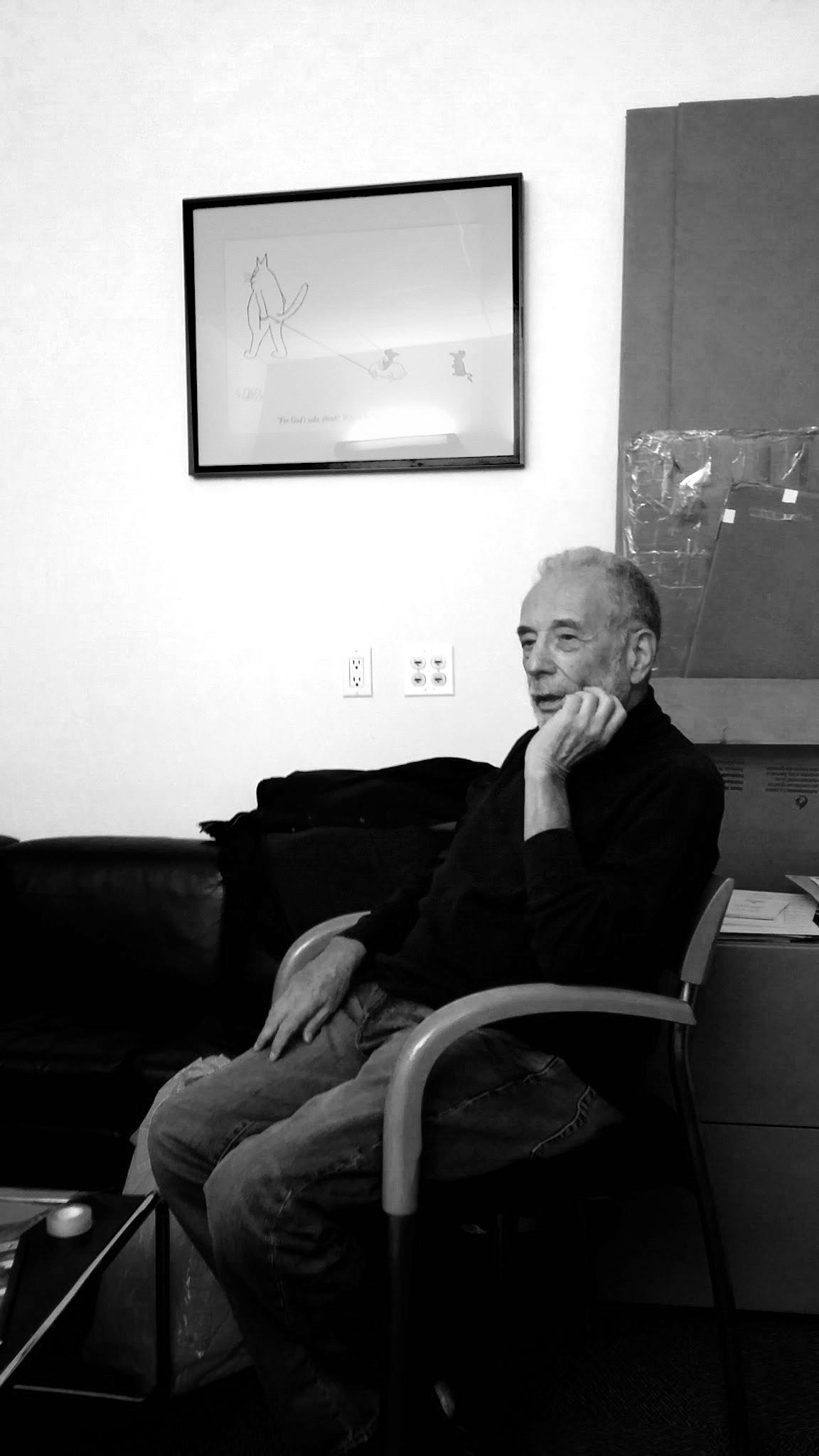
The legendary Sam Gross was sitting in the room. He was in a chair, positioned right below a giant framed picture of his classic cartoon, the one with the mouse driving the wind-up car. If you’re a cartoonist, sitting in a room with Sam Gross is like a guitarist sitting in a room with Keith Richards.
Related Reading:

Sam was holding a copy of a magazine I had never seen before. “Kid, have you heard of this magazine?” he asked me. I looked at the cover. The unmistakable, beautiful line work of Arnie Roth stared back at me. It was Issue Number Six. “I’m embarrassed to say that I haven’t heard of it,” I admitted.
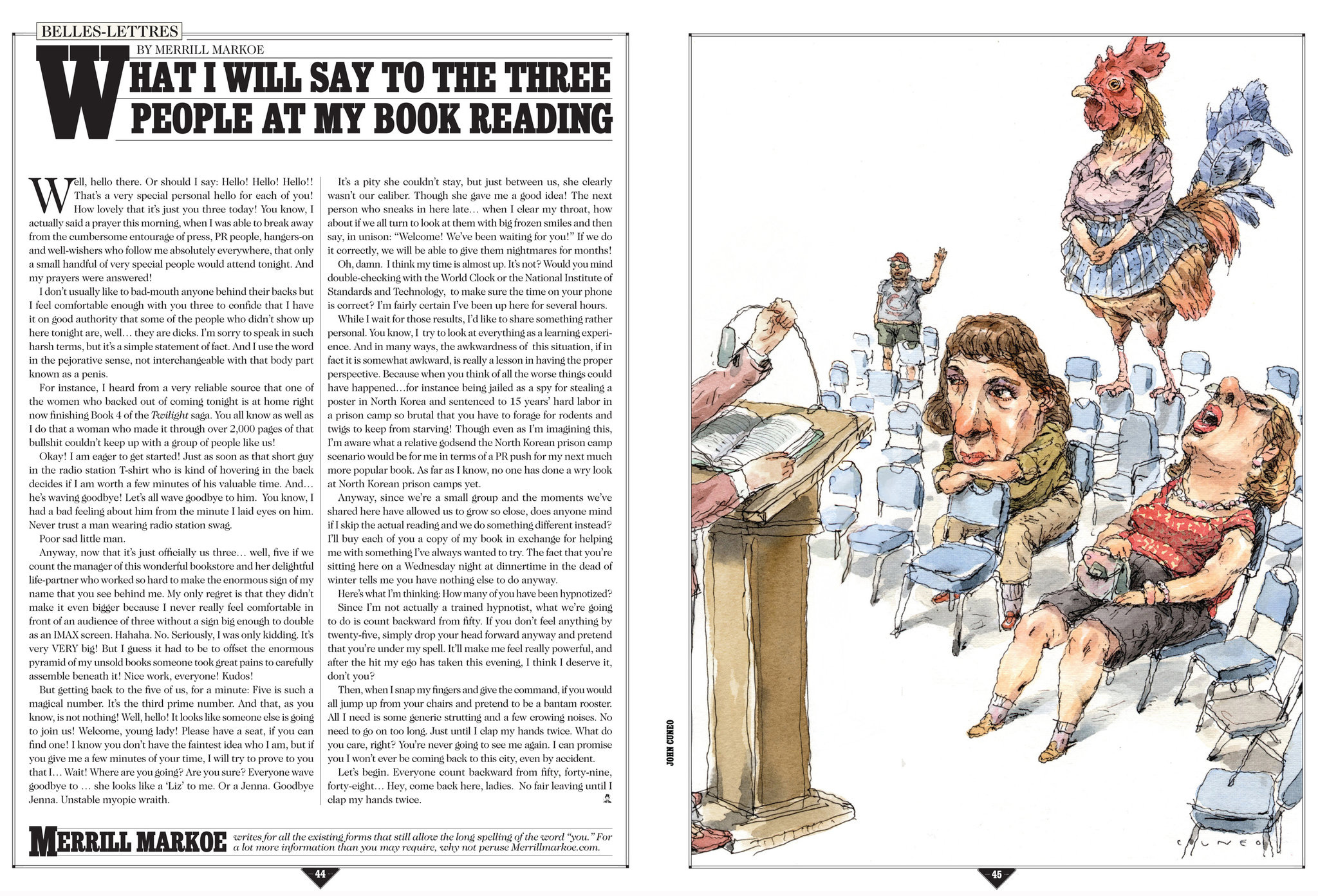
Sam started explaining what it was, and as he flipped through the pages to show me the cartoons, my jaw hit the floor. I was looking at a murderers’ row of comedy art. “This is everyone I love,” I remember thinking. “These are all my favourite cartoonists in here. What the hell? How long has this thing been around?”
Sam saw the absolute shock on my face. “Yeah, right?” he smirked. “You should submit to this.”
It takes a long time to put these interviews and recaps together. If you find my work valuable, I’d really love it if you’d consider upgrading to paid for just $1 a week. It makes all the difference.
Naturally, the moment he said that, the impostor syndrome kicked in with the weight of a freight train. I was so completely enamoured with this magazine, yet I had absolutely no idea it even existed. When I told this story to Michael on the stream, he just laughed. “Well, that’s kind of the story of the business right there,” he said…
“…Everybody loves it. Very few people know about it. We’re always trying to figure out how to get more people to know about it.”
Fast forward to today, and I am deeply proud to not only be a contributor to The Bystander but to have now hosted its “re-founder” to talk about exactly how this impossible publication came to exist.


The Trifecta and the Pitch
To understand The American Bystander, you have to understand the pedigree of the people who originally conceived it…
Back in 2012, Michael was approached by a comedy legend named Brian McConnachie, along with his friend and senior writer Alan Goldberg.
If you don’t know the name Brian McConnachie, you know his work. As Michael explains on the stream, Brian possesses what is arguably the holy grail of comedy resumes. “He’s the only person I know who worked for the original National Lampoon in the first five years,” Michael said. “And then SNL from ‘76 to ‘80. And then SCTV, like ‘80 to ‘82. So he’s the only person I know that has that sort of trifecta.”
Brian and Alan came to Michael with an idea: they wanted to do an old-fashioned radio show. They envisioned something akin to the legendary National Lampoon Radio Hour. They knew Michael was a bit of a wild card in the publishing world, so they pitched him the concept.
But Michael saw the logistical hurdles. “I don’t know how that business works,” he told them. “But I will tell you this, that if we do a magazine, you’ll get a podcast.” It was a brilliant bait-and-switch. The guys were intrigued. “All right,” they asked, “well, how would you do a magazine?”
This is where his unique background came into play. He’d spent years developing a highly specific, ultra-lean publishing model during his time running the Yale Record and studying college humour magazines. He understood the scrappy shoestring reality of getting physical pages printed.
At the time, Michael was just recovering from an illness that had plagued him for decades. He had no idea if he physically had the stamina to actually run a full-scale mag. So, he made them a deal: he’d use his lean publishing knowledge to put together a magazine “dummy” -a physical prototype of what the publication could look like- and hand it over to them to run with.
“I’ll give it to you,” Michael told them. “And then you can do what you want.” They agreed. The dummy was built. Now, they just needed the money.
The $5 Million Pitch & the Chinese Oligarchs
If you want to start a massive media venture the conventional way, you need capital. Usually, that means walking into a boardroom in Manhattan and asking for a ridiculous sum of money with a straight face.
Michael, Brian, and Alan tried to do exactly that. “We tried to get somebody to give us, you know, $5 million…” Michael explained. What followed was one of the most absurd, hilarious, and deeply questionable funding negotiations in publishing history. They found a potential investor who claimed he could secure the $5 million they needed because he was “in tight with a bunch of Chinese oligarchs.”
There was, however, a catch. And it was a massive, legally questionable catch. The investor told them he would hand over the money, but only under one condition: “If you put a bunch of the sons of Chinese oligarchs on your magazine masthead to give them H-1B visas.”
So. The future of the last great American humour magazine was resting on a geopolitical immigration fraud scheme designed to sneak the children of Chinese billionaires into the United States under the guise of being comedy editors…
As a guy who had to jump through a million legal hoops to get my own visa as an “Alien of Extraordinary Ability,” hearing this made me laugh out loud. And the wildest part? They said yes.
When you’re trying to get a print publication off the ground, morals occasionally take a back seat to capital. But alas, the shady international visa ring was not meant to be. The deal fell through at the very last minute. The oligarchs vanished, the $5 million disappeared, and the guys were left standing in a room with a magazine dummy and zero cash.
Michael handed Brian and Alan the dummy he had built. “Okay, here you go,” he told them. “Here’s a magazine. I’m going to go off and do something else.” Michael realised that if this magazine was going to survive, he was going to have to steer the ship himself. “Okay,” he said, “well then let me run it.”
The Shower Launch
With the $5 million oligarch funding dead in the water, Michael made a massive pivot. He decided to abandon the traditional corporate funding route entirely. Instead of begging rich guys for money, he decided to take the magazine directly to the people who would actually read it.
“I said to them, well, I think we could at least try to do one issue via Kickstarter,” Michael said. They approached it not as a recurring periodical but as a one-off project. “That first issue is like a book because we thought it was a one-off,” Michael explained.
It was October 2015. Michael had the Kickstarter page built and ready to go. He had absolutely no idea whether the internet was going to care about a print humour magazine.
The moment he actually launched the campaign is a piece of publishing legend...
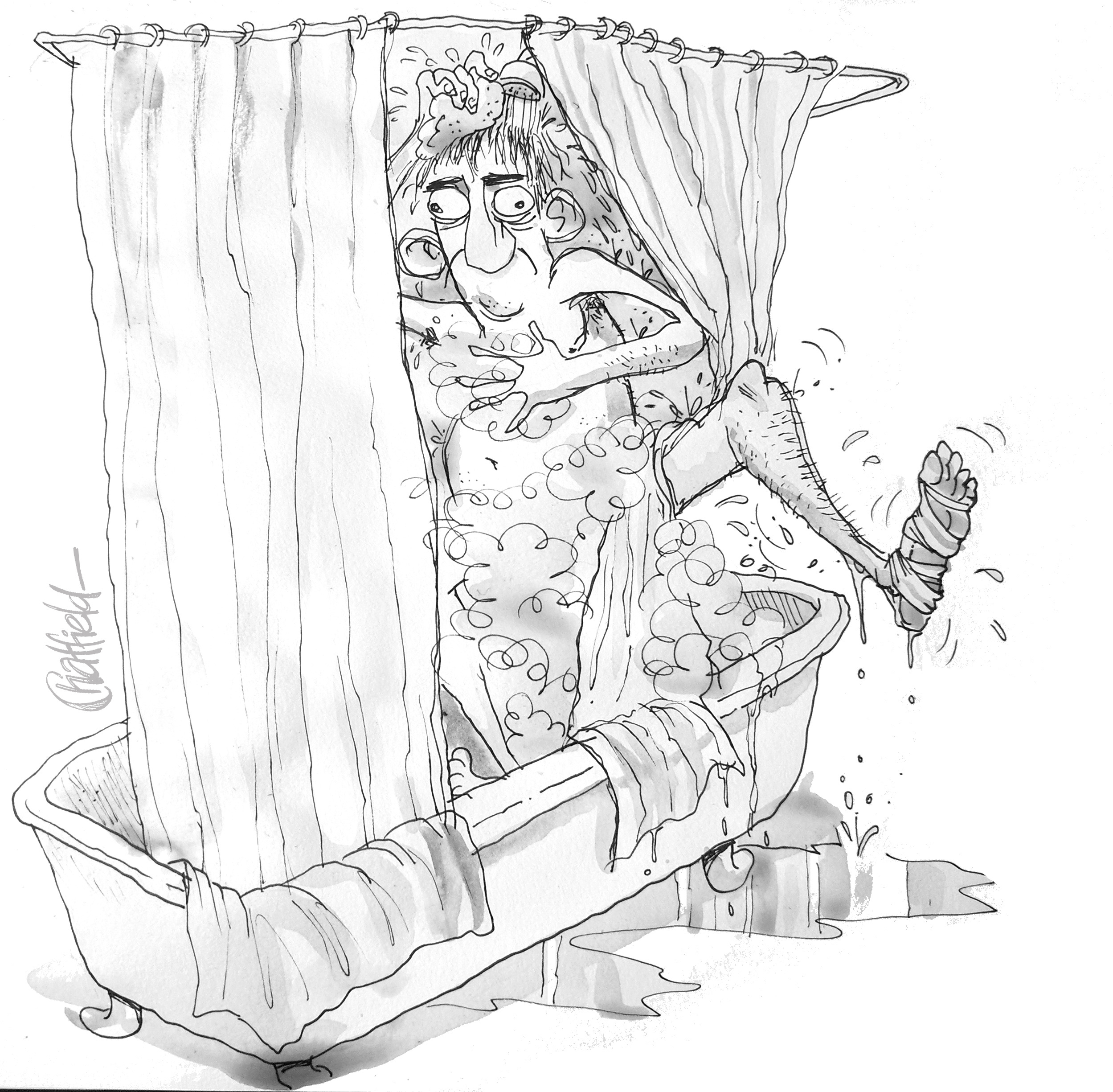
“I remember I was jumping in the shower,” Michael laughed on the stream. “So I was stark naked when I hit Go on the Kickstarter… and I thought either this is like a really good omen or a really terrible omen.” He pressed launch, naked, dripping wet, and hoped for the best.
It was a very good omen.
The campaign didn’t just fund; it funded very fucking quickly. The hunger for real, human-made, high-quality comedy art was palpable. People threw their money at the project. But the success immediately bred a brand new, terrifying problem for Michael. “We funded, and we funded quickly,” Michael said. “And then people are like, ‘When’s issue two coming out?’ And I’m like, okay, I guess I’m running a magazine now.”
Bypassing the Corporate Overlords
That was 11 years ago. For a print magazine to survive over a decade in the current media climate is nothing short of a miracle. But The Bystander didn’t just survive; it thrived because he refused to play by the broken rules of the corporate magazine industry.
During our chat, Michael broke down exactly why the traditional publishing model is a doomed, rotting dinosaur. For decades, massive media conglomerates relied on a very specific “three-legged stool” to keep their magazines afloat. “The corporate magazine model is back in the day; it was essentially, you’d try to break even on your newsstand sales,” he said.
That was step one.
Step two was to actively haemorrhage money on subscriptions. If you’ve ever wondered why you used to get offers in the mail for a year of Esquire or Sports Illustrated for the price of a cup of coffee, it was entirely by design.
“You’d lose money on your subscriptions,” Michael noted. “Like Esquire will give you a year for $9 or whatever.” Why would a business actively lose money selling its own product? Because of step three:
The advertisers. (oof)
By practically giving the magazine away for free, the publishers could artificially inflate their subscriber numbers (known in the industry as the “rate base”). They would then take that massive, bloated number to Madison Avenue and charge advertisers exorbitant rates for full-page spreads.
“Your rate base from your newsstand sales and your subscriptions would be high enough that whatever profit you make come from your advertisers,”
The entire industry was a shell game. It wasn’t built on delivering great art to readers; it was built on delivering eyeballs to advertisers. And the moment the internet came along and advertisers realised they could target readers directly via Facebook and Google algorithms, the magazine industry’s three-legged stool completely collapsed.
The American Bystander said, “To hell with all of that!”
Michael’s model bypasses the corporate overlords and the advertisers entirely. It is a direct-to-reader, crowdfunded, subscriber-supported lifeboat. There are no ad executives dictating content. There are no SEO managers telling the cartoonists to optimise their jokes for the Google algorithm.
“The model is ballsy,” I told him during the stream. And it is. It relies entirely on the premise that if you put the greatest comedy writers and the greatest cartoonists in the world into a beautifully designed, high-quality physical object, people will actually pay for it.
The Slow Food of Comedy
Listening to him detail the survival of The Bystander was the exact antidote I needed after weeks of reading about generative AI and the death of media. (I know I write about it a lot too— I’m part of the problem. Sorry.)
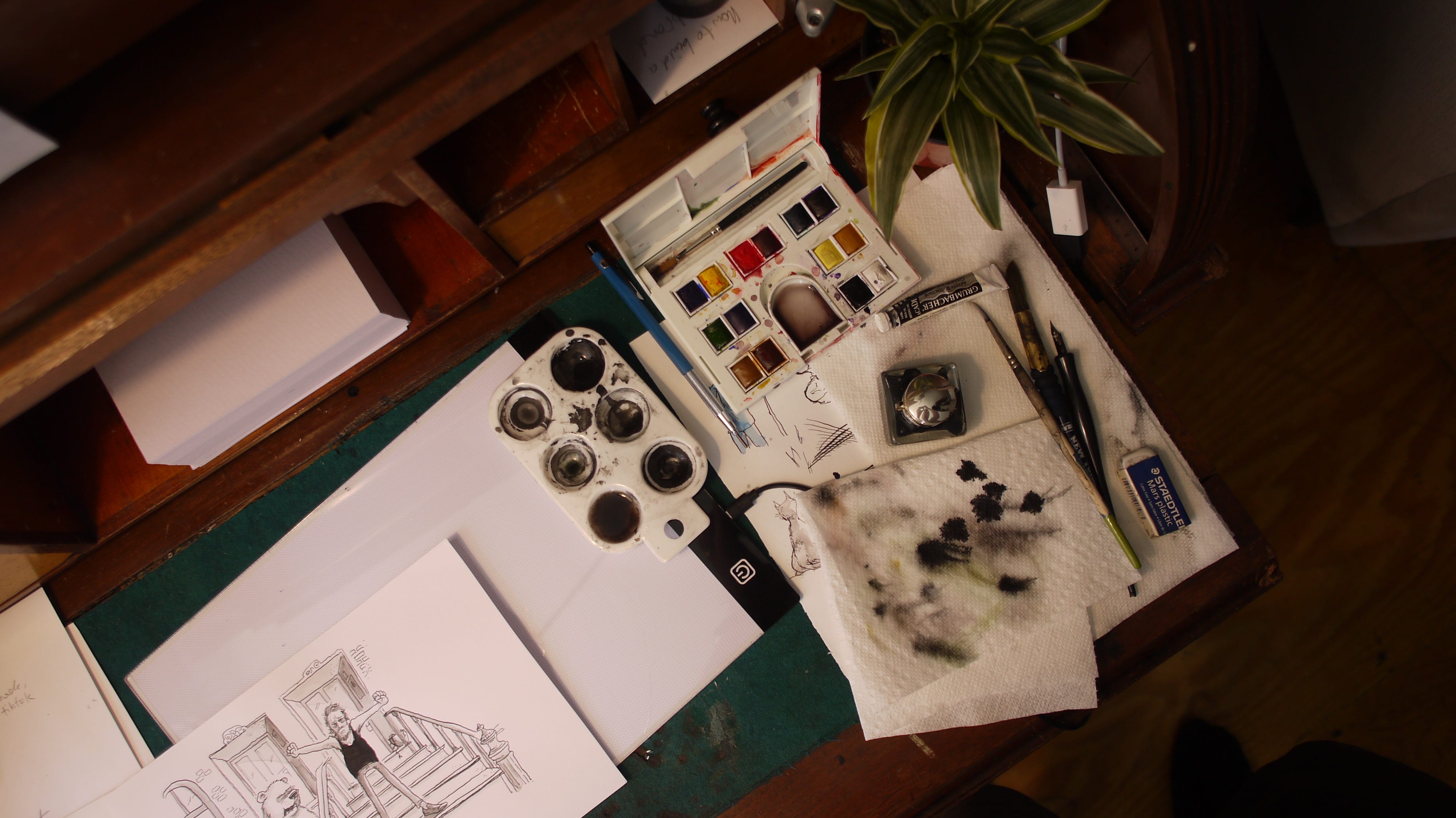
The Bystander is the “slow food” of comedy. We talked about this a bit. It takes time. It costs real money. It is printed on actual, tactile paper. And it requires a reader to sit down, disconnect from the endless scrolling slot machine of their phone, and actually engage with the work.
We’re living in an era where tech companies are trying to convince us that art is just “content” to be generated by a machine in 0.4 seconds. But as Michael and the entire roster of Bystander contributors prove, you can’t automate a joke. You can’t code a machine to replicate the smell of fresh ink on a page, or the decades of brutal, bombing nights at open mics it takes to find a punchline.
The Bystander is proof that if you stop trying to sound like everyone else on the internet, and just build something you actually care about, people will eventually find you.
‘til next time!
Your pal,

PS. Look, if this actually did something for your brain (or at least distracted you from the creeping dread of your own inbox for six minutes), please consider restacking this and sharing it with your people. It’s the only way the word spreads.