





I live in an ancient little apartment a block from Times Square, because I love cooking dinner in my bedroom.
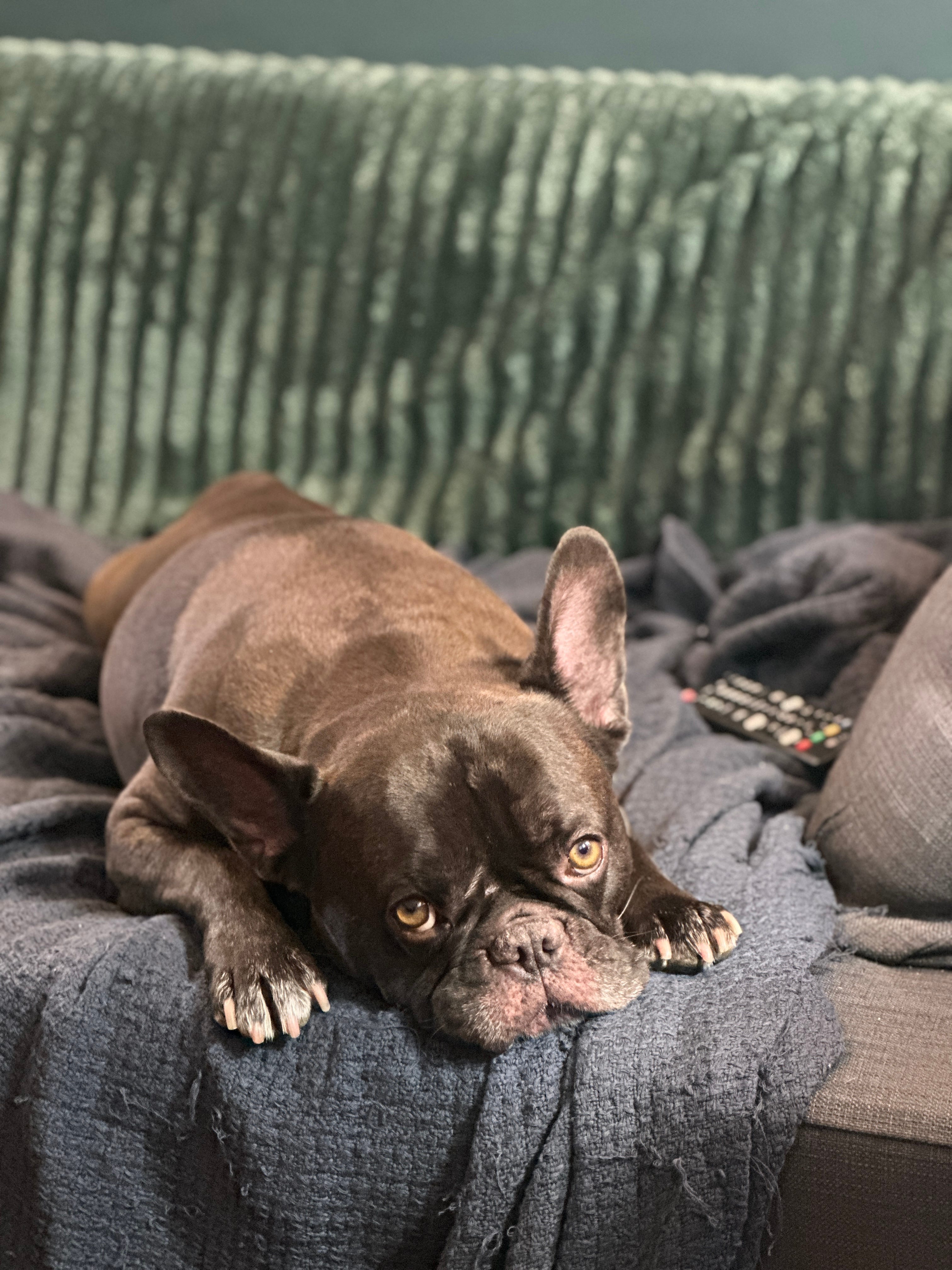
It’s more of a ‘Pre-War Cupboard’ really. I ordered a mini fridge the other day because I needed a guest bedroom. Morris, my French bulldog, is asleep on a pile of discarded drawing paper, completely unbothered by the fact that his gourmet kibble requires legal tender. My radiator clangs with the aggressive rhythm of a stolen Citibike being dragged backwards down a flight of subway stairs.
It’s a very particular kind of anxiety. You want to make art, but you also want to occasionally eat a Chipotle burrito (strictly no beans). It’s an impossible Venn diagram. I’ve made my living for twenty-one years as a freelance artist and comedian. I don’t have a day job, I don’t have a side hustle, and I don’t have a wealthy patron bankrolling my Blackwing addiction.
Luckily, Mason Currey came on the show this week. He’s the author of Daily Rituals, a book I devoured during the pandemic, and his new hardcover is out right now. It’s called Making Art and Making a Living: Adventures in Funding a Creative Life.
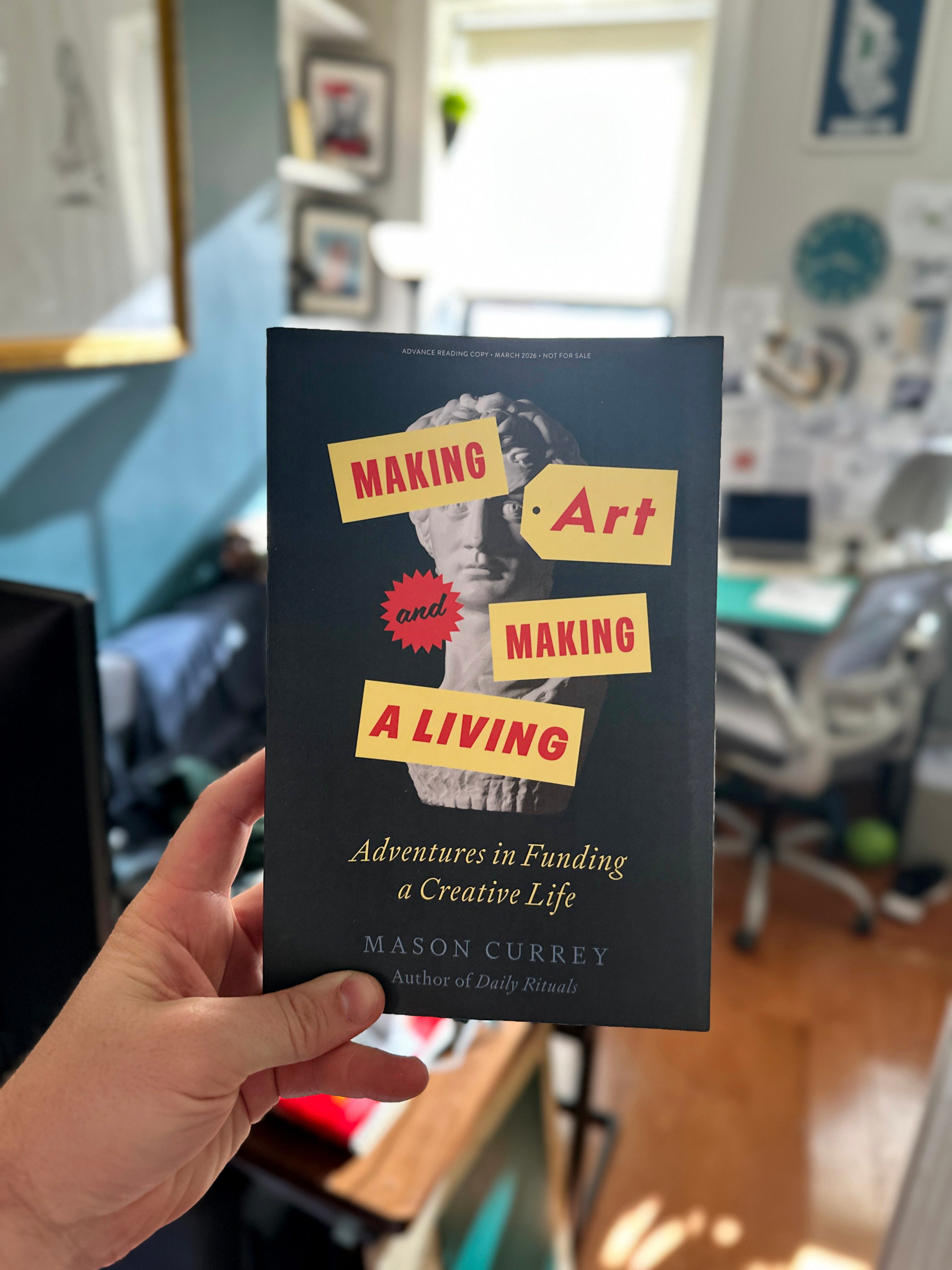
When I first saw the title, I told Mason my immediate thought process. “I initially, when I got the book, thought it was finding a creative life,” I said. “And I was like, oh no, it’s way more important. Funding! It’s about money.”
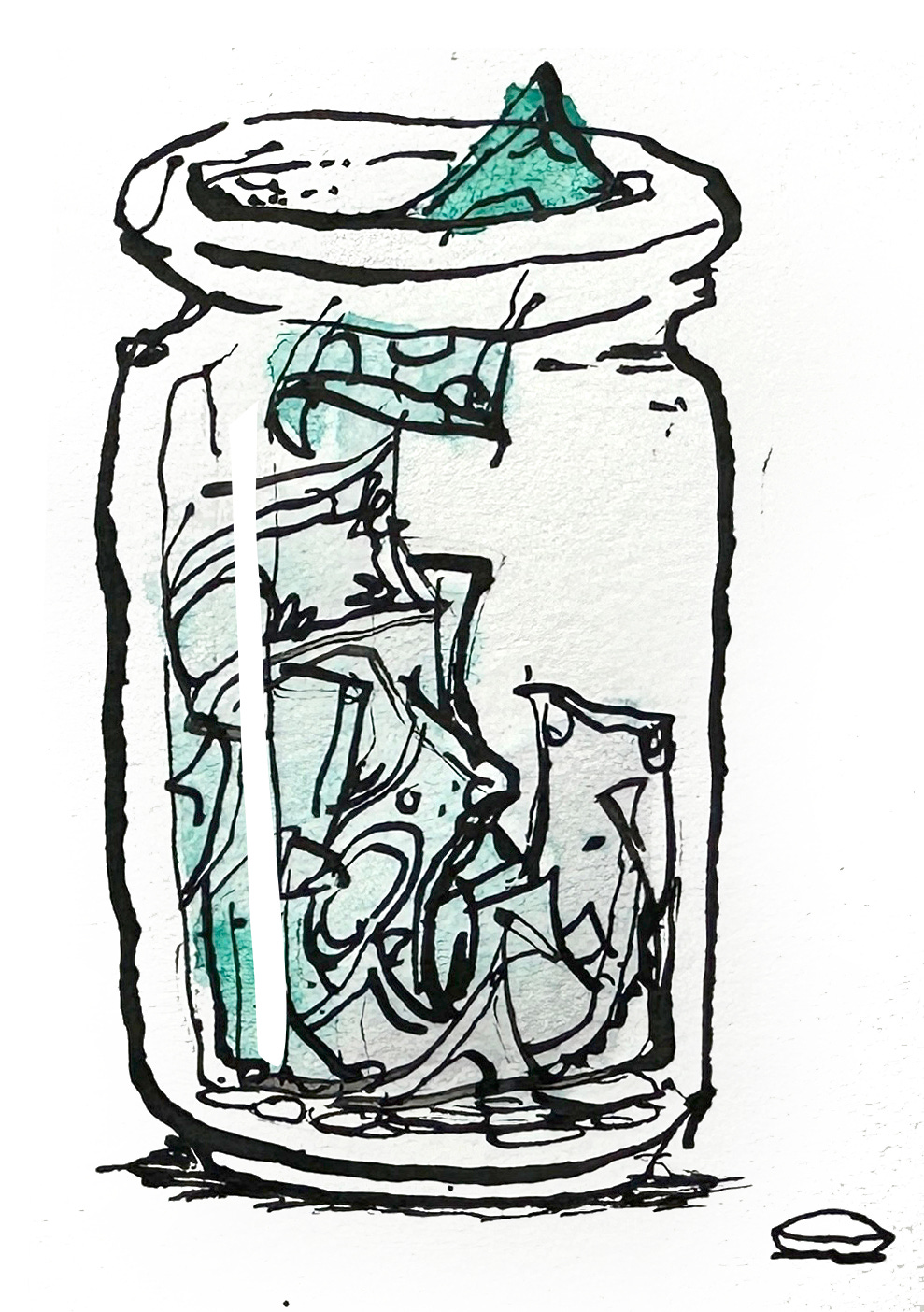
We got into the weeds of how historical geniuses paid their bills, and honestly, it’s comforting to realise they were mostly just flailing around like the rest of us.
I started by asking about Arthur Schopenhauer, who managed to dodge a soul-crushing life in mercantile finance solely because his father died and left him an inheritance. I spend half my time wandering the concrete canyons of Manhattan, wondering how to pay my rent, so I had to ask Mason: Is the secret to artistic genius really just having a rich dad who dies at the exact right time?
“James Joyce, for instance, was an absolute nightmare of a human being…”
It turns out, the answer is a complicated ‘yes and no’. We discussed Charles Baudelaire, whose letters to his mother sounded violently familiar. I’ve always carried this quiet, crushing shame that I can’t just sit at a desk at 9:00am and produce brilliance. I struggle with regulating attention on demand and initiating tasks without a heroic amount of friction. When I can’t meet expectations, it feels intensely personal, like a reflection of who I am at my core.
I asked Mason if Baudelaire’s legendary financial chaos was a symptom of executive dysfunction. Mason pointed out that Baudelaire would let pressure build up until he was in a mad panic. “He talks about how he can’t make himself do the thing until it’s built up so much pressure that he finally does it in this explosion,” Mason said. “He sort of had run up so much debt that he’s forced to dodge creditors and continually be moving from place to place.”
If you enjoy my work and would like to support, please take out a premium subscription (just $1 per week)
Leaving things until the absolute last second to manufacture adrenaline is a textbook symptom of ADHD. Baudelaire didn’t have the diagnostic criteria to explain his dopamine dysregulation, but he had the frantic, desperate energy of a man trying to outrun his own brain. He blew his inheritance, dodged his landlords, and begged his mother for loans just to buy firewood.
“The odd jobs that used to support young artists have basically evaporated… They’ve been swallowed up by algorithms and artificial intelligence.”
We talked about the absolute absurdity of how some artists survived their financial ruin. John Cage funded his avant-garde music by going on an Italian television quiz show as an amateur mushroom expert. (As one does). He won the modern equivalent of ninety grand and bought a Volkswagen van. I asked, "Are we all just one weird reality TV appearance away from funding our next creative project? Do I need to go on a baking programme and pretend I care about fondant just to afford fresh watercolour pans?” (I’m kidding. I did that already…)
Then there’s Fernando Pessoa, who inherited a hefty chunk of change. Did he invest it sensibly to live off the interest? Hell No! He blew the entire inheritance in less than a year, having an incredibly expensive printing press shipped from Spain to Portugal, of course…

We also spoke about the absurd methods we use to force ourselves into a productive headspace. For sixteen years, the only way I could get my daily newspaper comic strip done was a highly specific, slightly unhinged ritual. I told Mason all about Scotch Bath Sunday. I would get in the bathtub, pour myself a generous glass of peaty Scotch, and sit there with a yellow legal pad. No phones, no iPads, no laptops. Just me, the boiling water, and the looming terror of a deadline.
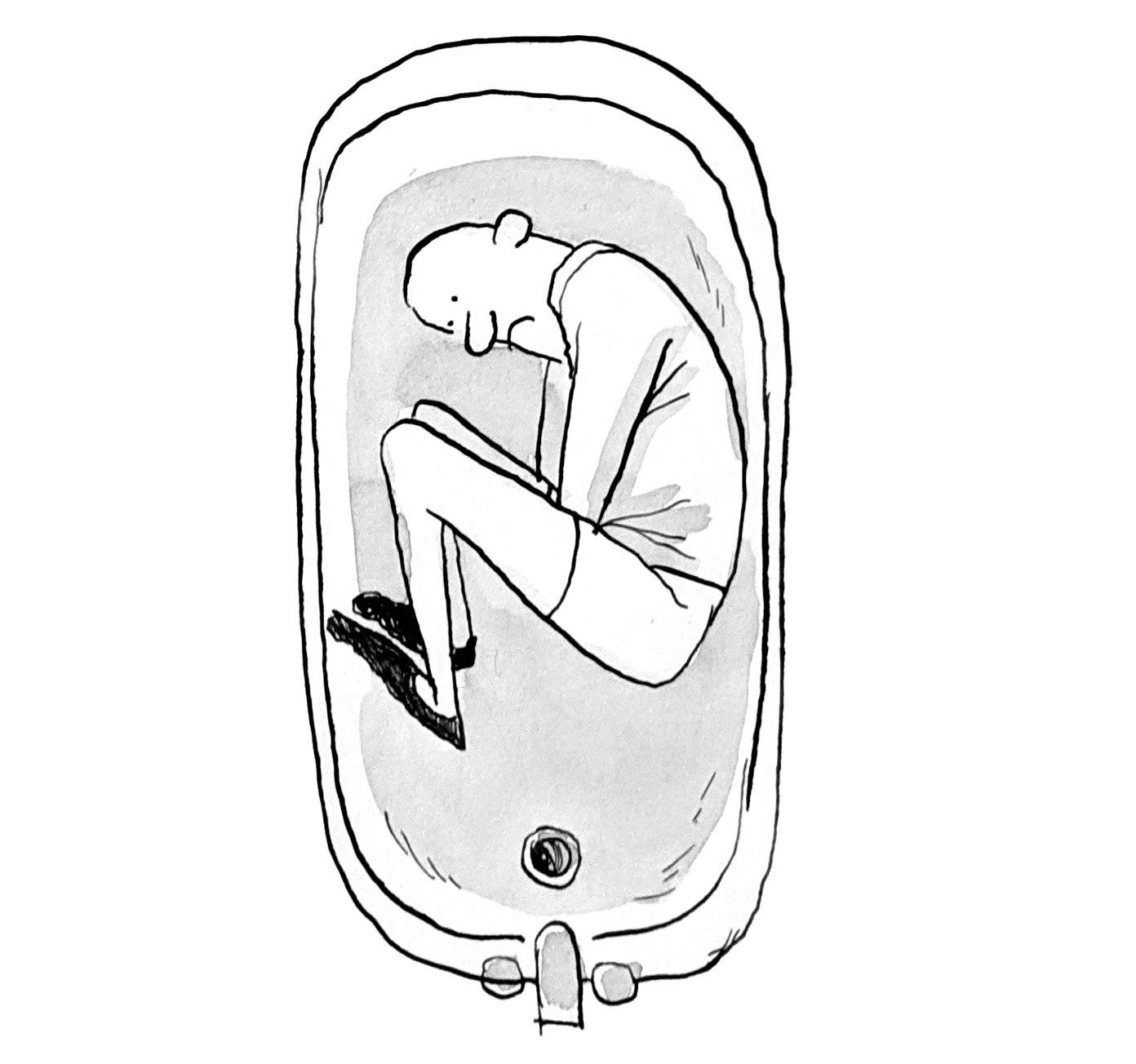
Mason loved it. “I think there is a little bit of superstition there,” he said, “but there’s also something really powerful about the repetition. You train your mind to get into that particular headspace on a somewhat regular basis.”
It works incredibly well until the water goes cold and you realise you’re just a forty-one-year-old man marinating in a tepid soup of his own dead skin cells, staring at a damp legal pad, trying to think of a punchline while the upstairs neighbour’s kid practices the souzaphone.
The deeper we got into the book, the more I started to actively resent some of my artistic heroes. James Joyce, for instance, was an absolute nightmare of a human being. While he was writing the stories that would become Dubliners, he was living in Trieste, completely neglecting his duties as a father, and drinking himself into an aggressive stupor. His younger brother had to constantly drag him out of pubs, pay his rent, and keep him alive.
Joyce literally promised to dedicate the book to the brother who bankrolled his survival, and then, when it was published, he just conveniently forgot... I’ve been a comedian doing stand-up in this city for a long time, but even the most narcissistic comics I know would at least buy you a watered-down well drink after draining your life savings.

Then you have the people who required absolute stability, which is a concept my brain simply rejects. Wallace Stevens thrived as an insurance executive. Virginia Woolf relied on an inherited income of £400 a year to buy herself the freedom to write for three and a half hours every morning, 330 days a year. She had the safety net to avoid the constant, buzzing panic of impending destitution.
But the odd jobs that used to support young artists in New York have basically evaporated. Grace Hartigan used to take what she called a “tabulating job for morons” to fund her painting. Those jobs are gone. They’ve been swallowed up by algorithms and artificial intelligence. The first rung of the ladder has been pulled up, and now artists are just expected to stare into a glowing rectangle and monetise their every waking thought. We don’t get to mindlessly file papers while listening to a podcast; we have to be our own marketing department, social media manager, and accountant.
We inevitably touched on the anxiety of modern technology and the suffocating pressure of financial insecurity. Mason put it brilliantly when quoting the publisher Anne Trubek. She said,
“Financial stress is the rule, not the exception.”
It’s incredibly validating to hear that out loud. You always harbour this secret, internal belief that if you’re just good enough, the money will magically appear. You think that real artists don’t worry about the electricity bill. But the reality is a constant, grinding hustle. Even Van Gogh, who forced his brother Theo to act as his personal ATM, felt the deep, terrible friction of trying to survive in a marketplace that didn’t understand him.
I asked Mason what his ultimate verdict was after spending years researching these magnificent, deeply flawed minds. Should a working artist hold out for a wealthy patron, suffer through an insurance job like Kafka, or just accept the chaotic struggle?
He said, “I feel like the secret message of the bookis like when you have to decide between being more pragmatic or being less- to err on the side of being less pragmatic. In favour of chasing your instincts and seeing where they lead and maybe figuring out the money part later, if you can deal with it.”
I actually think it’s the only advice that makes any sense in a world this fundamentally ridiculous. You have to chase the instinct. You have to follow the weird, impractical urge to draw, or write, or compose. Even if it means you end up slightly broke, clutching a Blackwing pencil, listening to the clanking Hell’s Kitchen radiator, and wondering if your French bulldog is secretly plotting to eat you the second your bank account hits zero.
Anyway, enjoy the replay! Thank you for supporting my work and ensuring my account does not indeed hit zero.
‘til next time!
Your pal,

PS. Look, if this actually did something for your brain (or at least distracted you from the creeping dread of your own inbox for six minutes), please consider restacking this and sharing it with your people. It’s the only way the word spreads.
Related Reading:


