I spent an hour yesterday talking to Elijah Woolery and Aarron Walter from the Design Better podcast, and by “talking,” I mean I went on several extended, caffeinated tangents about the existential dread of artificial intelligence, my masochistic love for 19th-century stationery, and how bombing at open mics is a legitimate business strategy.
(Eli was the incredible design lecturer who invited me to lecture at Stanford last fall. You can read all about that below.)

We covered a frankly ridiculous amount of ground. It was supposed to be an AMA about the creative process and the human experience, but it steadily morphed into a group therapy session for creatives trying to survive in a world rapidly being swallowed by digital slop.

(Before we get into the weeds: If you want to watch the full replay of the hour-long chat, hear me unravel in real-time, and get access to the complete archive of these interviews, hit the upgrade button below. It costs just a few bucks a month, and it goes directly toward funding my creative work here in this Newsletter.)
The Uncanny Valley and the Return of the “Wobble”
We started the session by addressing the elephant in the server room: Artificial Intelligence. Right now, the markets are dropping, people are panicking, and the anxiety about AI eliminating creative jobs is palpable. I’ve felt it myself. I told the guys how AI has essentially eaten up a massive chunk of my freelance work: Agencies are telling me they’re using Midjourney for storyboards and concept sketches, and then a week later, the art directors themselves are getting laid off. The rooms are emptying out.
But there is a silver lining, and it’s a deeply human one. Aarron brought up a great comparison to the 1830s in the UK, during the height of the Industrial Revolution. Factories were being built, physical labour jobs were being eliminated, and everything was suddenly being mass-produced. The human pushback to that era of mechanisation was the “Arts and Crafts movement” -a massive cultural pivot back toward physical craft, craftsmanship, and things made by hand.
We are seeing the exact same reflexive reaction right now.
Related Reading:
The Slow Burn of "Mastery"

I was recently revisiting Thinking, Fast and Slow by the late, great Daniel Kahneman, and I stumbled upon a passage that stopped me cold. It was about chess, and the sheer, grinding volume of time it…
Consumers are getting sick of seeing digital art that feels “very antiseptic, very clean and neat and a little too perfect”. There is a visceral swing back toward the bespoke and the analogue. Aarron mentioned that his 12-year-old son can spot an AI YouTube video in a split second, and his immediate instinct is to reject it. (Heartening…)
It’s the “Uncanny Valley” -that deeply unsettling feeling you get when something is mimicking human creation but is just slightly off. You know, like any Robert Zemeckis film? Evolutionarily speaking, this response actually activates our fight-or-flight instincts. It’s a protective mechanism we developed to identify illness or camouflage predators in the wild, and now it’s firing on all cylinders when we look at a digitally generated rendering of a dog with six legs. People want to see the human behind the pen; they want to see the “wobble in the line” that acts like a heartbeat connecting the artist to the audience.

“We Are Being Sold a Lie”
This led to a quote I’d written recently, which Eli brought up during the chat: “We’re currently being sold a lie that the value of creation lies solely in the output”.
If you just type a prompt into a machine and let it spit out a finished image or essay, you’re skipping the entire neural architecture required to understand the game. You are skipping the struggle. I reread Daniel Kahneman’s Thinking, Fast and Slow recently, and it constantly reminds me that the dopamine hit shouldn’t just come at the end when you hit “publish” or turn in an assignment. The dopamine has to come from the making of the thing: The process.
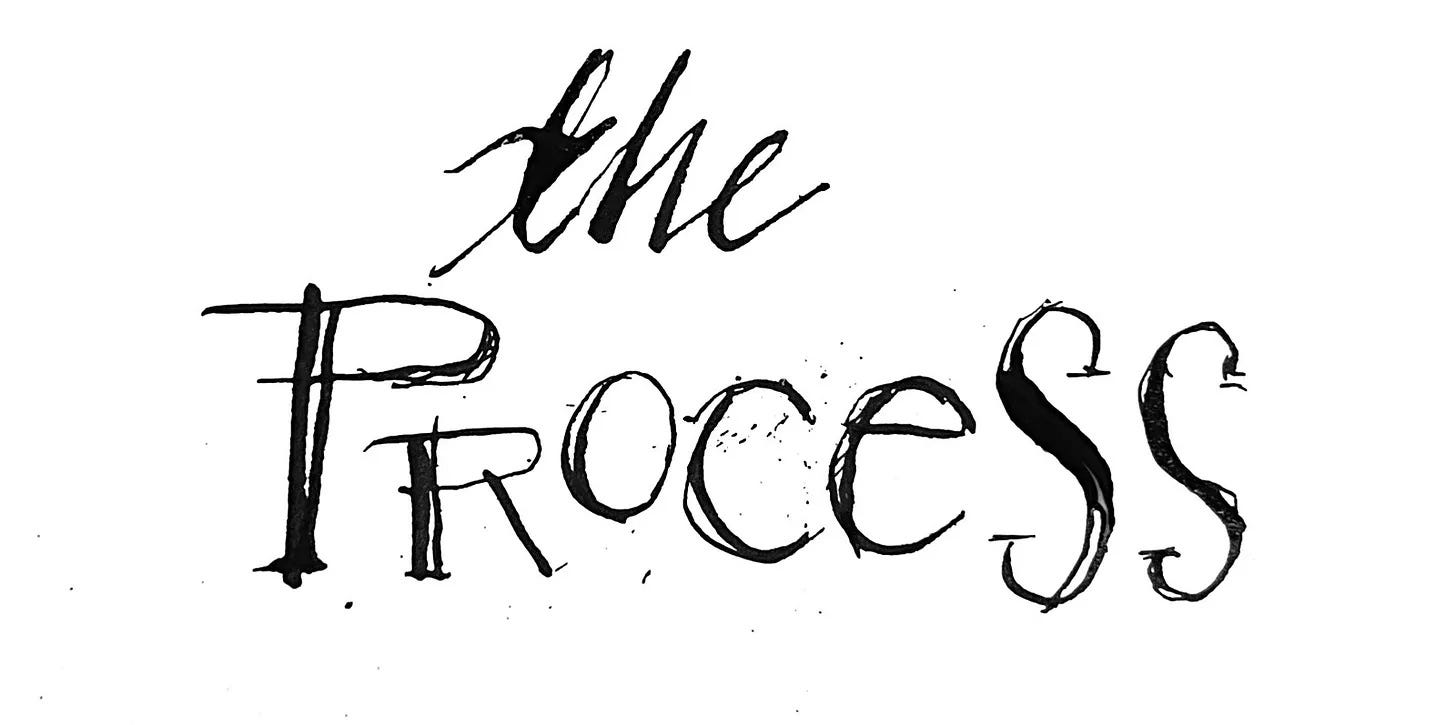
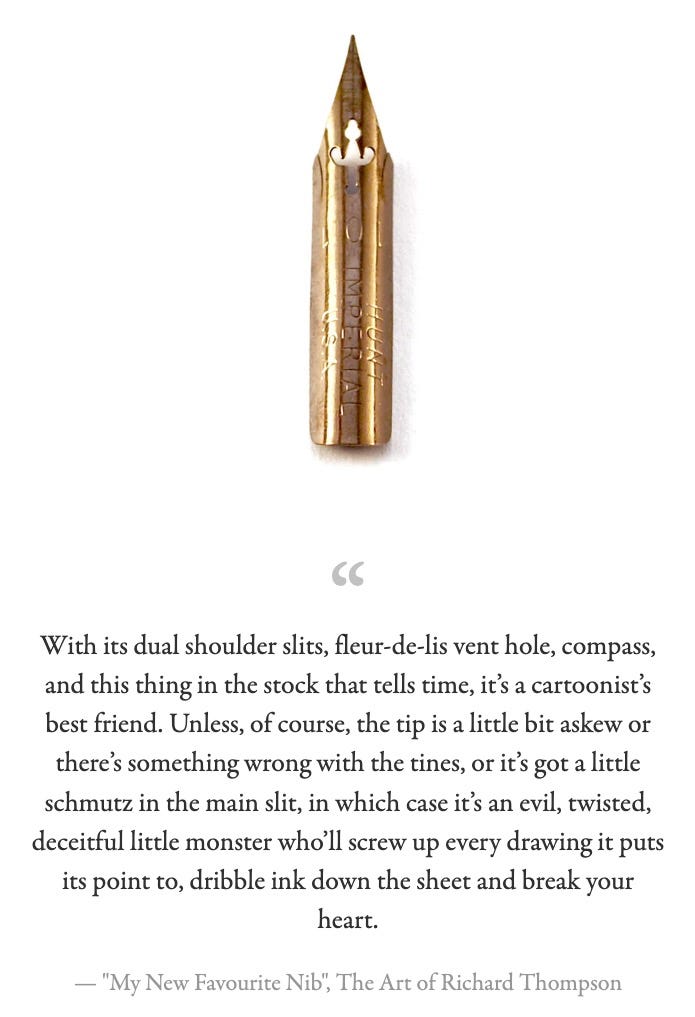
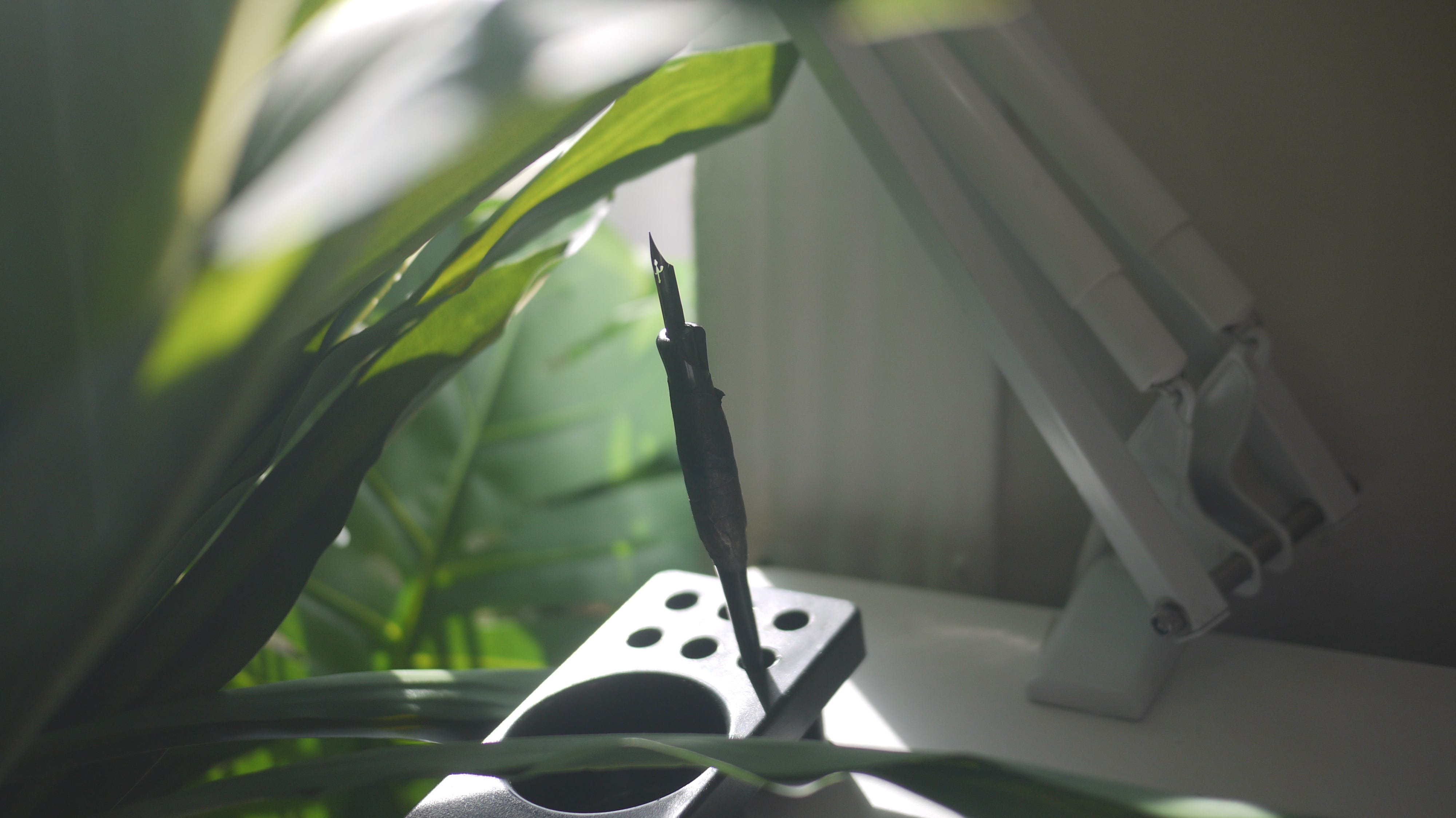
This is why I am a certified demon for dip pen nibs. I held up my Hunt 101 Imperial on the camera—a deeply inconvenient, 19th-century invention that will absolutely break your heart. “One blob of ink just like coming out of the nib at the wrong angle and the whole thing’s ruined,” I explained. But that constant threat of failure makes you entirely present. It slows you down. You have to physically dip the pen, make your mark, and be in the moment.
We geeked out over other analogue tools, too. Eli talked about buying vinyl records, like Sam Beam’s new album, and holding a beautiful, physical piece of art. Aarron showed off an Olivetti Valentine typewriter that his wife got him, and I whipped out the vintage Royal typewriter my buddy Ethan gave me. There is a profound connection to the lineage of human history when you use these tactile objects. It’s the ultimate resistance to the spinning wheel of death.
If you enjoy my work and would like to support, please take out a premium subscription (just $1 per week)
How to Find Your Style (and Steal Like an Artist)
We took some questions from the chat, and Paula asked how I went about discovering my drawing style.
The truth is, my style is just a chaotic amalgam of my favourite artists. I never went to art school. My grades in high school weren’t great, mostly due to undiagnosed ADHD and a complete inability to learn in a rigid learning environment. I used to just disappear into my drawings, trying to reverse-engineer artists like Bob Camp/John Kricfalusi, Tex Avery, and the legends at Mad Magazine like Mort Drucker and Jack Davis. I graduated and went straight into working as a printer, getting deep into the weeds with Heidelberg presses and 19th-century guillotines.
But some of the best advice I ever got on “style” was when I was 17. There was only one cartooning job in my hometown of Perth, Australia, and it belonged to Dean Alston at The West Australian. He gave me a test. He said, “Draw me a truck on the side of the road”.
I drew the truck, but I also drew the curb, the sidewalk, and a little sewer grate. He looked at how I interpreted the world on that page and said, “That’s your style now…”. He also told me, “If you stick with this career, that style you’re looking at on the page will change at least six times over the next few decades”, which was incredibly liberating.
You don’t just “find” your style. You build it by pasting together bits of Ronald Searle, Ralph Steadman, and Richard Thompson, until it looks like something nobody else is doing.
Related Reading:
'How do you decide who you're going to be when you get up in the morning?'

The question landed like a perfectly timed comedic slap.

What Stand-Up Taught Me About Substack
Towards the end, Matt asked a brilliant question: “What was unexpected learning from stand-up comedy that translated to Substack cartooning?”
The answer is: Learning how to bomb.
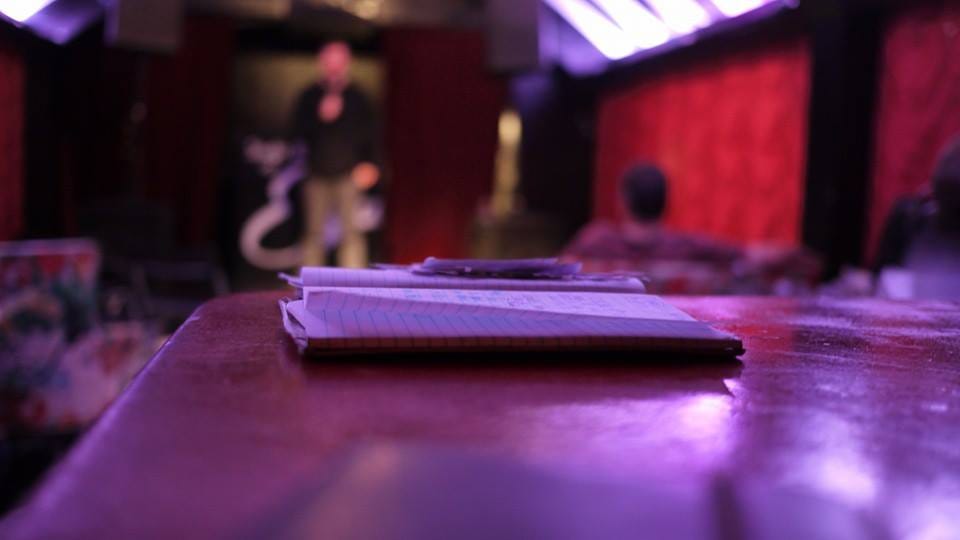
I’ve been doing comedy for 19 years, and I still do open mics when I’m working out brand new material. You can’t write comedy in a vacuum. You might think you have the greatest joke in the world, but until you say it into a microphone in a sticky-floored basement, you have no idea if it actually works. Comedy is the ultimate masochistic sport. It forces you to try things, fail miserably, tighten the wording, tack it onto a bit about couscous, and try the next night again. Then again. Aaaand again.

When I first started this Substack in 2020, I didn’t treat it like an open mic. I treated it like a final exam. I was terrified of bothering people in their inboxes, which is a very intimate space. My subscriber graph was a flat line because I was paralysed by perfectionism, posting maybe once a month.
Then, I finally decided to poll my readers and ask them how often they actually wanted to hear from me. The overwhelming response was essentially: “As much as you like. Just send it, you’re overthinking this.”

So, I took the stand-up approach. I stopped being precious. I started throwing things at the wall just to see what would stick. I realised that people weren’t subscribing to a slick, polished corporate product that solved a specific problem; they were just subscribing to me. They wanted to know what my life looked like.
Now, between my Tuesday recaps, my Draw Me Anything live streams, and these essays, I post about four to five times a week. I thought my numbers would plummet, but the exact opposite happened. The community grew!
We wrapped up the AMA with a few plugs. If you haven’t yet, you can go to realdogowner.com to check out my latest book, You’re Not a Real Dog Owner Until.... If you order a copy, I am drawing portraits of people’s dogs into the book in pencil before sending them out. It’s wildly time-consuming, but as we’ve established, I have a sickness for doing things the hard, analogue way.
A massive thank you to Aaron and Eli for having me on. It was a blast.
And seriously, if you made it this far, consider upgrading to a paid subscription so you can watch the entire glorious video replay.
‘til next time!
Your pal,