



Some notable quotes from this week’s episode:
“There’s more to life than money, which is lucky because I’m a cartoonist.”
“At some point, you realise you’re not learning to draw- you’re learning how to keep drawing.”
“AI is fake—it’s all about pretending to be human. But it can’t feel the exhaustion or joy that goes into a single line.”
“You have a scientist’s mind—you’re a cartoonist with a scientist’s brain.”
“Anything that’s going to work for us is about us being more human; making connections.”
“The way AI gets traction is by making things cute. Look at the cute thing! Don’t think about the data centres sucking up water.”
“I care about people, the planet, and being authentic. I hate fakery- any kind of fakery.”
“Late-stage capitalism isn’t a tale as old as time—it’s our own special kind of hell.”
“He’d hit that number and just stop, and then just live. He found his ‘enough.’”
“If you treat AI like human intelligence, it’s going to surprise you. It’s alien intelligence.”
“We evolved as cooperative animals who could pass on knowledge. It’s what we do best.”
“The problem is the AI is changing so fast, what I write now may not even apply in two years.”
“Artists in hard times draw for survival and mental health. It’s not new, it’s just our turn.”
“AI hasn’t reduced the admin- it’s added to it. You’re always learning new platforms instead of making art.”
“The freedom to be alive -to just decide to get up and go to the beach- is a reminder that this is all still a gift.”

DMA#30, with Alex Hallatt:
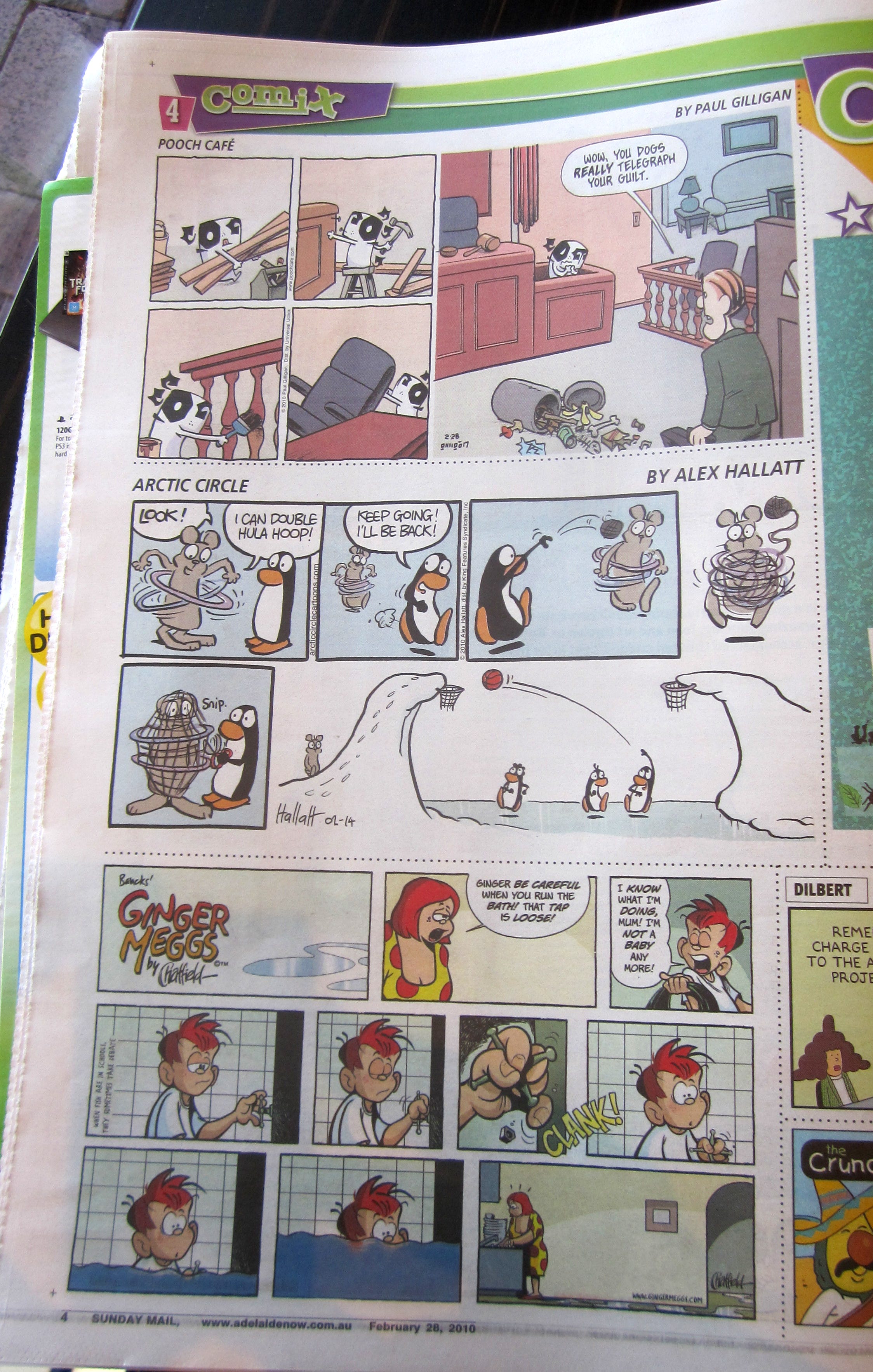
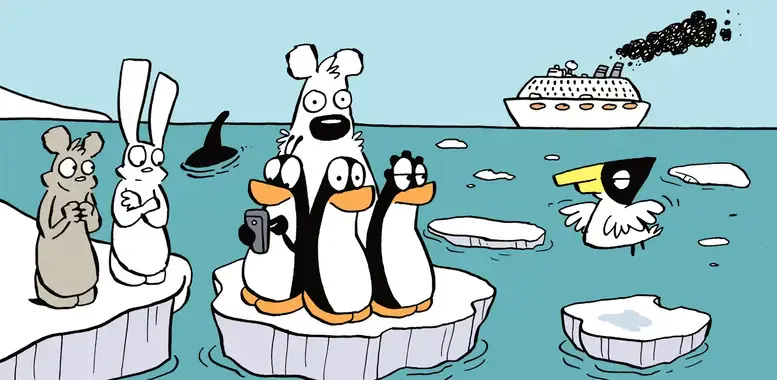
Today’s Draw Me Anything was one of my favourites yet- a lively, funny, occasionally existential chat with my old friend Alex Hallatt, the creator of the long-running comic strip Arctic Circle and the Substack Cartooning in the Age of AI. Alex and I go way back to our newspaper days in Australia, when her strip ran beside my legacy strip, Ginger Meggs, on the comics page. (Back when newspapers still had comics pages. Simpler times. Inkier hands.)
Now she’s living in the UK, drawing, painting, and writing travel sketchbooks like one of my faves, A Basque Diary—which, if you haven’t seen it, will make you want to sell everything and move to Spain with a fountain pen.
We talked about the question that every freelancer quietly obsesses over: what does “enough” look like? I told a story about a friend of the author of Company Of One who set a modest annual goal—to cover expenses, fund one holiday, and then stop working once he hit it. “He’d hit that number and just stop, and then just live.” I confess, I’m not built for that kind of restraint; I’ll probably die at the drawing table, surrounded by deadlines and coffee cups.
(Reference: “Enough” philosophy from Company Of One)
One of my favourite moments came when we talked about consumer minimalism. Alex admires actor Willem Dafoe’s “one-suit” philosophy: buy one good thing, use it forever. “We cartoonists are lucky,” she said. “We already look poor—it saves a fortune on wardrobe.”

We talked about the state of cartooning in a world run by algorithms. “AI is fake,” Alex said flatly. “It’s all about pretending to be human, but it can’t feel the exhaustion or joy that goes into a single line.” She sees AI less as a rival than as an alien intelligence—useful if handled carefully, terrifying if trusted too much. I nodded while silently imagining a robot army taking over Manhattan.
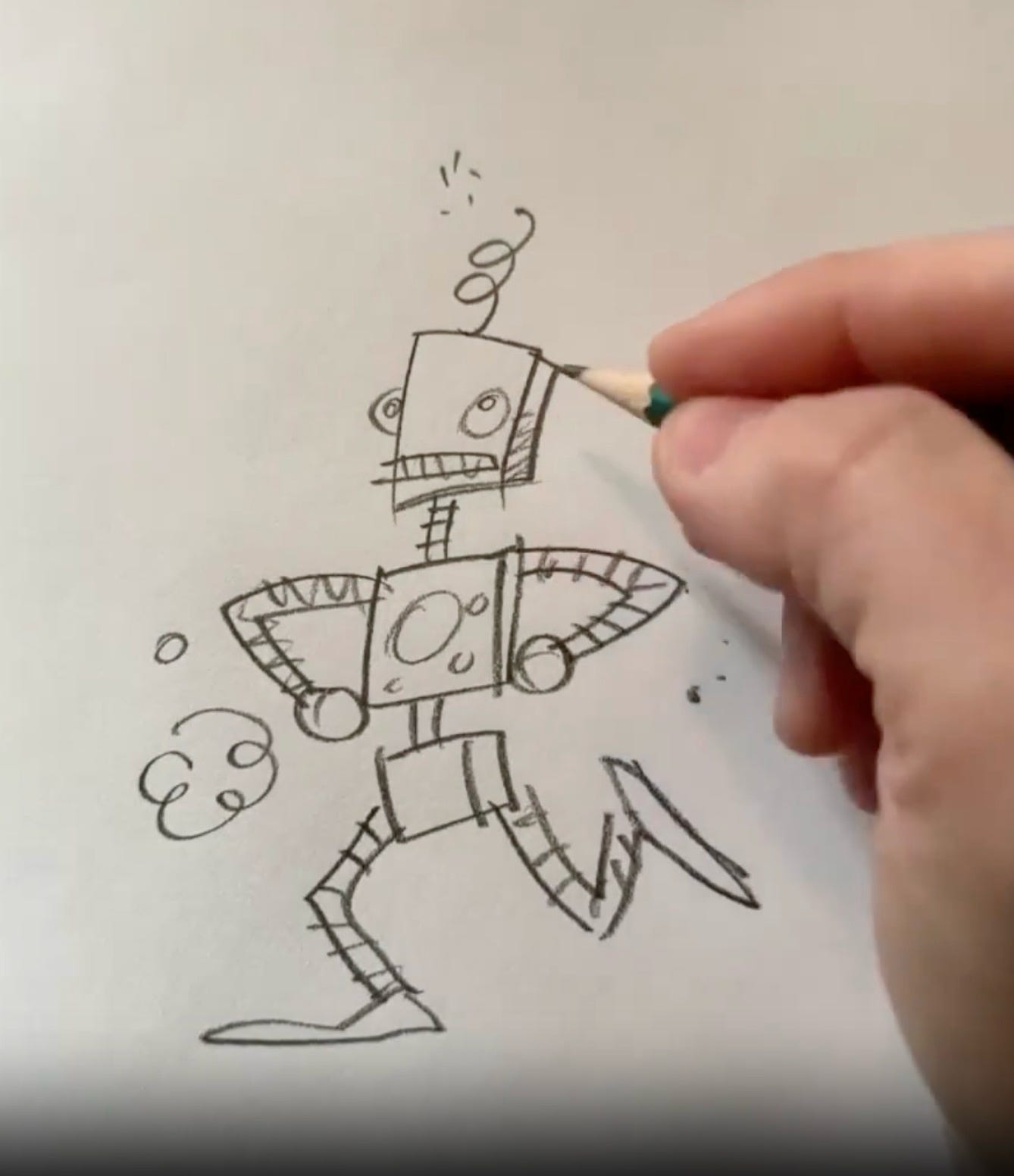
From there, we detoured into process: she draws on layout paper using Noodler’s ink because it dries fast and doesn’t smudge. “Dip pens are for masochists,” she said. I quietly hid the dip pen on my desk from camera view.
Viewers asked about how much time she spends promoting versus drawing. Her answer was painfully honest: “AI hasn’t reduced the admin—it’s added to it. Everything changes so fast, you’re constantly learning new platforms instead of just making work.” Every freelancer watching sighed in unison.
By the end, we were laughing about how we’d make a great podcast but would never start one because it sounds like work. The conversation wrapped on a hopeful note: that handmade art still has a pulse precisely because it’s human, flawed, and occasionally coffee-stained.
Related Reading:


