There’s a cartoon early in Rich Sparks’s new book of a man my age, alone in a bath, lifting a spoon to his lips. No setup, no crowd, no scene. Just the act, and a title underneath:
“Youp.”
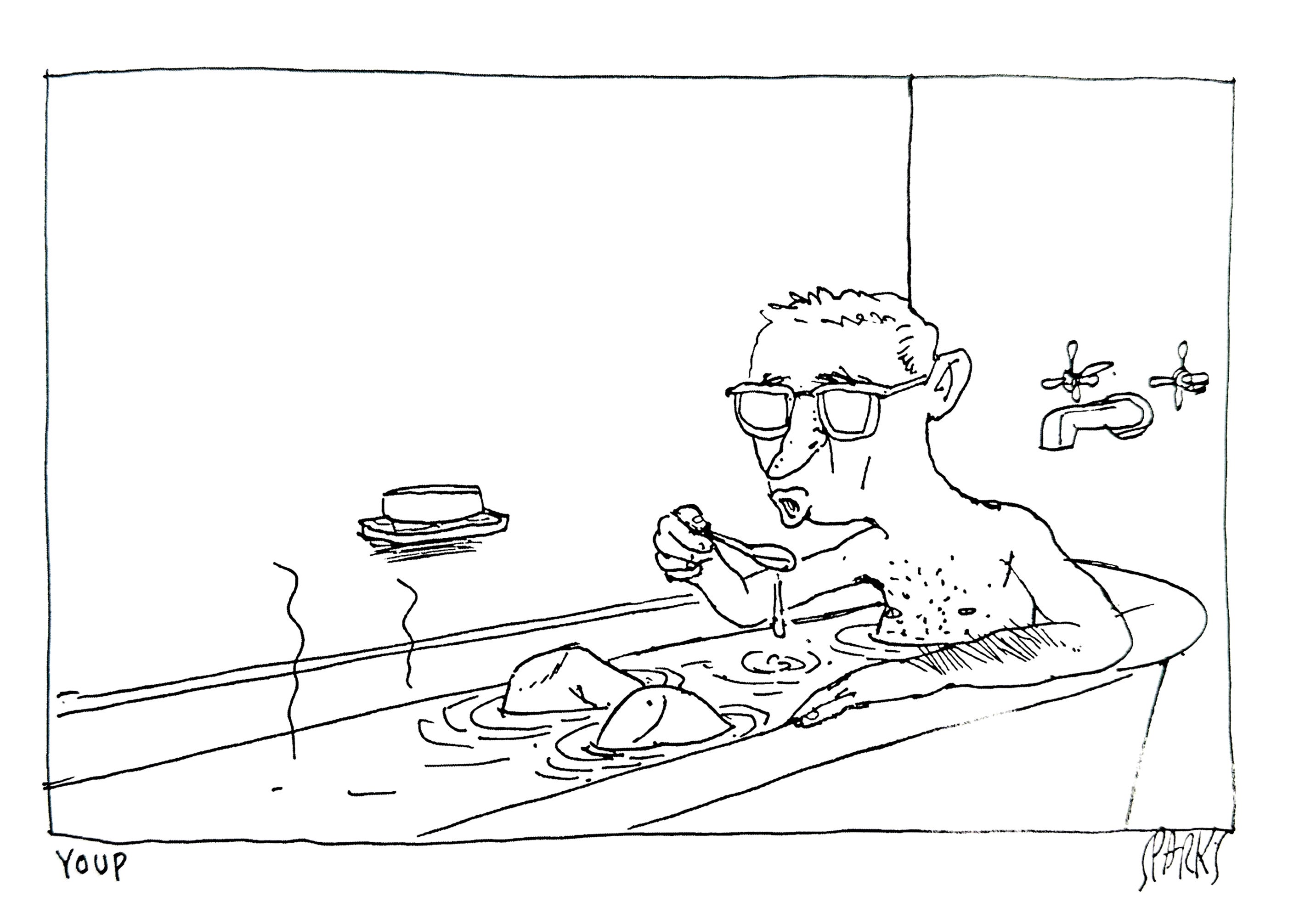
Where I’m from, that’s a diagnosis. My uncle Greg taught it to me as a child: “Mate, get a load of this bloke. He drinks his own fucken bath water.” (Australian for arrogant.) First cousin to tall poppy syndrome, that great national project of never letting anyone tout their own success.
I opened the book to that page first, and decided the next hour of my morning was spoken for. Which is roughly how the whole conversation went.
A book with no thread, which is the whole point…
The reason for the visit was Horseshoes and Tardigrades and Other Drawings, Rich’s new collection, put out by our mutual pal Marty over at The Weekly Humorist. A book of single-panel cartoons is one of the hardest things in the world to assemble, and I say that as someone who has tried. There’s no narrative. No theme. No throughline to hide behind. It’s just a brain, decanted onto a few hundred pages, arranged so a stranger will smile no matter where they crack it open.
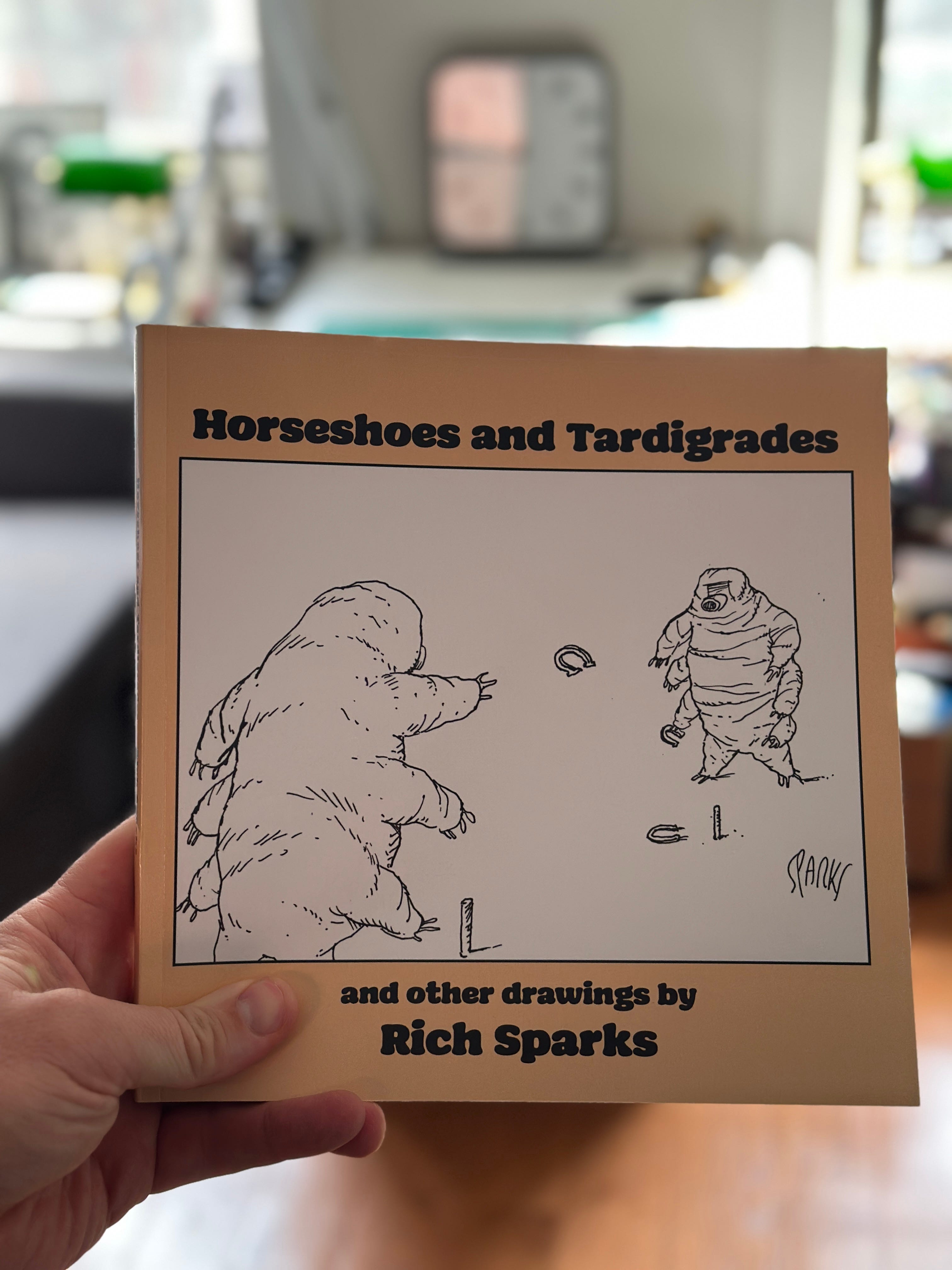
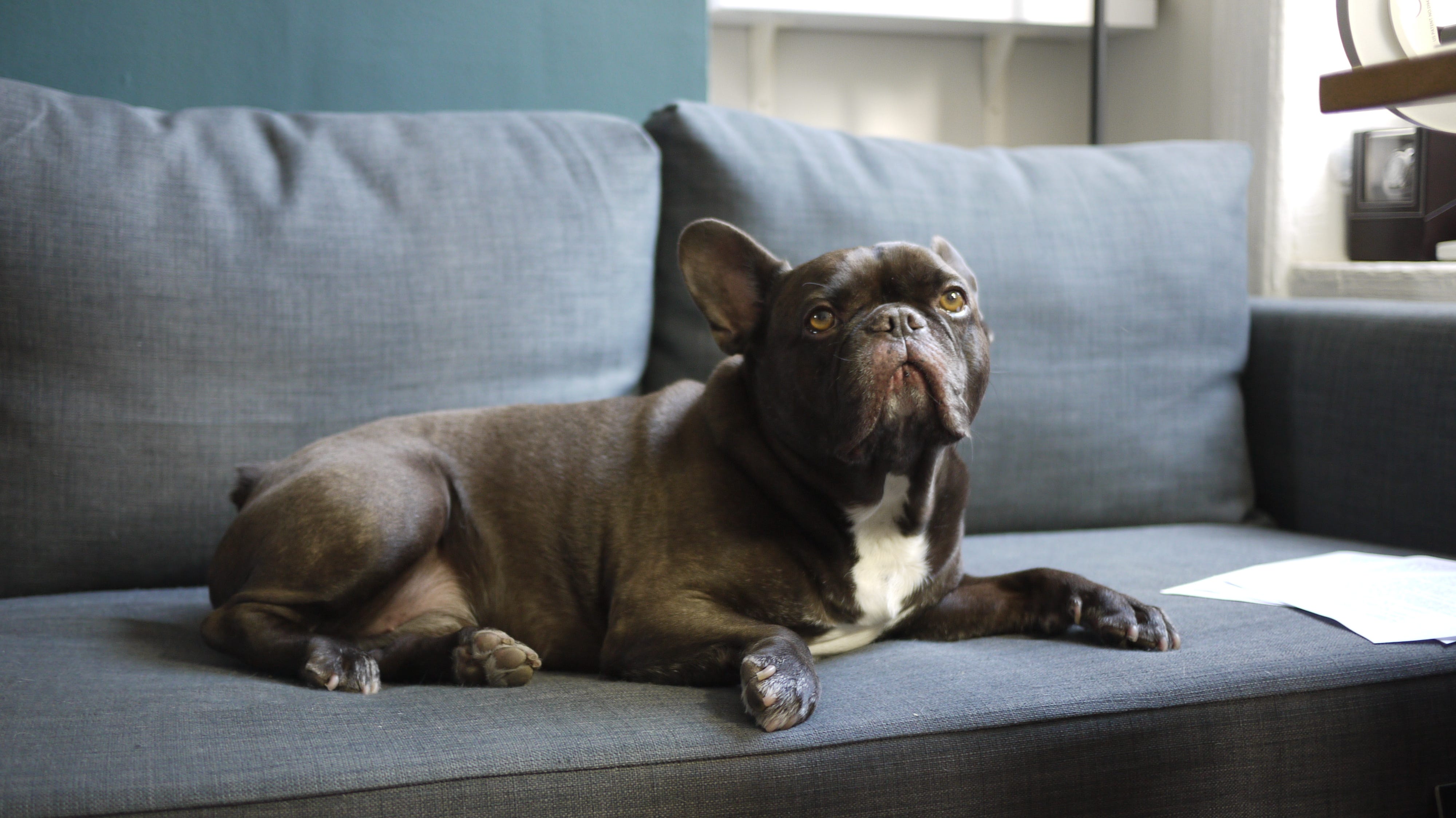
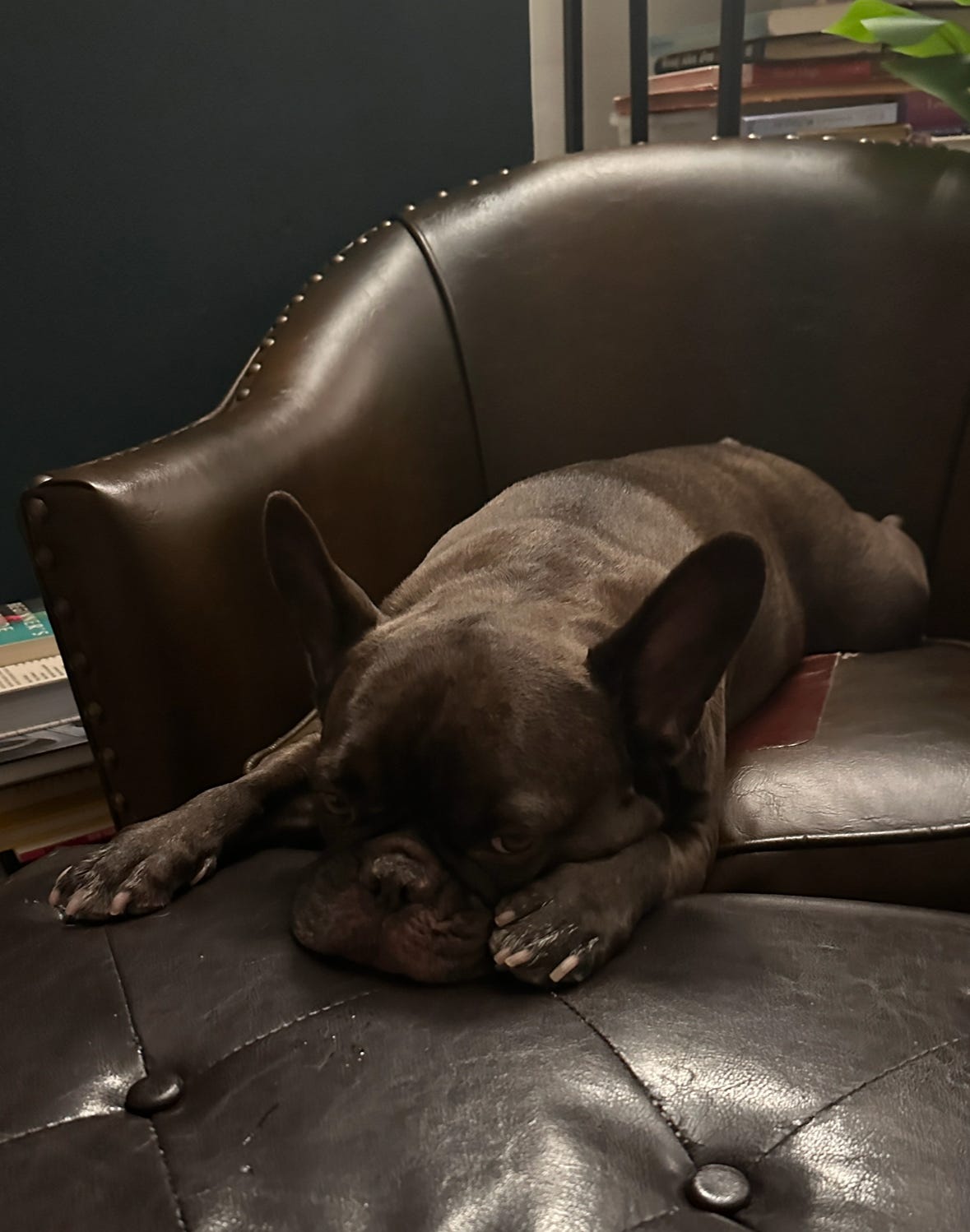
I got my copy in the mail the other day. I had mail to sort- urgent, adult, responsible-immigrant mail. Instead of opening my Jury Duty letter, I sat down with the book instead and didn’t move for an hour and a half. Morris watched me from the floor with the quiet judgment of a dog who knows the difference between work and joy and resents being excluded from the second.
Rich works out of Chicago, has been at it for decades, and turns up pretty much anywhere a cartoon can legally be printed- the New Yorker, Air Mail, the lot. The story goes that he got his start redrawing a Ring bell for service sign on the scale in the produce department of a grocery store, then quietly updating it every week until customers started coming by to see what it said. That’s the whole career in miniature, really. Couldn’t not do it.
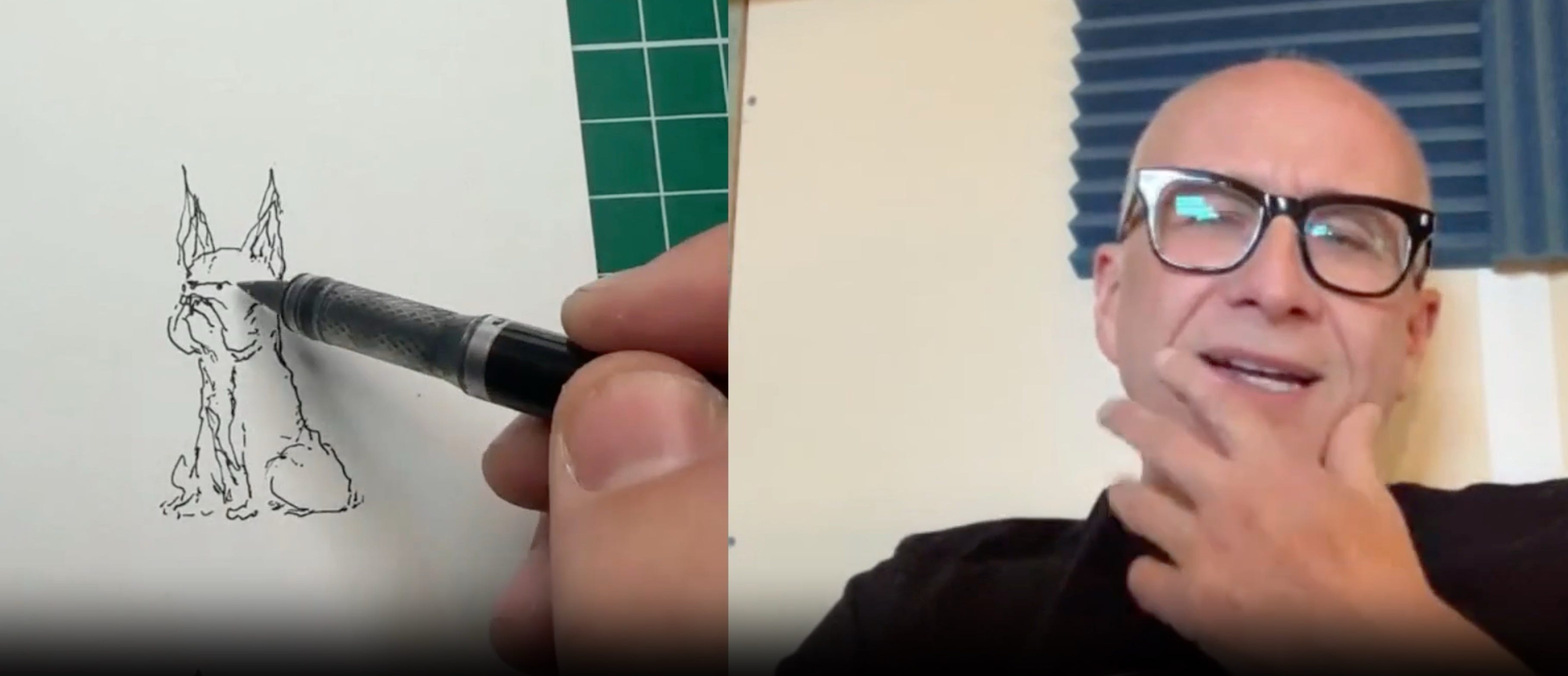
“Getting a dog right
doesn’t mean getting a dog funny.”
This is the line I came away with, and I suspect it’ll rattle round my skull for months. (it’s around the 40:47 mark).
We got talking about reference, because Rich draws his animals from photos. I thought he knew what a dog looked like. Then I spent months -months!— trying to work out the shape a dog makes when it leaps to catch a ball, only to discover that the real anatomy of a jumping dog is so deranged it looks like a printing error.
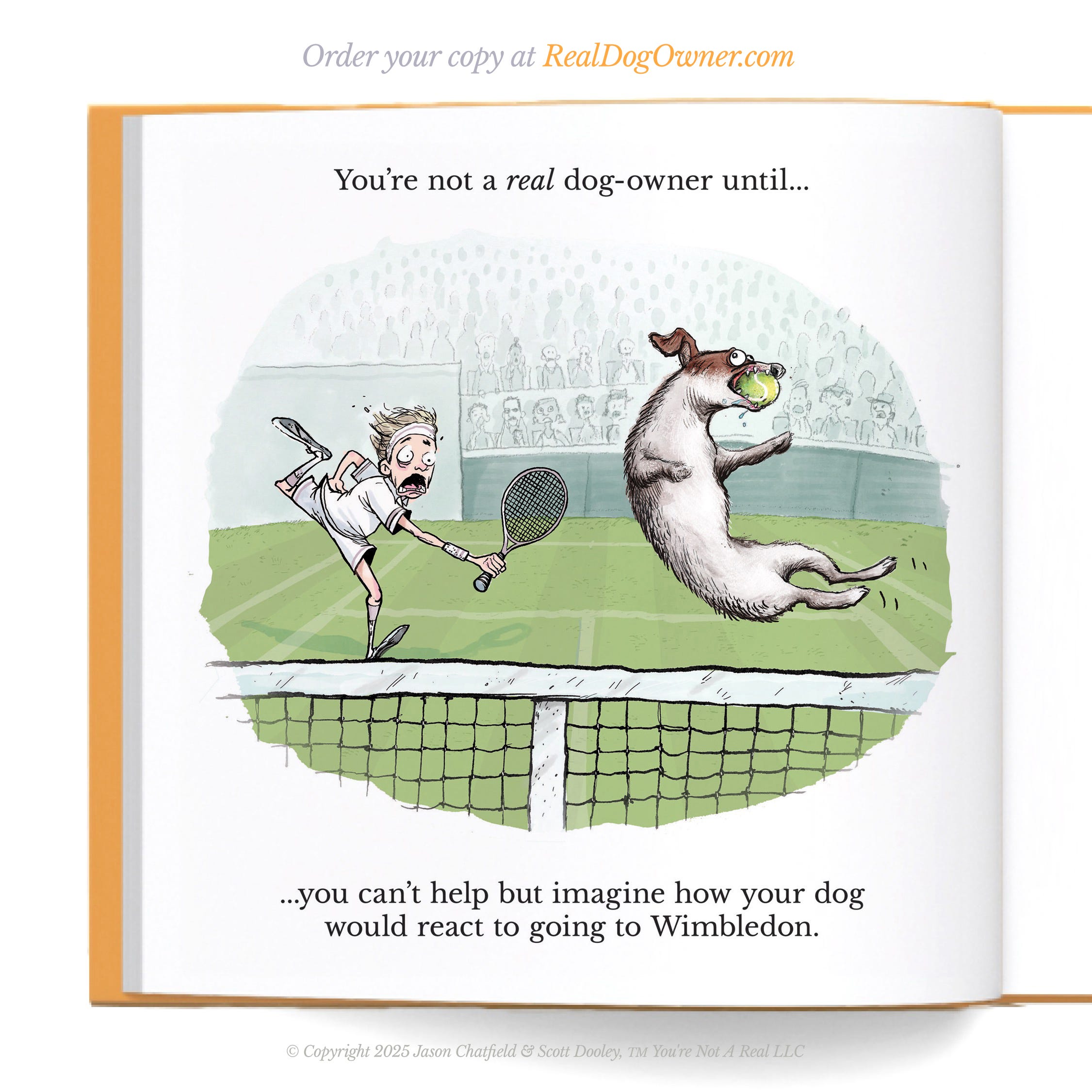
He personally lands, as you do, somewhere between the truth and the lie.
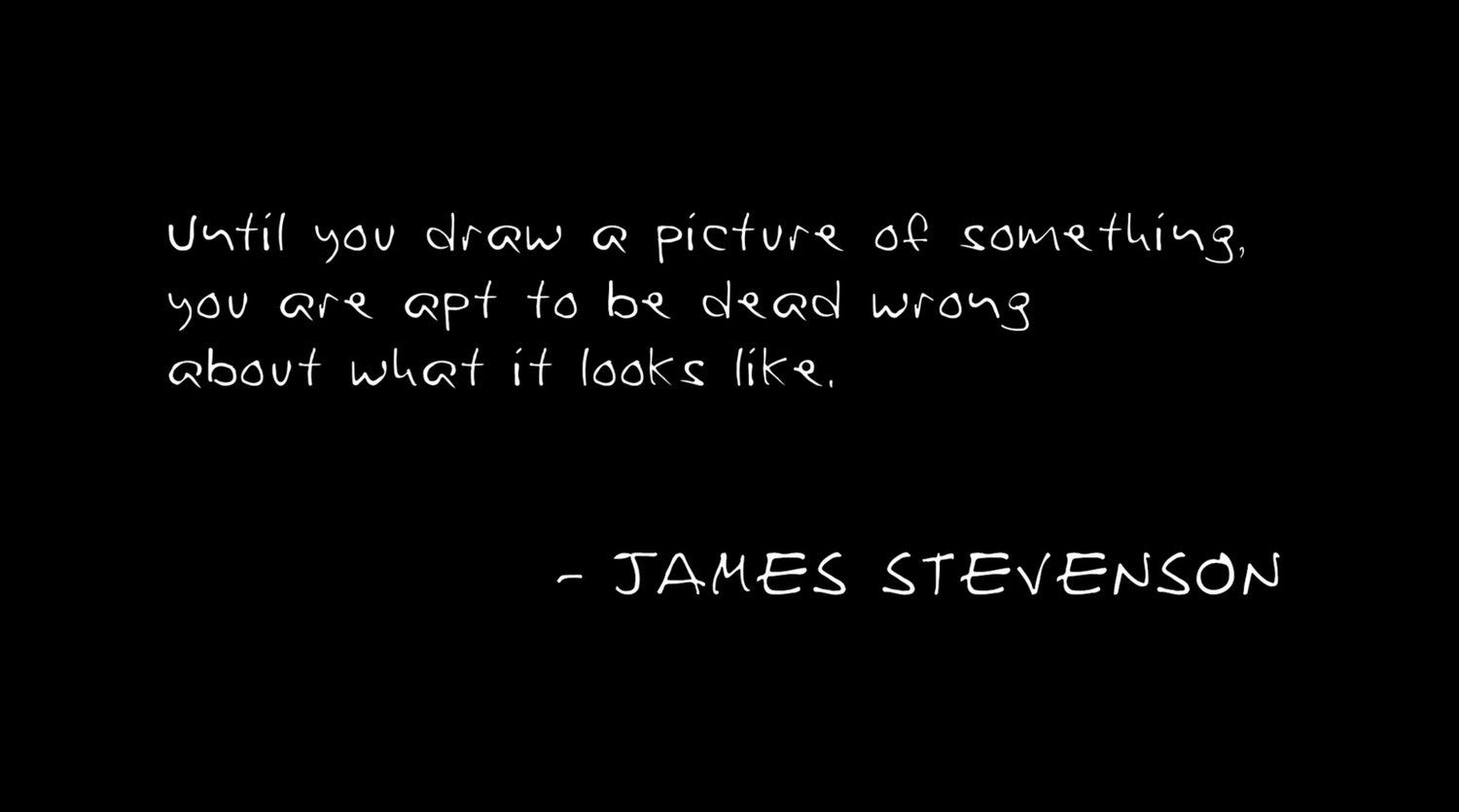
I quoted the late James Stevenson, the New Yorker cartoonist, who said that “Until you draw a picture of something, you are apt to be dead wrong about what it looks like.” And that’s the trade, isn’t it? You think you know your own father’s face until you try to put it on paper and realise you’ve been carrying around a rough sketch your whole life.
But here’s the bathos (because there’s always bathos). Even after all that fastidious study of the real, Rich’s actual insight is that accuracy isn’t the job. You can chase the truth of a thing for weeks and still have to abandon it at the last second for the funnier pose. There’s a reality inside the panel, and it is not this one.
I think about that with caricature. The likeness lives in the asymmetry- the bit of a face that’s slightly wrong is the bit that’s most them. Same with bodies. Rich said he sees the human form in three dimensions, rotating, and that when genuine symmetry turns up it’s so rare it’s almost shocking to look at. The rest of us are gloriously, correctly lopsided. The algorithm would like to convince you otherwise. The algorithm can drink its own bath water.

Here’s the bit where I rattle the tin.
These recaps take a while. The interview’s the fun part- the writing-up is me, alone, in the studio, doing the cartoonist’s equivalent of drawing the dog’s back leg forty times until it’s both true and funny. It’s a solitary job, as Rich said.
If you’ve read this far, you’re my kind of reader, and I’d love you to consider upgrading to a paid subscription. It’s a dollar a week. That’s less than a single bad coffee in this city, and considerably less than a good one.
It keeps the lights on, the cheap whiskey in the glass, and the bath water in the bath, where it belongs.
The men in the cartoons are all his father.
This was the moment the whole hour tilted.
I’d been banging on about the glasses -Rich draws this specific flat-topped frame, the kind where you can’t see the eyes, and I’d built an entire theory about Scott McCloud, and how a reader projects themselves onto a face they can’t quite read.
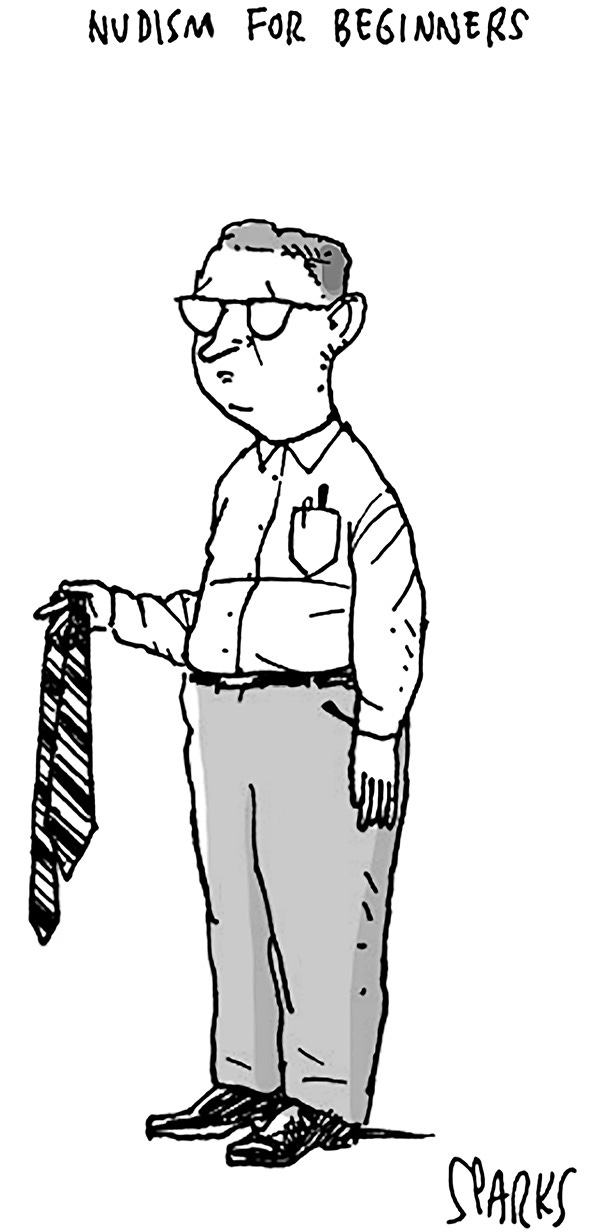
Then he said the men in the drawings are his dad. Or versions of his dad. The glasses, the little moustache, the high-waisted trousers, the bit more hair than a man that age has any right to keep. He’s been drawing his father, over and over, for a career.

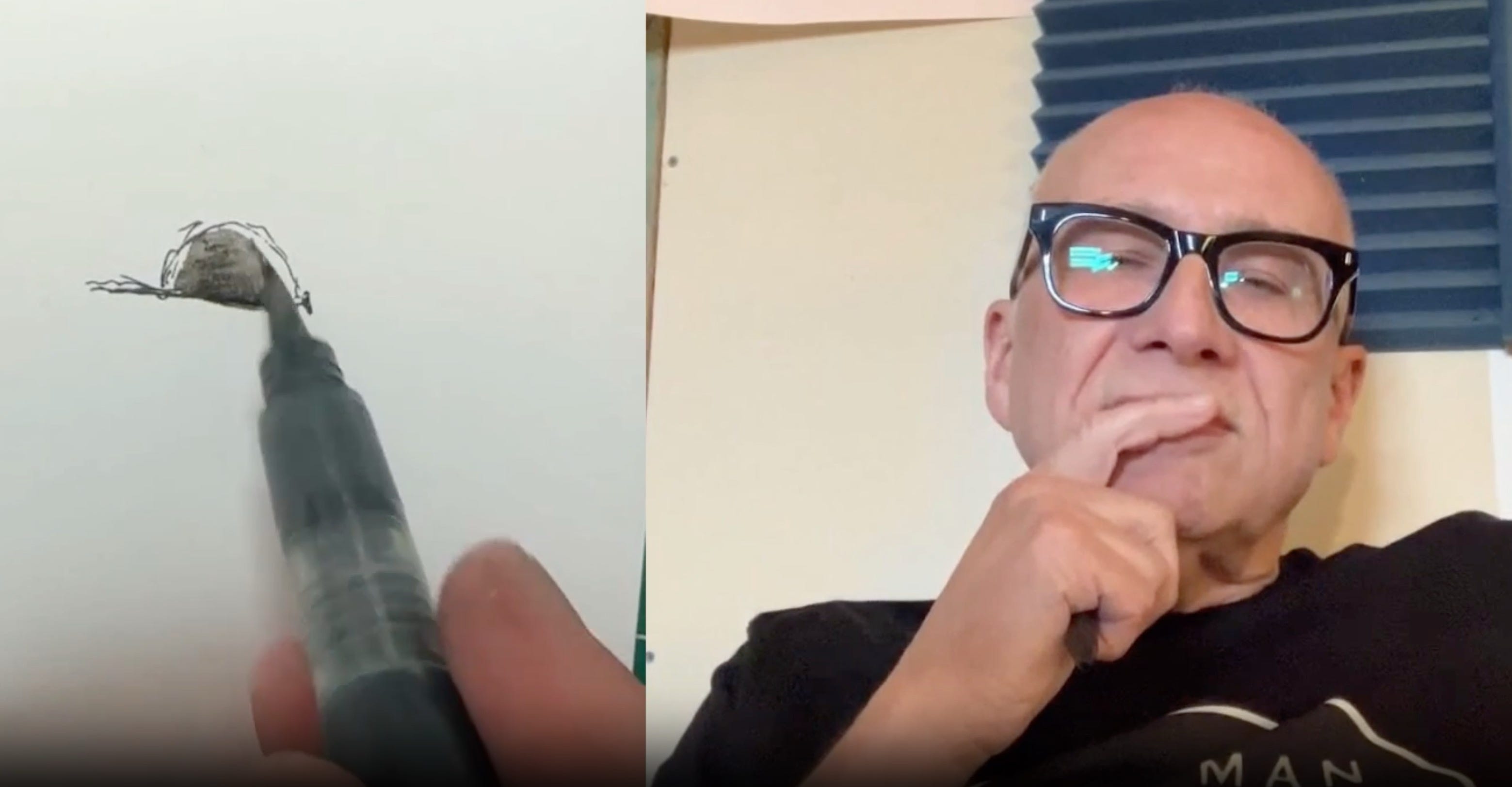
We didn’t dwell. Cartoonists never do. We pivoted immediately to the fact that he draws nearly everything with a Uniball Vision. Because the ink isn’t waterproof, I sometimes cheat a little wash out of it with a water brush- making it look like I hauled a full watercolour kit to the desk when really I just smudged a pen.
The deep cuts, the dick jokes, and Vlad the Employer
The book is stuffed with what I can only call cartooning deep cuts. There’s a Leonardo da Muncie, a Charlie Brown gag built on the first Peanuts strip ever published. There’s a podcast hosted by a dog that I would, hand on heart, subscribe to over most of the human-hosted ones currently clogging the feed.
And then there’s Vlad.
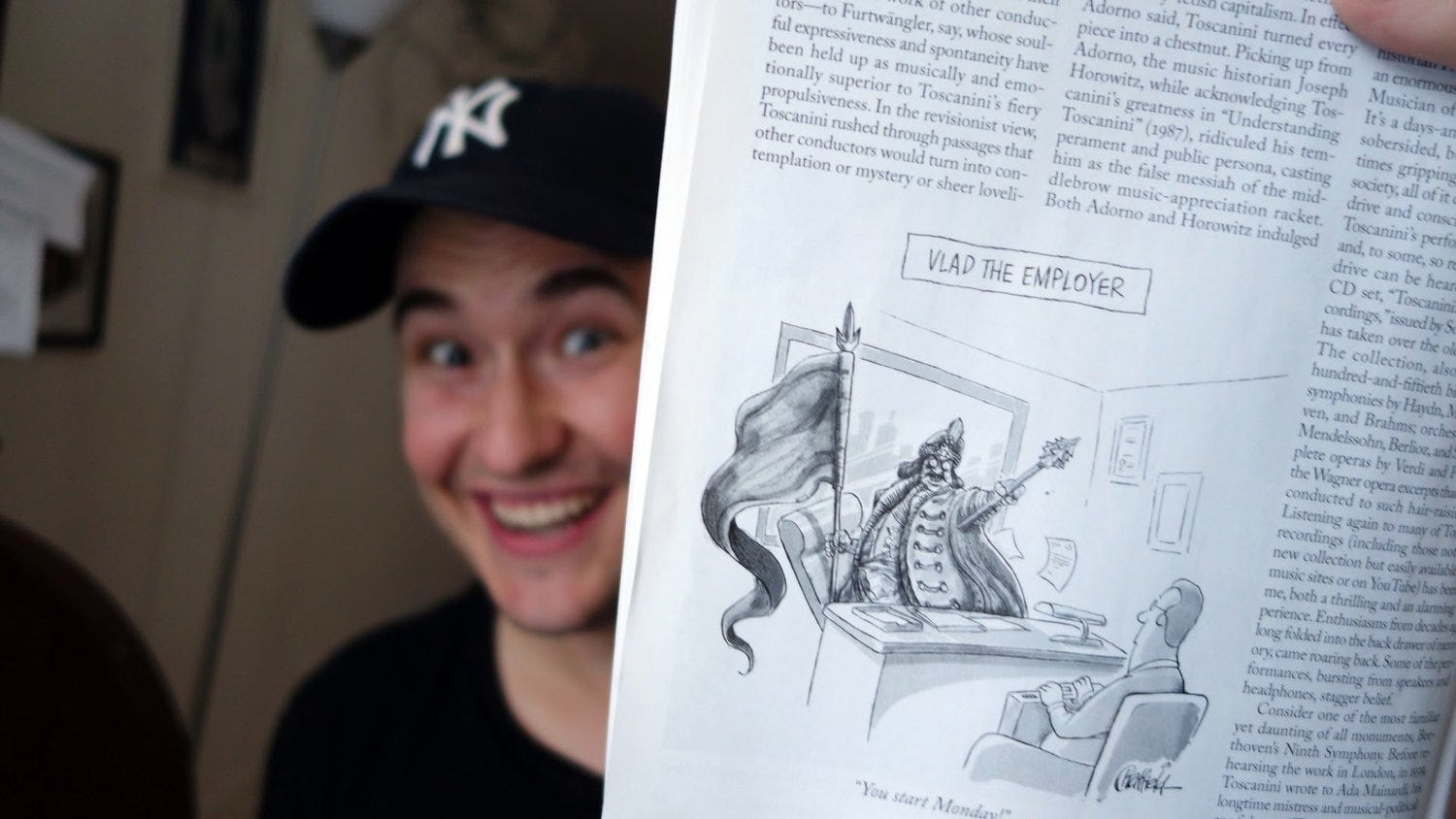
Rich has a Vlad the Impaler in the book, and seeing it sent me straight back to my own- a Vlad the Employer I drew years ago, the warlord interviewing a candidate, captioned “You start Monday!” I went to enormous, faintly insane lengths to get the costuming, jewellery and spear historically correct, because the New Yorker employs fact-checkers and I wasn’t about to be caught out on the haberdashery of a fifteenth-century warlord.
The joke is stupid. I knew it was stupid. I drew it purely to please myself and threw it into the batch as filler, fully expecting it to make the good ones look better by comparison. It’s the one Bob Mankoff took one look at and said O.K. -which, as anyone who’s submitted a batch knows, is never the one you bet on. You send your bangers and your sacrificial throwaway, and the machine reaches past all of it for the daft one you never meant anyone to see.
We also fielded a chat question from Cartoons by Collins about how on earth Facebook hasn’t banned him, given the, ah, anatomical confidence of certain drawings. Rich’s answer was a masterclass in living with the unknowable: he genuinely doesn’t know whether it’s a buggy AI, a phantom moderation team, or simple cosmic luck, and he’s decided that thinking about it is the surest way to summon it. “I feel like I’m always on the verge of getting in trouble,” he said. I told him that’s a wonderful place to live. I should know. I’m subletting there too.
Chickening out at Disneyland
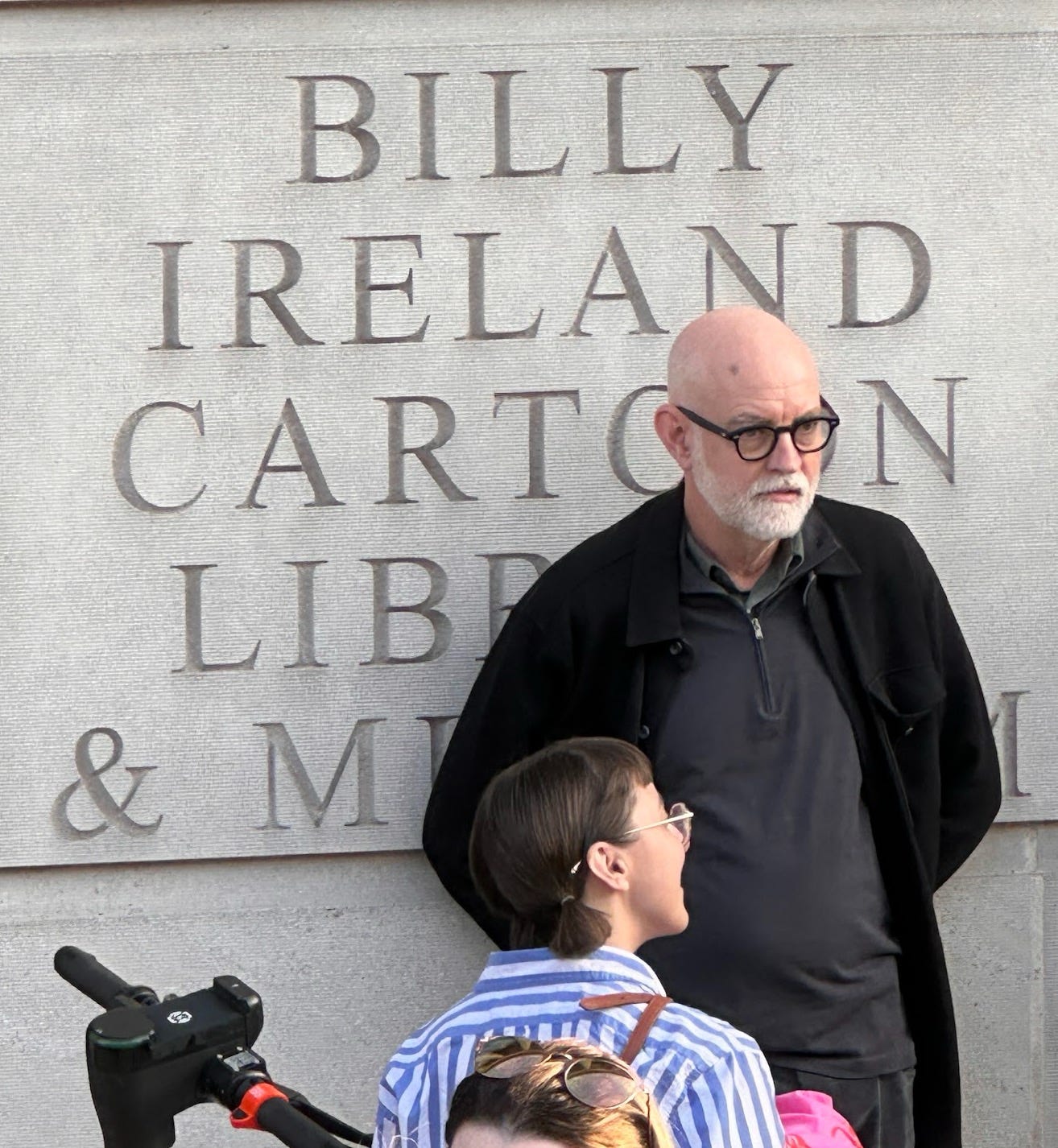
The detail I can’t shake: Rich has been to the Billy Ireland Cartoon Library at Ohio State (the site of this year’s Reuben awards). It’s the largest cartoon collection on Earth, the actual Disneyland for people like us, originals sitting in flat files like it’s nothing. And while he was there, he spotted the curator Caitlin McGurk behind a door. A social media friend. Someone who’d have been thrilled to meet him. And he got starstruck and couldn’t bring himself to say hello.
I found this unbearably endearing. Here’s a man whose work I’d cross a city to see, who’s published everywhere a cartoon can be published, standing in the cathedral of his own art form, chickening out of introducing himself to a fan of his.
We are all, every one of us, the admirer standing outside the door. Even the ones on the other side of it.
At the end, I told Rich the cruellest thing he could have done was turn out to be a disappointment, and he’d let me down by being decent company. He insisted he’s an asshole. “Trust me.” I don’t believe him. I think he’s a pure cartoonist- a man with my same derangement of the brain that lets us have an idea, put it on a page, and make a stranger on the far side of the planet laugh out loud at a man drinking his own bath water.
That’s a rare thing. It’s a hard thing to do well. And it takes time.
Rich Sparks’s Horseshoes and Tardigrades and Other Drawings is available now in the book section at Weekly Humorist, alongside his Apple Snyder calendar, starring a man who sleeps on his sister’s couch. Follow Rich on Instagram and Facebook, and find his band, The Last Afternoons -ten years old this year, power pop bordering on indie pop -over on Bandcamp.
Next on Draw Me Anything: Austin Kleon, with his new book Don’t Call It Art. That’ll be on Thursday, June 11th.
‘til then!
Your pal,

PS. Look, if this actually did something for your brain (or at least distracted you from the creeping dread of your own inbox for six minutes), please consider restacking this and sharing it with your people. It’s the only way the word spreads.